Travelling has always been a huge part of my life. Growing up my dad’s job required him to travel all around the world for weeks at a time and my mom, brother, and I often traveled to meet him wherever he was over summer and other breaks from school. This sparked a passion for adventure in me from a very young age. As I have grown older, I have jumped at every opportunity to travel that comes my way. I spent five weeks studying abroad in Cape Town the summer after my freshman year of college. I flew across the world and met my best friend who was studying abroad in Australia last spring break. I’ve slept in a camper for two weeks and hiked all around Iceland for my brother’s college graduation trip in 2018. When I received an email with information on a study abroad trip to Peru, it immediately caught my eye. I had never been to South America before and was eager to check another continent off my list. I decided to apply for the program because, but I had very low expectations because my parents would be in the middle of relocating from Dallas to Salt Lake City during the dates of the program. I almost did not ask my parents if I could go on the trip because I felt guilty asking them to pay for this program as they were buying a new house and moving across the country. Once the scholarship came in, I built up the courage to just throw it out and see how my parents reacted. They have always been incredibly supportive of my passions. My dad shares the same passion for seeing the world as I do and without hesitating, he was in full support. He has always told me this is stage in my life is the time to see as much as I can. Some of my close friends had spent some time exploring Peru last summer and had nothing but high praise for Machu Picchu. I knew it was a destination I wanted to eventually experience for myself. There are a few sites that stand out in my head more than others: the powerful waterfalls nestled in the mountains in Iceland, the sunset from the top of Lion’s Head mountain in Cape Town, the Blue Mountains in Australia, and I can now add Machu Picchu to this list. What sets apart Machu Picchu in my mind even further is that is a combination of breath-taking nature and remarkable man-made creations.
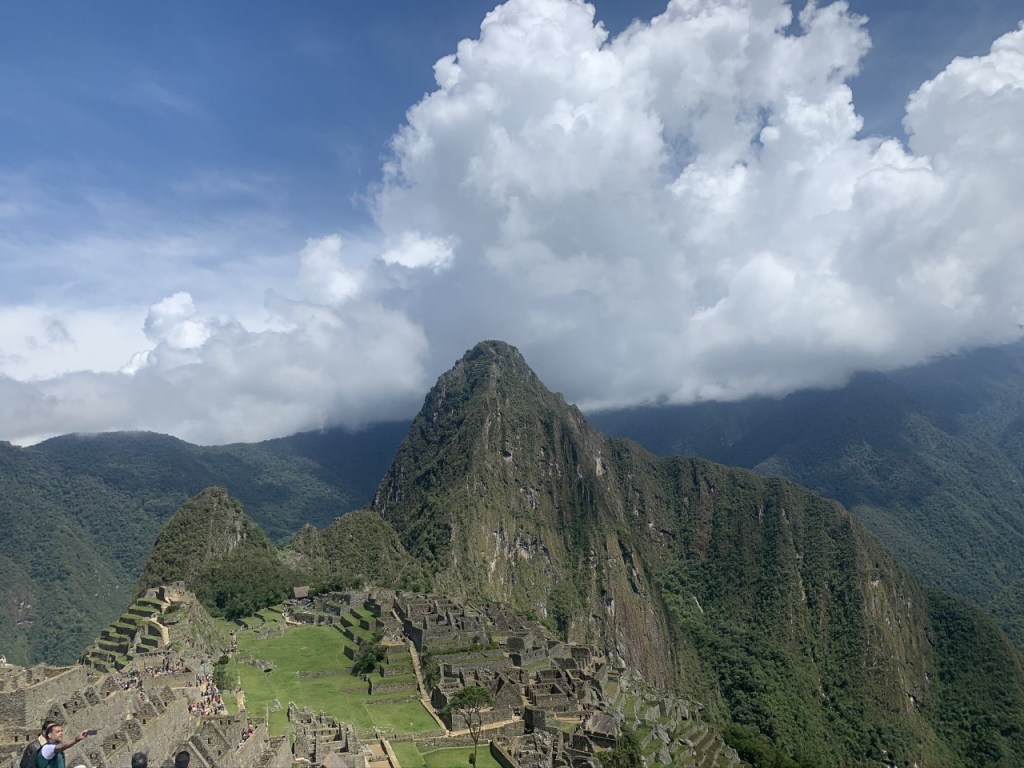
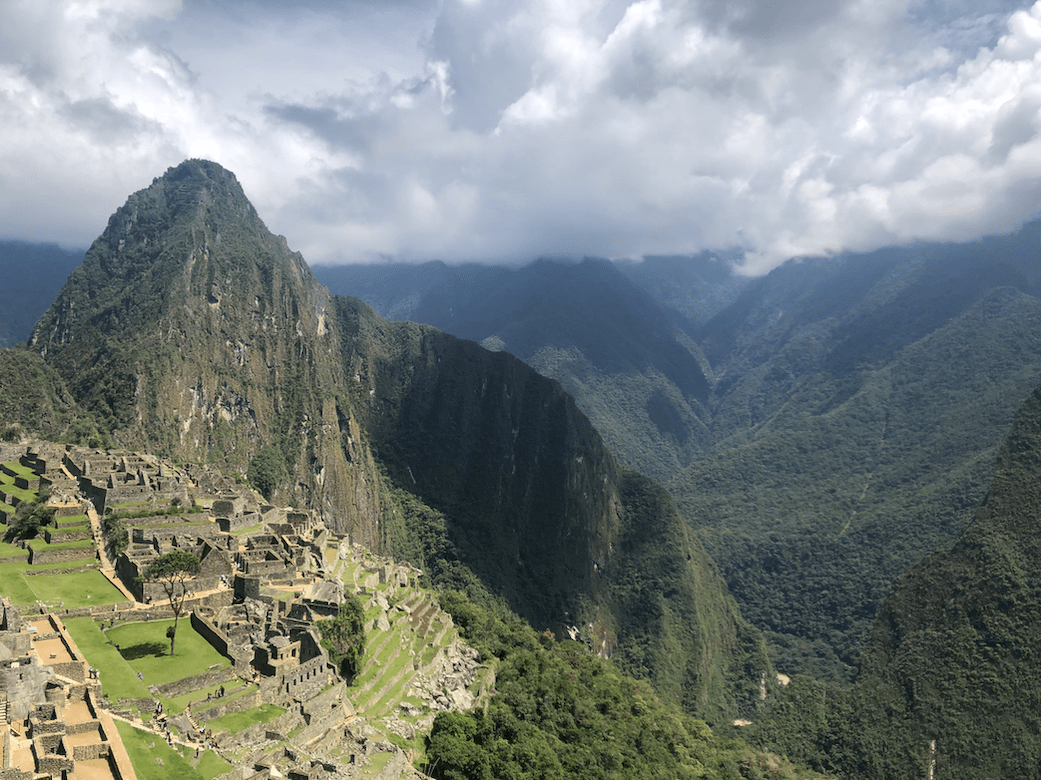
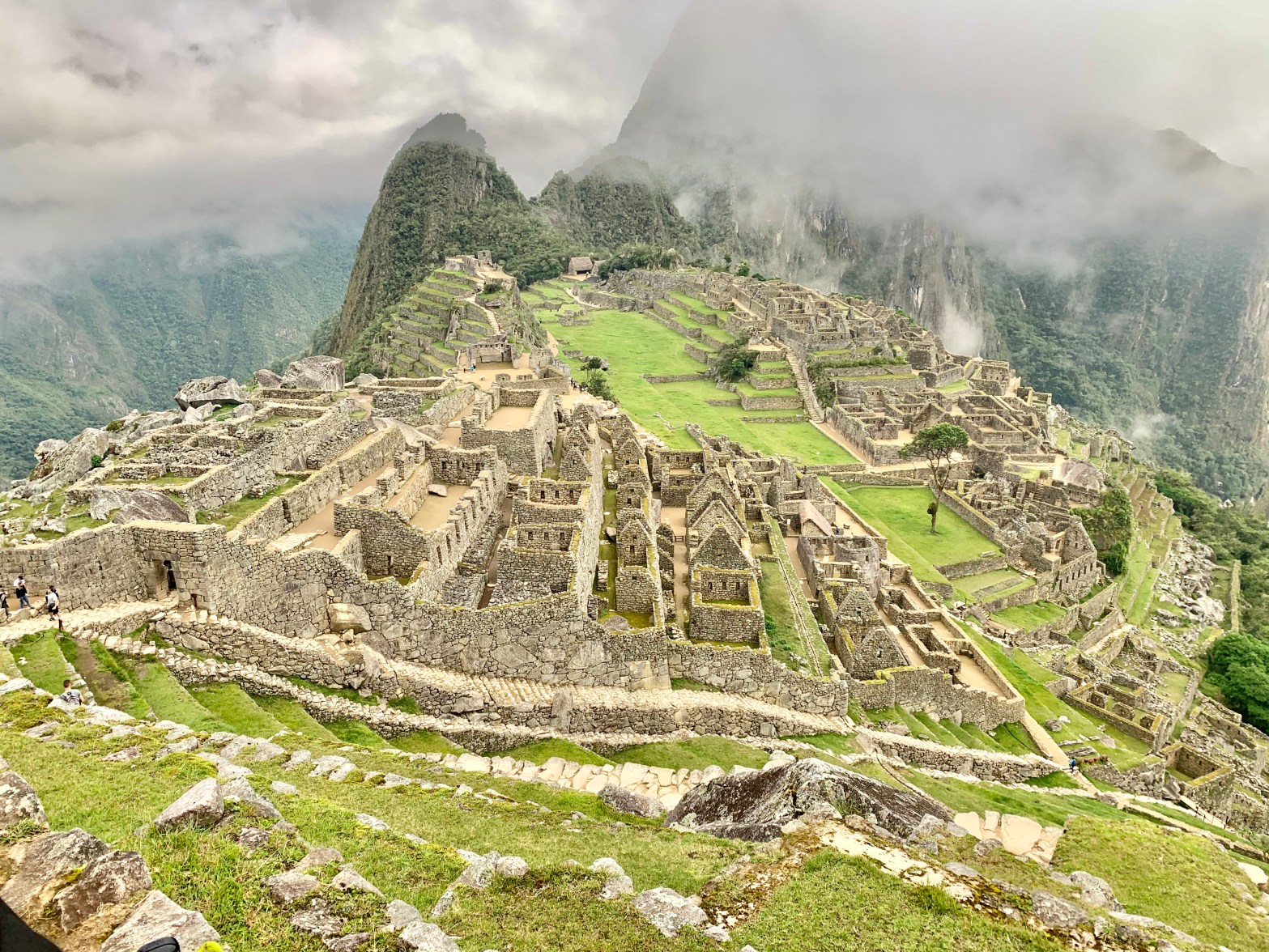
Tourism is a crucial part of Peru’s economy. Tourism accounts for nearly ten percent of the nation’s GDP (Knoema 1). There are numerous historically significant sites available to tourists within Peru, but Machu Picchu has been seen as the face of tourism in Peru in recent years. Tourism skyrocketed after it was voted one of the New Seven Wonders of the World in 2007. People travel from all over the world to see the spectacle. On average, more than 5,000 visitors explore Machu Picchu every day. Machu Picchu is almost 8,000 feet above sea level, surrounded by other mountains, and overlooks a rich, green valley. While Machu Picchu truly is picture-perfect, it is much more than just a stunning site.
“Machu” means old and “Picchu” means hill. It is estimated that Machu Picchu’s origins date back to some time between the 1450s and 1460s. Hiram Bingham, a Latin American History professor at Yale university, rediscovered Machu Picchu in 1911 on an expedition. Bingham proposed that it was the birthplace of the Incas based on a link he perceived between a unique 3-windowed building at the site and the myth that the 4 Ayar brothers and their sisters had emerged from 3 windows or caves. However, Bingham’s theory was later disproven. Archaeological evidence concluded that Machu Picchu was just one of numerous royal estates spread throughout the Inca empire (Salazar 26).
Royal estates were sites of luxury and pleasure for Inca royalty. There are a few criteria that defined royal estates in the Inca period which included land outside of the state administrative system and belonged to a specific Inca ruler and his descendants called “panacas” (Salazar 25). These estates were comparable to what we know Camp David to be; a private retreat where our nation’s leaders can relax and escape the immense pressure of leading a nation. Studies conducted on the structures of Machu Picchu suggest that Inca royalty and their family members used this palace for numerous activities such as celebrations, feasting, religious ceremonies, astronomical observations, and administrative meetings. Machu Picchu had a much more pleasant climate and was likely used to house 500-700 Inca elite and their families sometime between December-March.
Machu Picchu belonged to the 9th Inca ruler, Pachacuti Inca Yupanqui. Pachacuti also owned neighboring royal estates: Pisac and Ollyantaytambo. Pachacuti was credited with the success of defeating the Chanca out of Cusco. These royal estates glorified Pachacuti’s war campaigns. Each Inca ruler put their own unique mark on their royal estates through the architecture and design of structures at their royal estates. Machu Picchu represents Pachacuti’s divine power and authority. Pachacuti rebuilt Cusco, the Incan capital and we can see many similar design features between Machu Picchu and Cusco. His architecture is as if he completed a work left unfinished in nature by fitting blocks perfectly into nature. His style also features many gateways and walls made from stone. Pachacuti was said to be particularly fond of flowers and an analysis conducted on the soil at Machu Picchu concluded that orchids were grown in the private gardens and terraces. The land surrounding the structures at Machu Picchu were terraced and used for growing crops such as potatoes, corn, beans, and maize to provide food for the royal families that resided there. The hydraulic system at Machu Pichu was very advanced. It was a stone-lined gravity canal that supplied the site of Machu Picchu with fresh spring water brought from a perennial spring on the north slope of the mountain. It was then channeled into sixteen fountains spread throughout the area. The walls of the fountain were five feet high and the walls would have allowed the Inca ruler to take a ceremonial purification bath in privacy. The entire upper section of Machu Picchu to the west of the main plaza was dedicated to a notable set of structures designed for ceremonial activities. Machu Picchu has more structures built for religious activities than any other royal estate.
Machu Picchu has received a reputation for being mysterious. This reputation is not only because its nestled in a mountain with thick jungle-like vegetation and regular heavy fog, but also because Machu Picchu was perceived as lost. Why would the Inca abandon such a beautiful site that required an enormous amount of human labor and time to build? The site of Machu Picchu had some disadvantages. It was located about 60 miles from Cusco, the capital. Also, it was vulnerable to surprise attacks from highland groups. There are a couple reasons we can begin to understand the abandonment of such a beautiful place. Contrary to popular belief, Machu Picchu was never a critical site to the Inca empire. It only supported the residents at Machu Picchu and it only existed because the Inca elite had an abundance of labor and goods. Inca elites were able to live in luxury at the height of the empire. The Spaniards conquered the Inca empire in the 1500s, and Machu Picchu was abandoned and never used by the Spaniards.
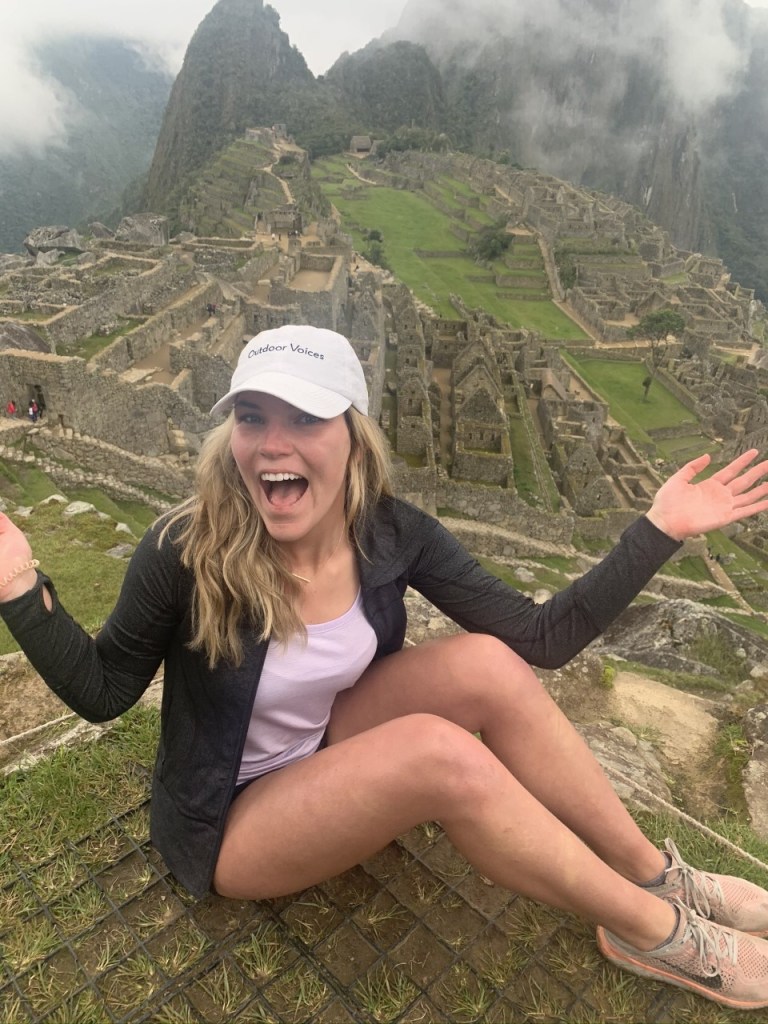
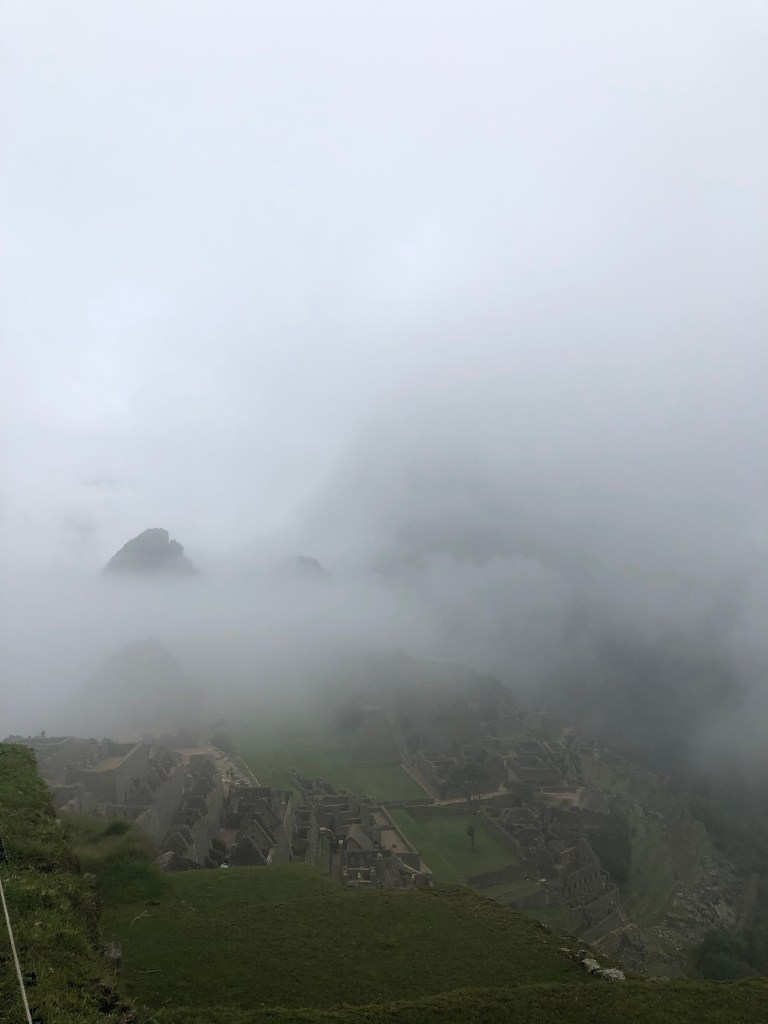
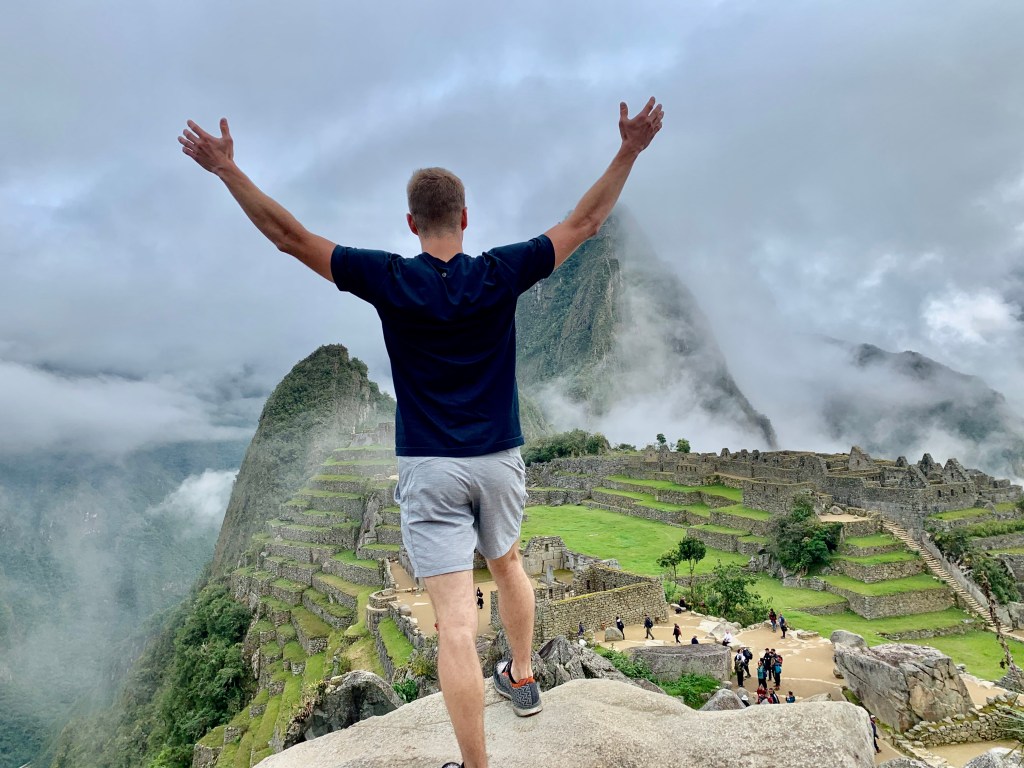
My personal experience at Machu Picchu began with a 4:00 am wake up call. It seemed like a little much at the time, but I would later understand why getting there early was the best way to witness the wonder of Machu Picchu. Our entrance ticket into Machu Picchu started at 6 am and we had to catch buses to the entrance gate beforehand. The bus trip up is not for the faint of heart as it is an adventure in of itself. The road is full of tight turns and the drivers do not take it slow. I rarely get car sick, but I felt like I was going to puke the whole thirty-minute drive up the mountain. When our group arrived safely at the top, it had already began filling with many hikers and other tourists. Clouds covered the entire view and I was filled with disappointment. I wondered if this whole experience would be a bust. Despite the heavy fog, we proceeded and began our guided tour through the park. Our guide could sense our worry and promised us that the clouds would eventually clear up. As time passed, the clouds began to break as promised. I will always remember my first clear view of the site. It was both breathtaking and mind-boggling. The sheer size of it was phenomenal and there were more structures and steps than I had imagined. It was surrounded by mountains from every angle. Our first three hours at the park was with a guide. In my opinion, I would recommend against the guided tour and opt for doing your own research beforehand and exploring the site freely. Perhaps it was just our guide, but he seemed to care more about making sure we all got the pictures we wanted and had a pleasant experience rather than really sharing the history of the Inca and Machu Picchu. I also noticed he did not like when our professors tried to share anything about the Inca empire with our group. After the guided tour, we exited the park and re-entered at 10 am for some time to explore freely. By 10 am, the park was becoming more and more packed with tourist from all over the world so I would recommend arriving at Machu Picchu as early as possible. A small group of us decided to hike up to the Sun Temple. By this time, we could not have asked for better weather: clear skies, sunny, and 75 degrees. The hike to Sun Gate was about an hour of steady incline. The Sun Gate overlooks the entire site of Machu Picchu and it was a great way to end our time at Machu Picchu. When we hiked back down to exit the site, I remember looking at my watch and being shocked that it was already almost 1 o’clock. Time had seemed to pass so quickly, probably because I was so enthralled the entire time.
There is some controversy surrounding the growing tourism at Machu Picchu. Machu Picchu is not the most significant Inca ruin left. It was a place that only the high-class and their families enjoyed. It has undoubtedly received the most attention from tourists relative to any other Inca site or any other site in the whole country of Peru for that matter. Many tourists see it as the face of Peru, and neglect to visit any other historically significant sites in Peru. There are some people that are very bothered by this and in turn have decided to boycott Machu Picchu. I believe that even though it was essentially just a summer home the elite, that does not disqualify it from being apart of Inca history. I believe that there is a lot that can be learned about the Inca from Machu Picchu.
In my opinion, it is certainly worth visiting Machu Picchu if you are travelling to Peru. Although Machu Picchu may not be the most historically significant site in Peru, visitors can still gain an understanding about the Inca culture from observing and experiencing all it has to offer. There are several different reasons I believe this. One, Machu Picchu shows the dominance, authority, and the intelligence of the Inca elite. It is mind-blowing that they were able to build this site up in the middle of the mountains without modern-day technology. There are roughly 700 terraces carved into the mountain at Machu Picchu. Terraces are something we repeatedly saw throughout historical Inca ruins. Terraces demonstrate the authority the Inca had over the land. It also showed their creativity by making the steep slopes functional for farming. The structures at Machu Picchu are exceptionally advanced, especially the hydraulic system which provided enough fresh water to support up to 700 residents. “The well-fitted stone lining of Machu Picchu’s canal would have minimized seepage and reduced maintenance requirements. The canal fed a series of sixteen founds, each of which was equipped with a sharp-edged fountain spout” (Salazar 31). The sharp-edged spout made it ideal for residents of Machu Picchu to collect water into various ceramics. These details seem miniscule, but they demonstrate that the Inca’s advanced civil engineering knowledge and dedication to efficiency. Another reason a tourist can benefit from experiencing this site is because it portrays the extent of the luxury that Inca royals lived in. The physical labor that made this vacation home possible is almost unimaginable. After seeing Machu Picchu for myself, I had immediate questions. I wondered, how the lower-class Inca lived? How big was the gap between the upper-class and lower-class? Touring Machu Picchu could potentially be the catalyst to digging deeper into researching Inca history for some visitors.
To be completely transparent, I was much more excited about experiencing the current culture in Peru, seeing stunning nature, and making new friends on this study abroad program than I was about really diving into the history of the Inca. I do not think I have even taken a history class since high school (business major lol). I was challenged to think in a new way because my brain like black and white. I found the Inca empire to be incredibly complex and fascinating and after focusing on their culture for 2 weeks I still want to learn more. I loved discovering aspects of their culture through the different ruins and I was constantly amazed at their intelligence. I saw their intelligence most evidently through their structures made for astronomical observations and their hydraulic system at Machu Picchu. I would without a doubt recommend making a stop to experience Machu Picchu if you ever find yourself in Peru- it is just something you cannot skip! It is one of the New Seven Wonders of the World for a reason. Machu Picchu truly is so much more than a stunning site, it’s a gateway into understanding the powerful empire of the Inca that once ruled. I am forever grateful for parents for giving me multiple opportunities to broaden my perspective and knowledge through travel. My mom has always quoted, “Travel is the one thing you buy that makes you richer.” This trip is something I will never forget, and I am still giddy I have two more stamps in my passport! I couldn’t think of a better way to start of 2020, here’s to more adventures, learning, and connecting!

Works Cited
“Peru Contribution of Travel and Tourism to GDP (% of GDP), 1995-2018.” Knoema, Knoema, knoema.com/atlas/Peru/topics/Tourism/Travel-and-Tourism-Total-Contribution-to-GDP/Contribution-of-travel-and-tourism-to-GDP-percent-of-GDP.
Salazar, Lucy C., and Richard L. Burger. Machu Picchu – Unveiling the Mystery of the Incas. Yale University Press, 2008.




 Indigenous Ways in Peru: Postcards from Students