By: Nikki Gross
Picture this:
You are a 21st century citizen of the United States. (Not so hard, right?) The catch is that writing does not exist. Well, writing with letters. On billboards and road signs, there are just vague photographs to convey the message. Your favorite novel is merely a story told to you by your grandma who got it her from grandma, a transgenerational game of telephone if you will. Your homework assignments are mostly oral storytelling and math, completed using cotton threads of various lengths, threads, colors and tied with specific knots. Imagine that the government takes census and tax information using the same threads you use to do your math homework. Every few years, some random guy comes over and asks you to tell him all the information you know about your home and income. He surveys your assets quite meticulously before moving onto your neighbors’ house. He will be in touch in the near future so you know what surplus of your capital you must redistribute back to the government. (Yes, taxes exist even in the imagined world.) Other than the cotton threads and the pictures, there is not a form of documentation to share your thoughts, ideas, or your work. There is no reading and no formal composition. Yours is a civilization founded on close-knit communities, a strong penchant for memorization and oral tradition, and a clear need for accounting. Is your modern-day society still complex and significant even without something considered as crucial as writing? Wait, what about those cotton threads? Would you consider them writing? What if, five hundred years from today, our civilization has been colonized and those threads are the only compositions historians and archaeologists have of our culture? Would you consider it writing then?
What is Writing? And Who Decides?
The 20th century archaeologist Gordon V. Childe suggested there were certain characteristics a society must possess in order to be a civilization (Childe). One of these characteristics was writing. When the Spanish “discovered” what is modern-day Peru, they found a civilization which had no script. Instead, information was recorded in colored cords tied with knots symbolizing various numerical values and objects called quipu. Only specific people, called the quipucamayoc could read and create the quipu, creating an elite, managerial tool for the Incan government (Schmidt, 614). The Incan empire was vast and possessed elaborate, widespread infrastructure, economy, and diverse populations. Yet, to the Spaniards’ western eyes, they lacked an important characteristic of society. How can you possibly have a complex civilization without formalized, scriptural writing similar to what existed in the Western world?
It is at important at this point to define what writing has been seen as throughout history for different cultures. In the modern-day United States, for example, we think of writing as letters combined to form words which are subsequently strung together to create sentences, and so forth, all written down on paper or typed onto our computers. We have grammar, syntax, voice, and tone in our writing. In Mesopotamia, they had cuneiform tablets stamped with symbols instead of words. In China, they have no alphabet but rather characters which can represent both the spoken language and symbolic meaning. Despite their differences, all of these examples share the “pen to paper” aspect seen as so crucial for writing. For a majority of cultures, especially those in the West, writing entails the formation of symbols in scriptural form, and yet the Inca empire seemed to be a complex civilization lacking this key feature. Therefore, quipu represent an entirely new conception of written language, given that it should be considered writing. There is no “pen to paper” moment, but instead a set of ropes colored and knotted in a specific fashion communicate primarily numerical information, without any semblance of letters or characters. Each quipu was highly individualized to the quipucamayoc who created, much like how your doctor’s handwriting is only legible to them, other doctors, and those specially trained nurses. The distance between knots, type and position of the knot, and type, thickness, and color of the cord, determined the meaning. These factors were highly variable based on who was creating the quipu and for what purpose (Helicon, “Quipu”). Despite European ethnocentric reservations about whether writing can even exist without script, these knotted fibers and fabrics were the primary system of documentation and recording in the Incan empire. It is how they documented their assets, demographics, and their livelihoods.
The Quipu
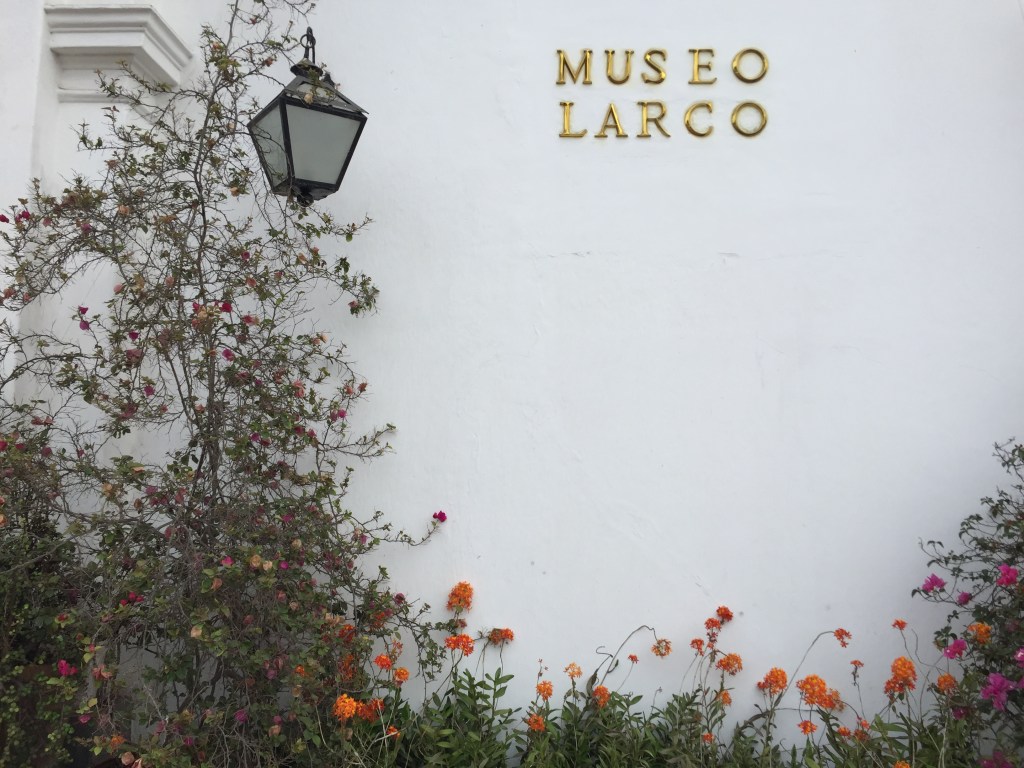
When you are walking around the Museo Larco in Lima, Peru, it might be easy to overlook the set of knotted cords splayed in the corner of the textiles room. The cords, to the nonchalant eye, might even resemble a necklace you carelessly shoved in your pocket which in turn became permanently tangled, but they are much more than that. Tucked in that back room, overshadowed by several massive, intricately woven textiles, the quipu might not look like hundreds of years of history, economics, and civilization, and yet those knots and muted colors are the record system of the Inca narrating just that. The knots speak to the management of the entire Incan empire. They are the material representation of the assets, population, and census demographics of the powerful empire which emerged in the 15th century and dominated for the one hundred years preceding the Spanish conquest. Quipu, or Quechua for “knot,” is, by definition, a communication apparatus using a primary cord with colored, knotted, pendant cords representing objects and numbers (Britannica, “Quipu”). Hundreds of years ago, along the extensive Incan road system the elite, specialized set of individuals mentioned earlier, the quipucamayoc, would travel from town to town and town to tambos, or royal storehouses, documenting taxable and demographic information of communities and possibly recording the narrative, once exclusively oral, stories of the people (D’Altroy, 267). From these tambos, located at key points along the elaborate road system implemented by the Inca, would emerge numerous quipus, depicting the lives of the past indigenous people of the surrounding areas.
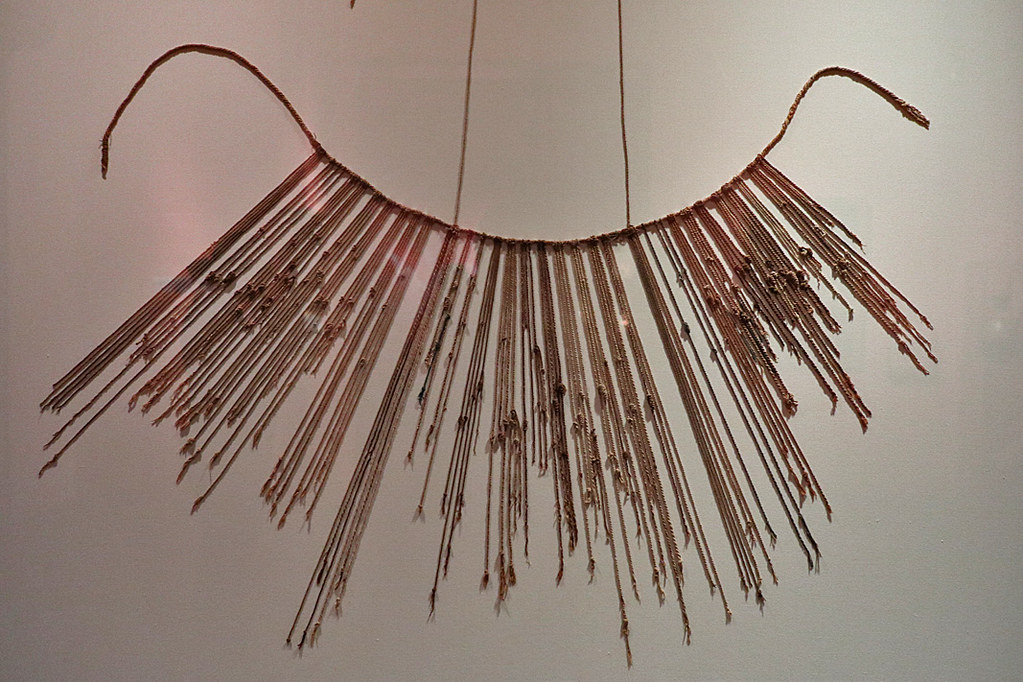
The years dominated by the Incan empire, though short in the span of the history of South America, are arguably some of the most popular years in Peruvian history. The culture of modern-day Peru ties itself deeply to its Incan roots through museums, tourism, and archaeology. The quipus are just one representation of that. In the ways in which the Inca are still alive in Peruvian culture today, through art, language, and artifacts, the quipus lend themselves to understanding the indigenous ways of the past and present. The quipu which have been uncovered and preserved contain all the complementary information to the well-preserved archaeological sites such as Ollantaytambo. They tell stories that the stones of the site do not; who lived there and how they did it. While they may not look like much, these knotted cords tell the history of Peru, revealing and redefining how writing interacts with civilization in the eyes of the Western archaeological world, and are some of the remaining material evidence of the complexity of the Incan empire’s economy, community, and individuality.
And just like you may overlook them in the Museo Larco, you probably wouldn’t think twice about the mock, miniature, quipus hanging on the wall and selling for 30 soles in a Cusco tourist shops. These quipus which could represent any number of things are now a blip in the tourist section of the Peru, but that is not insignificant in itself. The fact that this mundane looking object, which visually pales in comparison in both size, intricacy, and color to the luscious alpaca sweaters and textiles surrounding it, is a statement to how alive indigenous culture is today. Tourism, one of the most profitable industries in Peru, highlights the ways in which culture has shifted and remained the same over the course of time from the Inca to the present. Quipu, though no longer prominent in everyday life, is now a symbol of indigenous Peru and the manner in which it operates in a modern world filled with scriptural writing.
The rich, Peruvian history of both the Inca and the colonial era lends homage to the outwardly dull cords. The quipu system, which was once utilized in several different capacities, is no longer a widespread method of recording significant information about different populations. Yet, in the past, the quipus were a major cog in the machine of the empire. They operated in several different capacities, managing, accounting, and preserving the records of the Peruvian people.
Scenario #2: The Quipucamayoc
You are an elite in the Incan empire. You lived in a community which adopted Incan rule relatively quickly they entered the political scene. The communities’ primary source of income is raising camelids for meat and fabric which you either sell in markets, sacrifice, or give to allot to the Incan government. In order to make sure that there is no underhanded activity occurring in which people are taking more than their share, you have been tasked for creating the quipu which demarcates the number of camelids, meat and wool you obtain from your herds. You are also in charge of documenting the census and demographics of the settlement. You are to record the number of men, women, and children, their ethnic group and so forth. You have been trained for this specific task and know that if you document anything incorrectly, it could cost you more than just your status. It could cost you your life. You spend hours and hours meticulously taking stock of the herds. You travel to storehouse located on the newly installed roads put in place by the Inca to deposit your intricate documentation. You deposit your hard work there to be confirmed by other officials. While it seems a relatively mundane task, you have just participated in the maintenance of the Incan managerial control, economics, and community hierarchical structure.
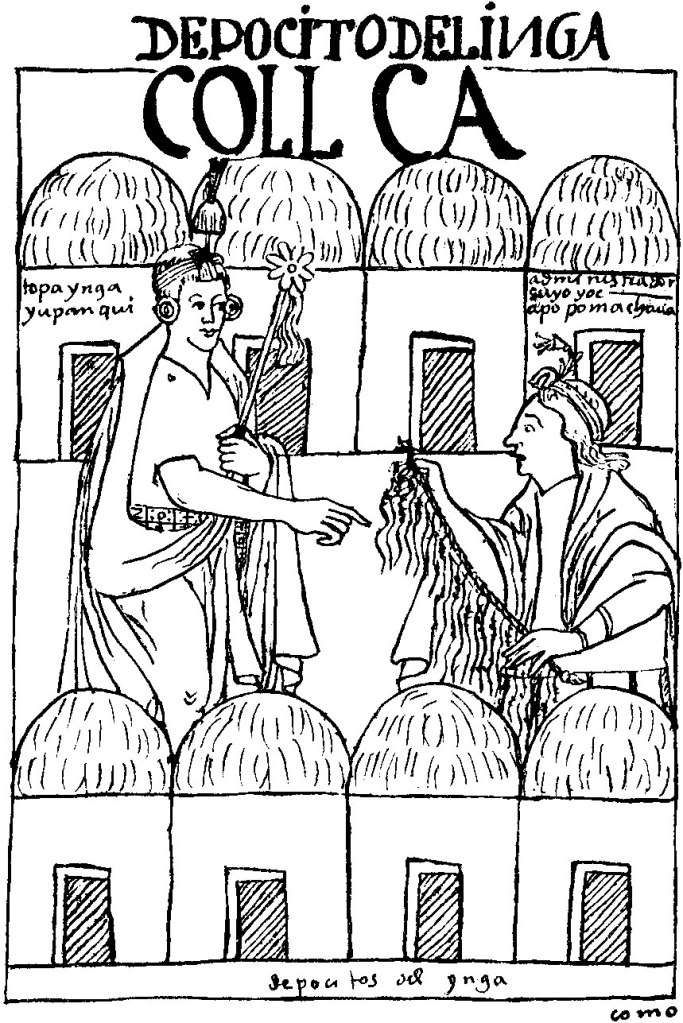
Alongside the Incan road system, quipus were another aspect of the sophisticated system of infrastructure established by the Incan empire. Even if you do not consider the knotted cords as writing, managing the assets of the individual communities and empire as a whole without them would have been incredibly difficult. With the quipus, not only were the Inca able to exert power over the communities with the information, they could determine the economic value of the community as a whole and survey production. With the widely utilized quipus, and their creators, the Inca would be able to properly calculate the amount of goods and services which would be taxable. Beyond monetary calculations, they would also be able to monitor the population on various levels. There were likely many different copies of one quipu in order to keep the governing bodies informed at the regional and national levels (Britannica, “Quipu”). Though today, quipu are the stuff of museums and gifts shops, several hundred years ago they were the foundations of an empire. They are an adaption to writing in a culture in which fabric and textiles were a significant piece of economic value. I mean, consider this, the Inca took a well-known and easily obtained resource, cords made of cotton or fabric, and they converted them into a method of documentation through which to manage their growing empire’s people and resources. That is pretty important, don’t you think?
The Quipu and Modernity
Let’s flash forward to a hypothetical future, shall we? You are an archaeologist excavating a site which clearly used to be a massive urban center. There are remnants of sky-high buildings, but the purpose for them is relatively unknown. Down at the base of what appears to have been a possible government building you find a chest, full of a strange organic material with markings all over it. You call one of the other excavators over to show them your interesting find, and they know exactly what it is. Paper! It is a material that quit being used a few hundred years back as technology became more advanced, and because of its composition, it is pretty hard to find. The markings are writings from some kind of governmental documentation, organizing all the residents of the urban center by various characteristics at the top, it names the location “New York City.” With this phenomenal find, you and your team now are able to make much more complete inferences about the role of government, the city’s makeup of people, and information about the different regional groups that once lived there.
Writing, in any form, was a clearly powerful tool in the past, and is just as much so today. It has the ability to convey adventures, emotions, livelihoods, and yes, taxes (can’t forget about those). Writing is how I told my mother that I love her from 3,480 miles away, while I was traversing Peru and trying to convince people not to overlook the ragged ropes in the back half of the Museo Larco. It allows us to transcend boundaries between nations and generations. Entire empires will rise and fall, people will be born and die, and writing will carry on. In five hundred years, when archaeologists are excavating your home, they may stumble upon your mailbox showing the house number assigned to you by our government. Granted, they may not understand what it means at the time, but that dingy mailbox puts historians and archaeologists alike one step closer to understanding our past culture. They may a copy of your favorite Stephen King novel. Writing shows what is important to our culture, even if that is a mailbox number or a piece of fiction about an evil clown that lives in a city’s sewer, just as the quipu showed what was significant to the Inca; economics, population management and their myths and stories. If archaeologists were to find a copy of the New York City census, like in your hypothetical future, should they know or be able to learn to read it, it would convey information through both the content and the method we used to document. That census would tell show future civilizations how we operated. It would show who lived where, what they did for a living, and how the government was involved and at what levels. This is precisely what the quipu were used for. Quipu, though they aren’t as beautiful as the indigenous inspired textiles, are important for the ways in which they represent the past and present Peruvian culture.
Join me in the present again, would you? Great. Peruvian culture is complex, constantly shifting to accommodate markets and government and so forth. Today in Peru, aside from the traditionalist alpaca farmer, you are not going to find quipus in your everyday travels. You have to seek them out. Quipus, and their survival throughout the centuries are a testament to the Peru of the past and are a symbol of the elaborate adaptability of other cultures. Western cultures questioned whether quipus were writing and if the Incan empire could truly be considered civilization without script. Yet, I would argue that quipus are exactly that. They are a piece of what made the Incan empire just that; civilization. There are not many of them lest, after Spanish colonizer began destroying them because of the fear they could be used to communicate in a revolution. Tell me, if you had to choose less than eight hundred books in the United States, what would they be? Do you think they would impact how people of the future view the United States as a civilization? Would you consider them important enough to suggest someone go see one of them in a museum, even if they couldn’t read it?
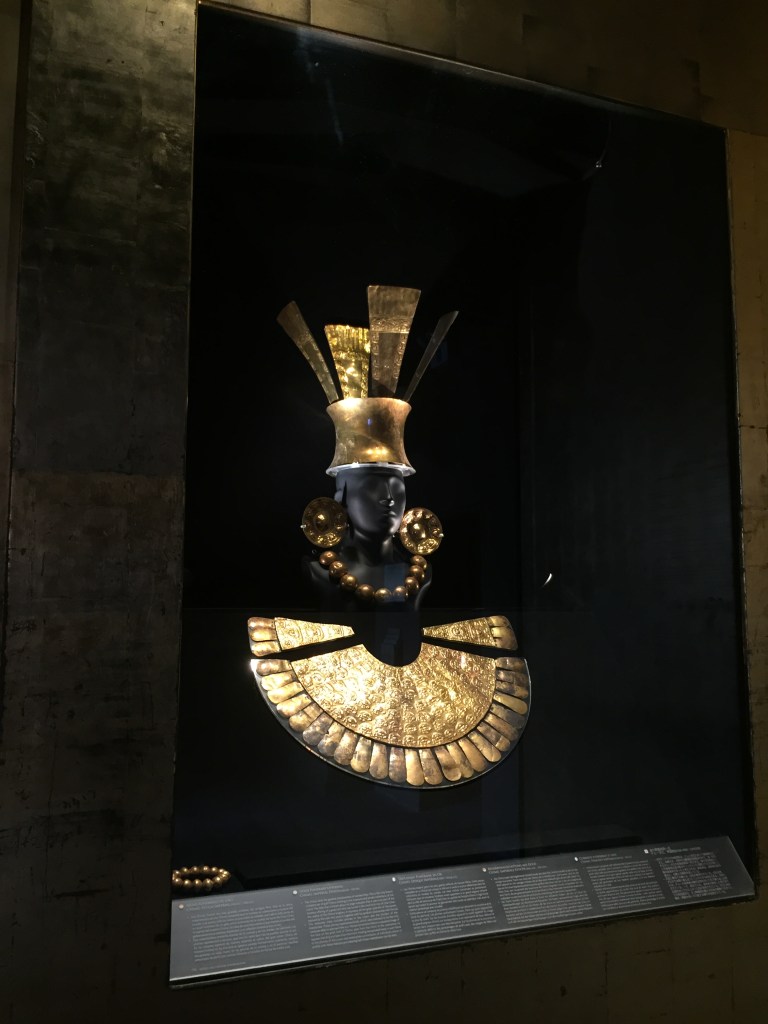
As a Peru traveler myself, I can tell you how quipu impacted my trip and why you must drop by and catch a glimpse of them. It isn’t every day that you see a five-hundred-year-old piece of writing. In museums, quipus are writing, art, archaeology, and history tied into one not-so-attractive artifact. Quipu are records of the lives of past people, composed by persons in power to manage their subjugates. They are works of art, crafted by the hands of a person who actually experienced the Inca. They are displayed to show they contents which may intelligible to the viewer but represent the history of Peru and how it operated. And finally, they are objects to be studied by archaeologists in order to better understand all the people who came before us. Essentially, what I am trying to say is: go see them. Gaze upon wonders of the past. Don’t forget to look in the corners of the room, at the drab artifacts, because sometimes those are the ones most steeped in history. Those are the ones sometimes most worth looking at.
References
Cartwright, Mark. “Quipu.” Ancient History Encyclopedia. Ancient History Encyclopedia, 08 May 2014. Web. 18 Jan 2020.
Childe, Vere Gordon. The Urban Revolution. Verlag Nicht Ermittelbar, 1950.
DAltroy, Terence N. The Incas. Wiley-Blackwell, 2015.
Luistro, Roland. “Lima – Museo Larco Quipus.” Flickr, Yahoo!, 9 Apr. 2018, http://www.flickr.com/photos/rluistro/40438136725.
Map: Inca Road System, ARTstor.
“Quipu.” Britannica Academic, Encyclopædia Britannica, 6 Apr. 2015. 0-academic-eb-com.library.uark.edu/levels/collegiate/article/quipu/62304. Accessed 20 Jan. 2020.
“Quipu.” The Hutchinson Unabridged Encyclopedia with Atlas and Weather Guide, edited by Helicon, 2018. Credo Reference, http://0-search.credoreference.com.library.uark.edu/content/entry/heliconhe/quipu/0?institutionId=5281. Accessed 14 Dec. 2019.
Schmidt, Paulo, and José Luiz dos Santos. “The Application of Inca Khipuas an Accountability and Managerial Control Tool.”Revista Brasileira De Gestão De Negócios, vol. 19, no. 66, 2017, pp. 613-626.
Urton, Gary, and Alejandro Chu. “ACCOUNTING IN THE KING’S STOREHOUSE: THE INKAWASI KHIPU ARCHIVE.” Latin American Antiquity, vol. 26, no. 4, 2015, pp. 512–529., www.jstor.org/stable/43746244. Accessed 20 Jan. 2020.
 Indigenous Ways in Peru: Postcards from Students