By: Katie Strickland
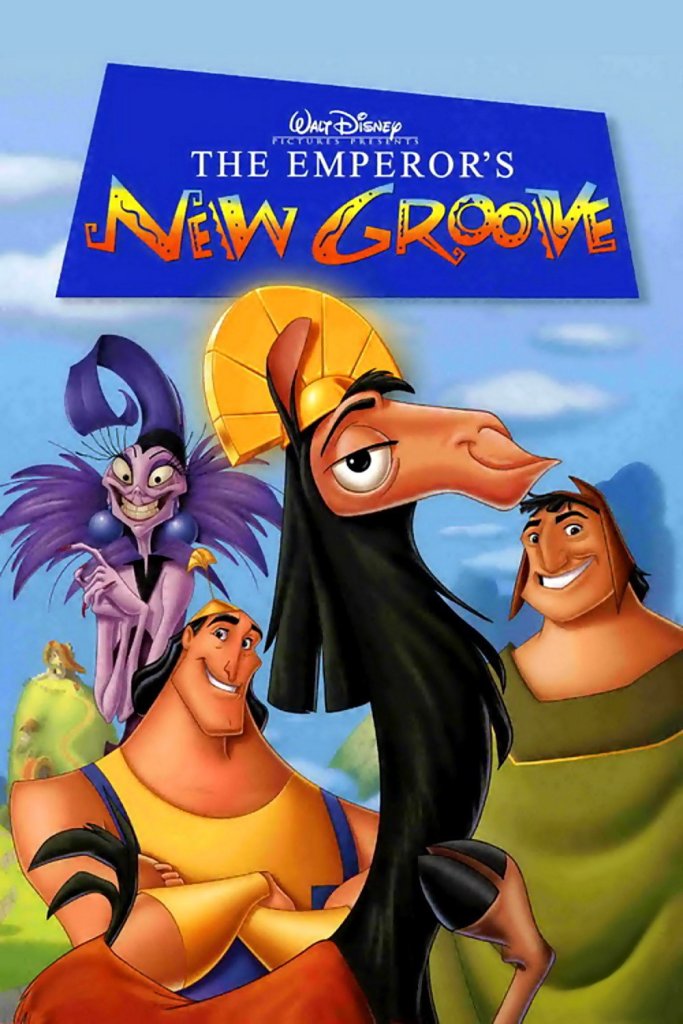
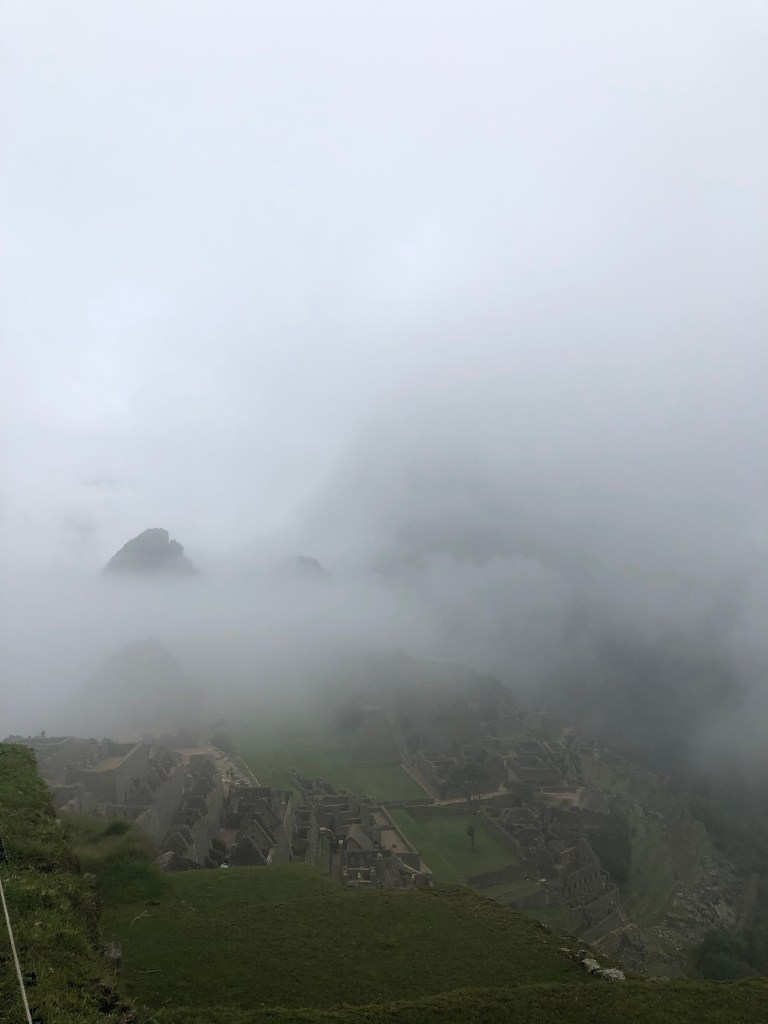
Prior to our first pre-departure meeting for the “Indigenous Ways in Peru” Honors Passport Study Abroad, the Inkas and their associated empire were almost a myth to me: a mystical entity that, while bearing truth in its being, was also associated in my mind with visions of adventurous grandeur, lost paradises, and Indiana Jones-esque sentiments of legend and lore. Sixth grade world history had informed me of Francisco Pizarro’s seemingly effortless conquest of the last Inka Atahualpa and his empire holdings at the time. Movies such as The Emperor’s New Groove caricatured the Inka into a kid-friendly story, cartooning the dynamics of the Andes. While Western power phenomenon such as the Roman Empire and the British monarchy were definitive, nuanced institutions, the Inkans formed almost a blob in my mind’s mental history: a blob with hazy edges, yet somehow featuring a collage of textbook images of stone terraces, feather headdresses, and Machu Picchu. Mystery was crafted through ignorance like a heavy-hanging fog over a ruin.
Just as my lack of knowledge played into the initial obscurity of the Inka, it also led to an all-too-easy oversimplification of the empire as we began to try to conceptualize the empire in history. On one end of a power dichotomy, the Inka were a strong people and a robust institution. Covering land now spanning multiple countries in South America along the coast of the Pacific Ocean, the Inkas were not people to me: they were a monolith of power, defined by their conquests both physically and politically and with origins as mystical to me as their current existence. Opposing this image of Inkan might was the other end of the dichotomy, on which features a weak and sickly empire which readily falls to the Western brains and brawn of conquistador Francisco Pizarro (whose name is mainly remembered by middle school history students due to its resemblance to a popular food item). In the face of European adversity, the Inka were to be relatively unable to defend themselves, depicted by many as the culmination of a longer process of deterioration of the Inkan Empire. Its dissolution was merely inevitable, with its conquering being seen as a natural process of the organic political process.
Either evaluation of the Inka leaves much to the reader’s imagination as it oversimplifies the true nature of the empire’s existence, an empire whose descendants still assign relevance and meaning to even today. One of our jobs historically when entering this endeavor was to find the complex, thoughtful, and layered middle ground between two ill-defined poles of thought. Who really were the Inka and how does their identity then, both as a people and as an empire, continue to hold relevance for indigenous peoples, particularly those of Peru, now?
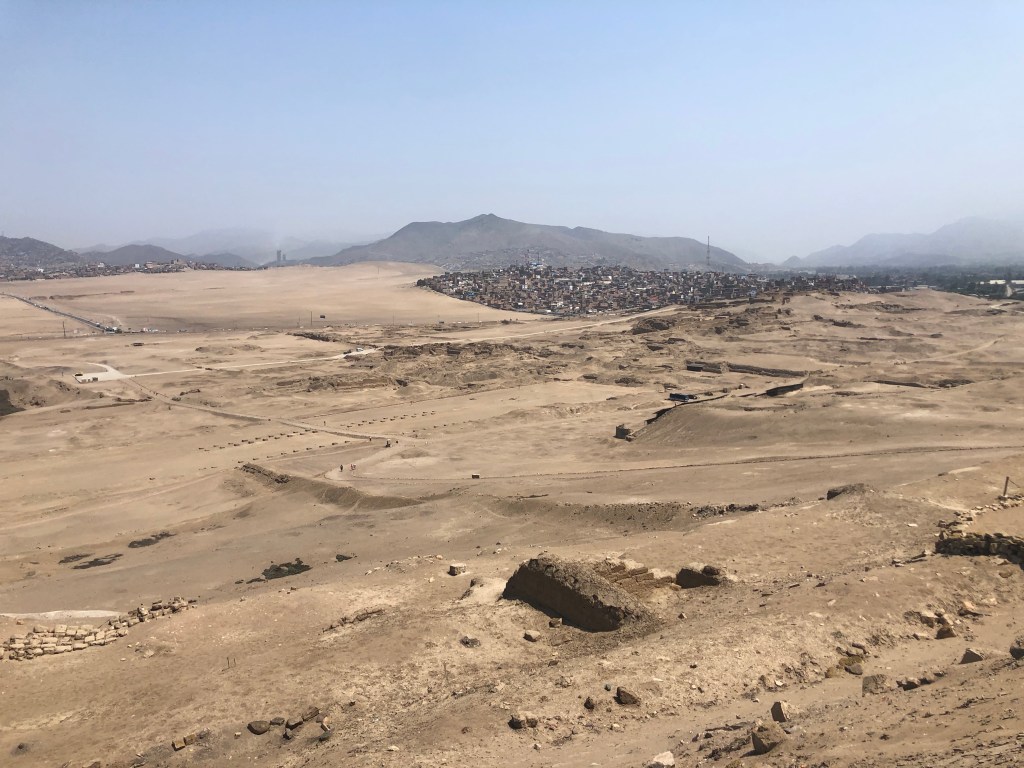
In my humble opinion, I believe Pachacamac, one of, if not the most, important Andean and eventually Inkan ceremonial centers in the empire, is the key to revealing and understanding this aforementioned complexity of the Inkas. It is here that we see how indigeneity has roots and finds its application, even without people, homes, or physical ways of life being present there.To many now (or at least to many in our group when our bus pulled into the site’s parking lot), Pachacamac looks like a bunch of dirt moved and shaped into indistinguishable slopes and platforms. The only shade you would be finding here was provided by your own hand, in many instances. Yet, this sandbox holds the key to understanding the strategy of the Inka, the political mind which allowed them to build their empire as quickly as they did, and it lays out how those same attitudes and strategies are still present in indigenous life today.
In order to fully understand how dirt can really have meaning, I must first go back and give a grand, swooshing overview of how the Inka themselves built their empire, framing Pachacamac in the proper context it belongs in: a powerful exception to many of the conventions utilized by the Inka. So, without further ado, allow me to present my brief, hopefully comical (*please laugh*) guide to Inkan empire building!
Katie’s Guide to Building an Empire: Inka Edition
Purpose in People
In building an empire, it is indeed important to consider military strategy, the amount of weapons you have stockpiled, all of the logistics that actually go into the physical act of conquest. However, if you do not have the manpower necessary to intimidate people into surrender or engage them in conflict if they do not, then the empire you are building will consist of only one thing: yourself.
So, the linchpin to your empire’s formation, what functions as both your greatest strength and most volatile variable, are the people you are able to recruit to your cause. People need to be inspired to leave their jobs and follow you, convinced that the purpose you are fighting for is one worth rallying themselves around and putting their literal lives on the line for.
For the Inka, that purpose was “Tawantinsuyu,” meaning “Land of the Four Quarters” or “Realm of the Four Parts.” This word was more an idea, an idea of a Inkan empire whose space had meaning. Almost like a South American manifest destiny, the idealization of the physical space of the empire gave any soldiers who joined the Inkan cause, whether they had volunteered or had been initially conquered and then forced into service, a ‘something’ to fight for, a something that was physical and was quantifiable. This idea of Tawantinsuyu, or a united land for the Inka, still lasts as a rallying cry to this day for Inka nationalists, an emblem of a time where the Inka Empire traversed current state boundaries in its empire’s mighty height of being.
If I don’t sound like a business professor by this point, with talks of employee morale and buying into the product you’re investing in (in this case, the empire), than something is wrong. While the Inka were working in a much different setting of both time and place than today, the variable of people and the tendencies/instincts of humanity (i.e. tendency towards community, towards the most beneficial side of a cost-benefit analysis, and towards a purpose and cause which they believe in) have remained relatively constant.
The Myth of the Conqueror
When I say the word conquest, what idea comes to your mind? Is it two opposing armies meeting on a field in battle formation, waiting with bated breath for hand-to-hand bloodshed to ensue? Or is it of a town on fire, with a mysterious conqueror on a horse watching over from a ridge, flag rippling in hand? Whatever you imagine, the basic themes probably involve, in no particular order: chaos, violence, blood, and decimation.
Remember my quick spiel about getting people to buy in to your empire, allowing them to believe in your purpose? Destroying someone’s village and livelihood in a conquest is no way to breed good will and inspiration among a people; in fact, all you are doing is sowing seeds of discourse which will eventually sprout into branches of resistance, rooted throughout your holdings.
The Inka recognized this fatal trap for their empire, a recognition which allowed them to gain most of their land holdings and complete most of their conquering effectively within the span of thirty years, crafting Tawantinsuyu over the course of one century. Instead of a blanket sweep of violence, the Inka became sparing with their sword, discarding the myth that a conqueror had to be brutal and senseless. Rather, the Inka ‘read the crowd’ and catered to the audience they were trying to subdue, resulting in three distinct approaches to empire-building which were designed to fit the specific situations they were encountering in other communities. Just as a Lego house can only be built sturdily with the different pieces which fit each other specifically, so too could a community only be acquired through the proper techniques to fit that specific, unique group of people. The Inka were like Play-Doh, molding themselves into various models to be effective. In this way, the mystical monolith of the Inka, the two-dimensional version depicted in world history textbooks, gains depth and complexity through the recognition that the Inka weren’t just blind forces moving across wide swathes of now-South America. They were calculating, they were strategic, and they were effective; and, the ways in which they achieved their goals, honoring Tawantinsuyu, reflects that.
Cutting out the Cancer
When doctors encounter a malignant cancerous tumor in a patient, the first and most pressing operation to perform is an excision. Malignant tumors have the potential to metastasize, that is, to have cells break off from it and spread through the bloodlines to other parts of the body, planting and growing their own malignant tumors there. Combating this requires the entire tumor, or as much of it as possible, to be removed from its host organ in an attempt to stop the spreading of cancerous, harmful cells to the rest of the body before the growth becomes uncontrollable and eventually disrupts central, vital functions for living.
To the Inka, this same approach was used for those communities they wished to conquer who posed to much of a threat to the empire if they were added in as is. If volatile communities were merely annexed without any form of restriction or precaution being taken to ensure that volatility was controlled, the Inkas would basically be welcoming a malignant tumor into their empire, only asking it politely to not spread and naïvely hoping for the best.
Rather than play this waiting game, the Inka utilized such circumstances as these to justify the previously discussed method of bloodshed into forced submission, an excision if you will. Take for example, the Huárco people, who lived in the Cañete Valley near modern-day Lima, Peru. When the Inka were approaching their communities, obviously hungry for expansion, the Huárcos decided that they would not just surrender, but would have to go kicking and screaming into the imperial fold if the Inkas wanted them so badly. Kick and scream, they did, as the Huárcos fortified their territories, rallied their troops, delivered three years of fighting to the Inkas. A final surrender on the part of the Huárcos would then result in the complete massacre of the chiefs and other high-ranking, influential people, effectively and violently knocking out the Huárcos’ capacity for resistance. The malignant tumor’s ability to spread resistance and cause faultiness within the empire had been tamed through the bloody approach reserved by the Inka for special threats which couldn’t be tamed.
Molding the Lego Block (i.e. Surrender and Assimilate)
For the majority of communities which the Inka spread into and claimed, the type of conquering they utilized was less one of ‘clearing shop’ and cleanly sweeping away any mark of the previous community, and more one of working with the conquered peoples and their already established cultures and conventions, personalizing their approaches in order to cater to what each community necessitated in order to assimilate them into Inkan society. This approach was often implemented in communities who might have shown slight demonstrations of resistance, but who relatively easily surrendered and only showed a minimal capacity for unrest.The goal was not total annihilation, but of transforming the physical aspects of a community to something distinctly Inkan, hoping to inspire a conversion of the mental/emotional through physical reminders of Inkan presence closely associated with benefits to the people. Just as the Inka closely sculpted their building stones to fit together so tightly, not even a pin could be stuck in the rocky seam, so too were communities molded into Inkan prototypical Lego blocks, enabling the empire itself to fit together tightly in one seamless Lego masterpiece, one Tawantinsuyu.
Such changes often fit a model, to steal a slogan from the Roman Empire, of Panem et Circenses. In order to gain and hold the people’s trust and pacify them into Inkan rule, conquered peoples were often offered a multitude of new resources and benefits through their membership in Tawantinsuyu, just as the Roman people were offered free food and entertainment through their Roman membership and allegiance.
New perks included the building of new, distinctly Inkan infrastructure and architecture around conquered communities, physical reminders of Inkan presence and permeation of the atmosphere. New roads connected benefitted not only the empire through the fast transportation of troops during outbreaks of violence and resistance, but it also gave the communities within Tawantinsuyu channels of communication through which they themselves could move, communicate, and trade more easily, aiding both social and economic efforts. Other strategic actions involving the movement of people and places included the relocation of a people’s elites and nobles to large, Inkan urban centers such as Cusco, subsequently diluting out any form of power a community had and exercising a lighter version of the excision of a malignant community as mentioned in the previous section.
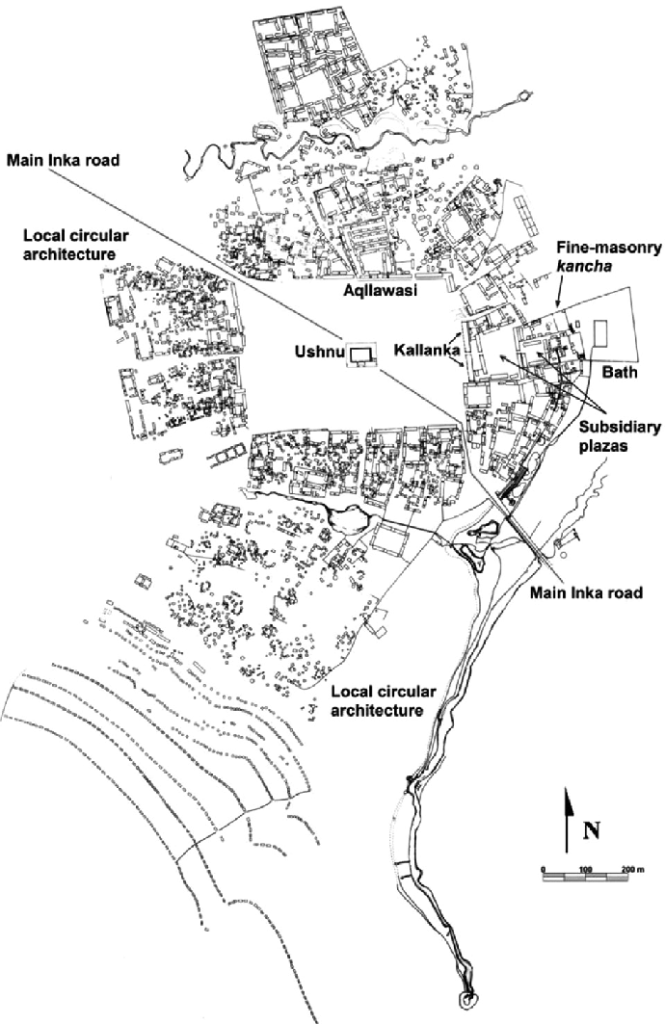
Even within communities, spatial changes by the Inka in the architecture and layout of a village made sure that the people who were allowed to continue living in their previous homes prior to Inka occupation were still aware of the Inkas’ power to manipulate their current political and urban structures. In several towns, the city core would be cleared to make way for a large pampa, or grassy plaza with a ceremonial ushnu, or platform, in the middle for any ceremonies featuring the Inka (ruler). Meanwhile, any town elites left after relocation were then concentrated into long, niched kallankas, or halls, which overlooked the pampa; residentially, even regular citizens were to live in Inka-style kancha homes, made of multiple buildings grouped together within one compound, allowing ‘Inka-ness’ to seep into even the most personal aspects of a person’s life, their home. Peoples now were to be physically uniform and dependent upon Inka ways of life, all under one Inka banner in the hopes that such constant, reminding exposure would eventually lend itself to a conversion of heart towards the empire. Such uniform Lego blocks of living were to fit together perfectly, again forming that sturdy, seamless empire.
The Exception
All of these explanations of how the Inka modified their landscape, both physically and politically, in order to fit their image and deactivate threats makes the Inka sound like perfectionists in a sense, always finding issues in everything but their own selves and looking for ways to modify new communities to make them the perfect match to be assimilated in. However, there were some societies, albeit a select few, that were exceptions to these rules and conditions: societies which showed almost no obvious traces of Inkan occupation, yet were known to be reutilized by them. Pachacamac, that sandbox that we discussed earlier, was one of, if not the most, important of these exceptions.
Pachacamac and the Indigeneity Underneath
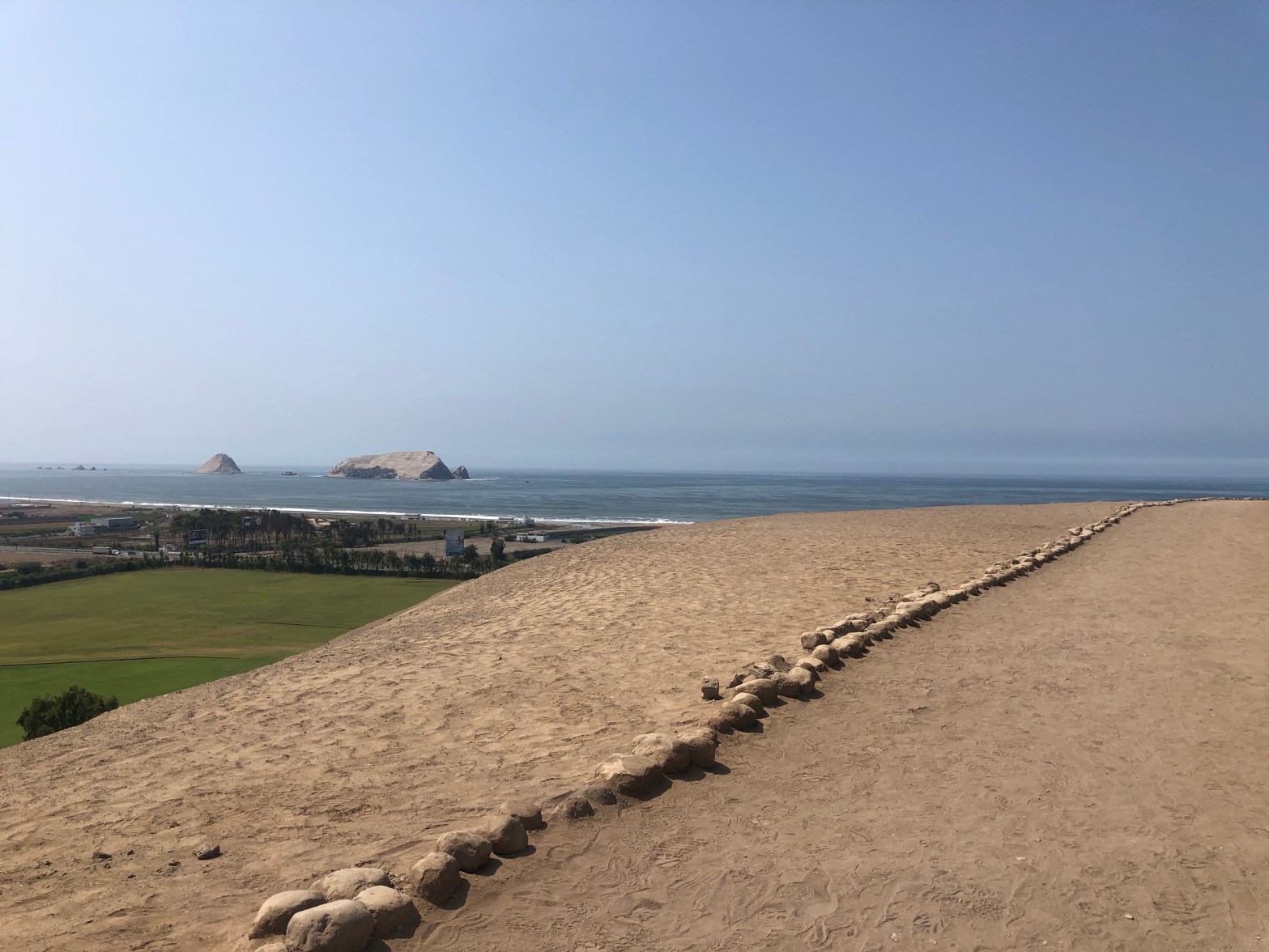
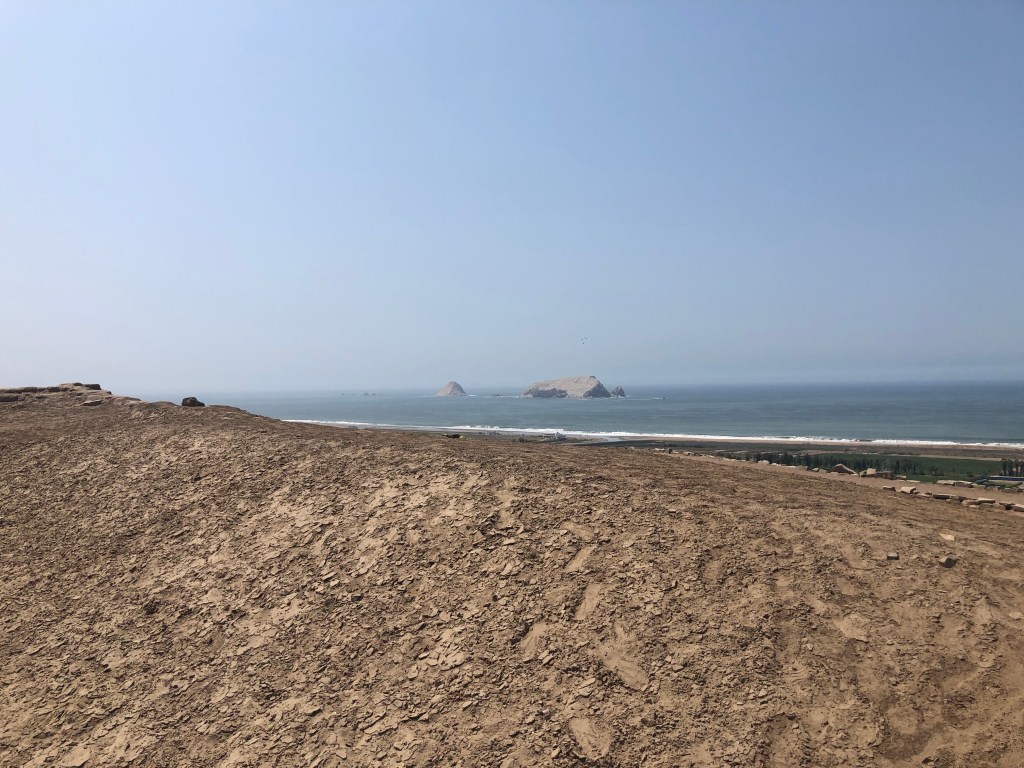
Pachacamac itself is a sight to behold, even without the historical context providing additional meaning to the site. Regardless of the archaeological significance, just arriving at the highest point of Pachacamac, the Inkans’ Temple of the Sun, to take in a panorama of the Pacific Ocean, featuring two islands in the hazy distances and a cool breeze sneakily rushing in from above the waves, is enough to make the June cover of any travel calendar. However, the Pacific Ocean is not just visible from one spot at Pachacamac; it extends all the way down the coast, bordering the entire western edge of South America. So, if the gorgeous views do not give Pachacamac enough significance to merit driving for almost an hour outside of Lima into the hot, shadeless plains of dirt, then what does?
I am an International Studies and Political Science major. My days are spent reading text after text on the political processes of countries, the contexts through which such systems were formed, and the climates through which they now operate. Pachacamac, when placed within the grand political schema of the Inka, represents not the overall might of the empire, but rather its prudence in strategy, a conscientiousness unrealized by myself prior to this study abroad (and still unrealized by many trapped in the clutches of a mythical ignorance of the Inka’s true nature).
The remarkable aspect, the reason that tourists and scholars alike can find value in Pachacamac, is not through the ability to marvel at stone ruins of Inka homes or analyze the spatialization of large stone terraces (giants’ steps, as dubbed by members of my group). Rather, Pachacamac’s significance comes through the absence of major physical manipulation or social assimilation. Instead of feeling the need to annihilate or physically assimilate, the Inka felt a brand of reverence towards Pachacamac, a centuries-old seaside ceremonial center whose sacred nature, whose energy (an indigenous spiritual theme later emphasized by our Quechuan tour guide) stirred in the Inka a type of respect for the space.
This respect is evidenced as one walks through the space of Pachacamac. While little stands in terms of structures at the site (again: sandbox), the massive scale and grandeur of the site, with sweeping hills and formations of old pillars and walls tucked into mounds of packed dirt and mudbrick, allows for visitors even now to experience even a fraction of the awe the Inka must have felt upon arrival in the region. These ruins weren’t Inkan constructions. These were remnants of pre-Inkan temples and ceremonial sites, predating any Inkan conquest and obviously not being majorly razed or changed after the fact.
In fact, what makes Pachacamac unique is truly its absence of major Inkan manipulation of space. Instead of implanting themselves right into the core of the region, the Inka adapted; they took into account the spaces and power constructs already in place and prominent in the region and mapped themselves onto the existing and local rather than crafting their own. An acknowledgement is made by the Inka of the merits of another system, simply changing the name of the previous site to its current title of Pachacamac and building its new structures, minimal in comparison to many of its other conquests, on the relative fringes of the center, not clearing big spaces for a pampa or implanting itself and its practices right in the center of life For example, the placement of the Acllahuasi, a niched complex meant to house upper-class girls training and being educated to either be priestesses or elite wives, is not within the center of Pachacamac, as one might assume such a place so important to both society and religion and so emblematic of the customs of the Inka within society to be on high ground, prominent both to the eye and to the gods in heaven. Yet, it is not until one looks down from a ridge level with the normal ground that one sees the Acllahuasi not in the center of the pre-existing city or on high ground, but tucked away into the side of a border valley. It is these types of spatial recognitions which only reveal themselves when you are standing in Pachacamac, the sun beating down, waves crashing in the distance and the same wind swirling about you.
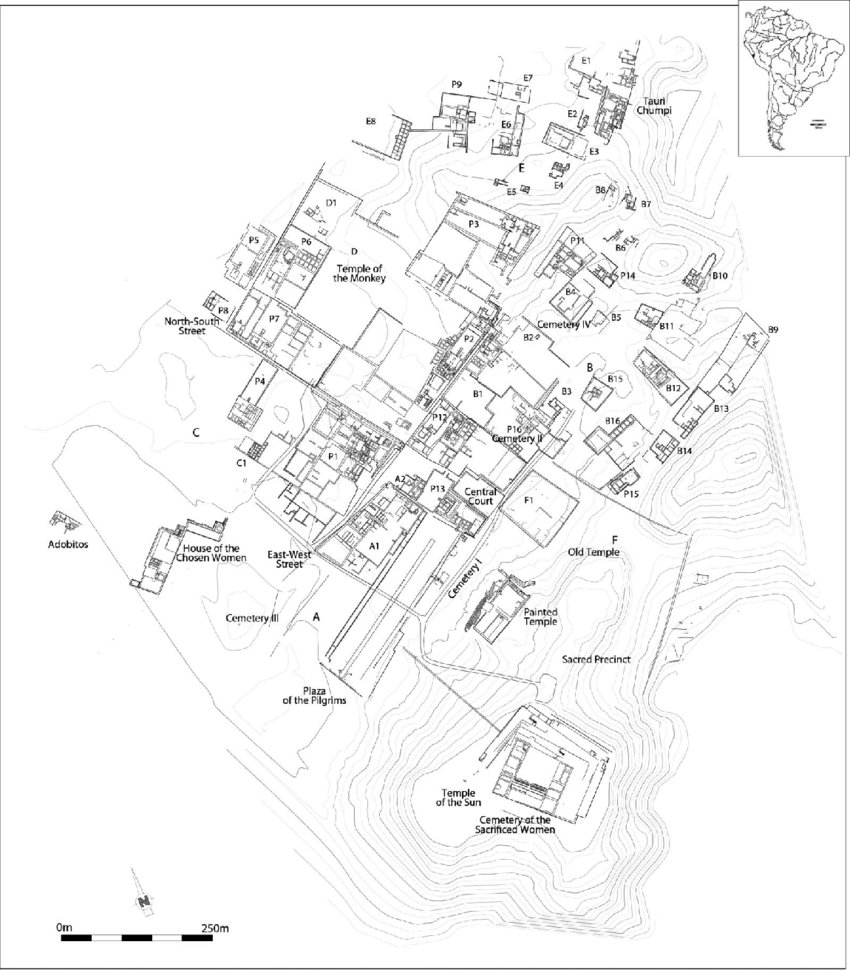
Seeing how the Inkas adapted to to their conquests, how they took the space of Pachacamac, recognized its already revered reputation with pre-existing societies, and decided to incorporate it with the acknowledgement of its already effective power/spiritual structures rather than erase its rich religious history as a point of pride, gives modern scholars, and even the average Joe, not only a look inside the complicated political mind of the Inkas, but a look also at the current of indigeneity flowing throughout the site. A current characterized by adaptation to the cards one is dealt; an energy that recognizes the dignity in other ways of life and that isn’t afraid to join a new practice or tradition into the fold like a new square onto a quilt of cultural heritage.
Indigeneity was a term difficult for me and my classmates to define on our study abroad because indigeneity and indigenous ways cannot be summarized into a tangible object or specific physical qualifiers that can be checked off like the instructions on building the Mouse Trap gameboard or the ingredients that go into a recipe. Indigeneity was a spirit, an attitude, a resolve connecting together community after community, generation after generation in a spirit of resilience, of maintenance of traditions and heritage through the means available, yet also of an openness to change, of the progress of time, and of the sustaining of a people through a new age. Indigeneity applied to the Uros families living on a floating totora island in Lake Titicaca and to the Taquile family who used iPhones to film their little cousins presenting traditional Taquile clothing. Indigeneity applied to Jacínto performing an age-old ritual at the top of Pachamama on Amantaní and to the same Amantaní family Jacínto was member to that utilized the foreign-originated eucalyptus in their traditional cooking of pachamanca. And, the case of Pachacamac, indigeneity is evident not simply in the archaeological ruins present on the site, but in patchwork quilt of assimilated, conglomerated culture evident there which would have, and still does, represent a meaningful whole to the Inka and others, despite differing origins.
All in All
In conclusion, did my the backs of my knees get sunburned during my trip to Pachacamac? Yes. Was the view from Pachacamac my first time ever seeing the Pacific Ocean? Also, yes. However, the true value from this sight, and the true reason that I believe that seeing this site is crucial to understanding indigenous ways, especially in Peru, did not come from its calendar-worthy panoramas or its terrifyingly high UV Index, but from its blending of physical space with political and religious significance. Through glimpsing at Pachacamac through these lenses, by putting this site into the proper historical context which honors its meaning for not only the Inka, but for all who utilized this site, we can begin to make sense of the sandbox. Pachacamac is not solely about one Acllahuasi or one Temple to the Sun, but rather a testament not only to the artistry of the Inkas in crafting their empire, but to the spirit of indigeneity, of persistence and cultural hybridity, underlying the whole of it, a spirit sustained to this day in the inheritors of Tawantinsuyu and all other forms of Andean society.
References
(While my blog post never makes a specific reference, most of my explanations and conclusions not supported by my own observations have been in some way, shape, or form informed by or synthesized from the following:)
Branch, Nick, Francisco Ferreira, Millena Frouin, Rob Kemp, Colin McEwan, Frank Meddens, Gabriel Ramon, Cirilo Vivanco, and Katie Willis. “Introduction: what is an ushnu?” The British Museum, 2010, https://research.britishmuseum.org/research/research_projects/complete_projects/featured_project_inca_ushnus/what_is_an_ushnu.aspx. Accessed 10 Dec. 2019.
Cartwright, Mark. “Pachacamac.” Ancient History Encyclopedia, 13 June 2016, https://www.ancient.eu/Pachacamac/. Accessed 8 December 2019.
Davies, Nigel. The Incas. Boulder, University Press of Colorado, 1995.
Dillehay, Tom D. “Tawantinsuyu Integration of the Chillon Valley, Peru: A Case of Inca Geo-political Mystery.” Journal of Field Archaeology, vol. 4, no. 4, 1977, 397-405.
Doutriaux, Miriam. “Power, Ideology and Ritual: The Practice of Agriculture in the Inca Empire.” Kroeber Anthropological Society Papers, vol. 85, 2001, 91-108.
McEwan, Gordon. Pikillacta: The Wari Empire in Cuzco. Iowa City, University of Iowa Press, 2005.
McEwan, Gordon. “The Rise and Fall of the Inca Empire.” Youtube, uploaded by TED-Ed, 12 Feb. 2018, https://www.youtube.com/watch?v=UO5ktwPXsyM.
“Pachacamac.” Current World Archaeology, no. 92, 22 Nov. 2018, https://www.world-archaeology.com/features/pachacamac-pilgrimages-and-power-in-ancient-peru/. Accessed on 8 December 2019.
Quilter, Jeffrey. The Ancient Central Andes. London, Routledge World Archaeology, 2014. Stanish, Charles. Ancient Titicaca: The Evolution of Complex Society in Southern Peru and Northern Bolivia. Berkeley, University of California Press, 2003.
 Indigenous Ways in Peru: Postcards from Students