by Arianna Kiaei
Well, 2020 is officially underway, and my decade has had quite the adventurous and insightful commencement! Through the University of Arkansas Honors College, I embarked on a journey to Peru a few days before the decade begun and celebrated a new era while observing and analyzing the “Indigenous Ways of Peru,” as the program was named. New Year is a special holiday, as it is one of reflection and forward-looking. The theme of looking at the past and making way for the future was one that came up many times. As I made my way through Peru, I was constantly reminded of the juxtaposition between the old and the new. To put it in the context of the course, we were frequently observing the indigenous ways, modern ways and all that is encompassed in the middle of the two.
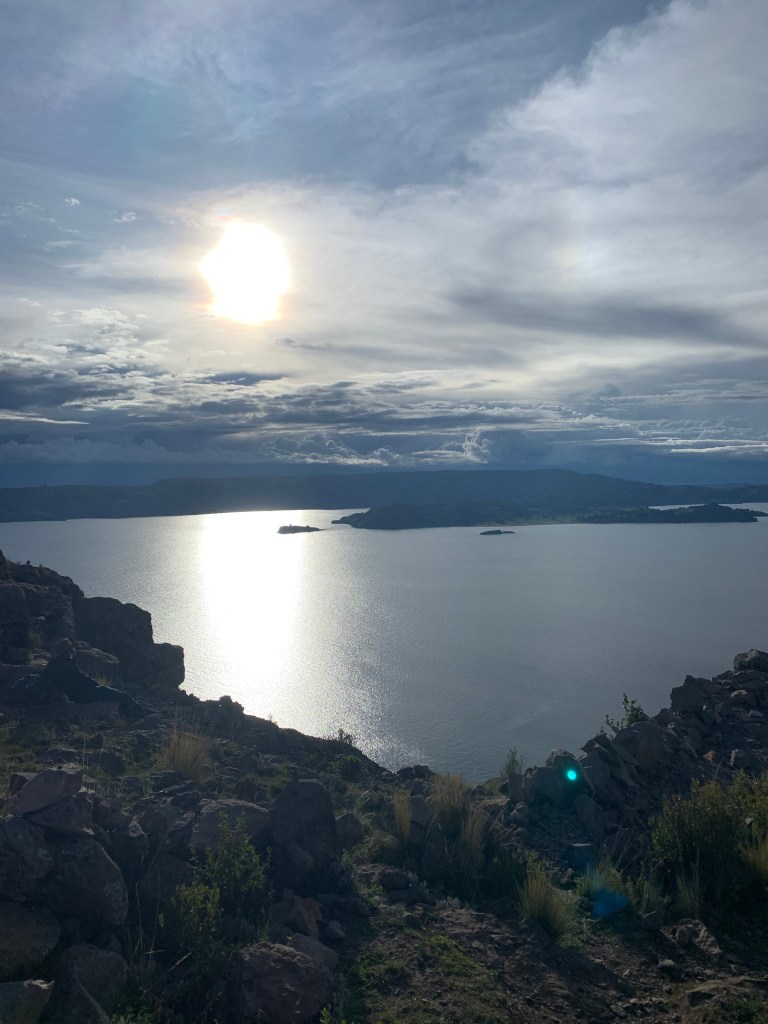
After acclimating to the altitude of roughly 13,000 feet above sea level in Puno, we took a two-day cultural tour of Lake Titicaca. Every student who participated in the study abroad was assigned to one location/landmark/museum that would be covered throughout the trip. Every student was to be the “expert” on the topic assigned. For me, my area of expertise became indigenous tourism specifically in the islands of Lake Titicaca.
Lake Titicaca is the highest commercially navigable lake in the world and the largest lake in South America. The island contains 41 islands, many of them densely populated by indigenous peoples that either speak Quechua or Aymara. In fact, the Lake Titicaca region has been considered to be the birthplace of the Inca Empire. Thus, these islands have become the center of indigenous tourism in Peru.
There are many tour agencies that put together 2-day programs around Lake Titicaca, including the floating islands of the Uros, Amantaní Island, and Taquile Island. The tour programs put together what seems to be the ultimate “authentic” experience. Let’s dive in and see what those experiences look like.
Stop 1: A Pit Stop at The Floating Islands of the Uros

As we departed Puno, we first visited one of the Floating Islands of the Uros. The Uros are an indigenous group living in the wetlands and on the shores of Lake Titicaca. There are an estimated 320 families living on 44 floating islands. The Uros are famous for their cultivation and harvesting of totora, a highly productive and resilient reed that grows on the lake’s shores and is used to construct the majority of the population’s floating islands, homes, and boats. We stepped off the boat and onto the totora foundation that makes up the specific island we visited. We were greeted by Roger, the president of the island, and the 5 families that make up his extended family. He gave us a demonstration on how the community members build the foundation of the island using the totora reed. During rainy season, they have to replace the flooring about every 15 days, otherwise they refloor every 20 or so days. Roger taught us how to call the birds they hunt, told us about farming trout, and showed us their modes of transportation. They had two different boats. One of them was their basic boat the community uses daily, and the other was what they called the “Mercedes Benz.” The Mercedes Benz was purely for the tourists. After the demonstration given by Roger, we were taken to an area full of totora. The most interesting aspect of this experience was when Roger described their “old ways of life” as opposed to their “new ways of life” now that tourism has entered as part of their culture. In the past, the Uros lived and hunters and fisherman. They hunted the birds that circulated the lake, and the fished what was around them. However, as tourists took a liking to their way of living, their priorities shifted as well. Now, they no longer use hunting and fishing as their main sources of income, and they no longer depend on those activities for survival. Now, they rely on making crafts to sell to the tourists, and making sure their “Mercedes Benz” is updated to take the tourists for a ride. As tourism as grown in this region, the totora reeds’ value as economic resources were given extreme precedence over their cultural value to the Uros. Once we came back from our tour of the totora, we were given the opportunity to shop around and buy handcrafted goods from the island women. The Uru women sang to us as we boarded the boat again, and headed on our trek to Amantaní Island.
Stop 2: A Night in Amantaní Island
Once we arrived to Amantaní Island, we were greeted by our host mother, Valentina, who escorted us to her house. Valentina immediately began preparations for lunch along with the other women in their household and Hacinto, our host father. We helped marinate the chicken and dig the pit to cook the potatoes. This, of course, is not the normal day-to-day life for their family. Because this was a special occasion, they were making a meal worthy of a special occasion. Normally, they would use the materials in the kitchen to cook our lunch. However, we were treated to a special preparation. The meal was called “Pachamama” which means from the earth. The earth pit we dug up shows how they use the land to create a feast. Throughout our time in Peru, we were constantly reminded of how the Incas and other indigenous groups really worked with the earth and manipulated land to show their power and all that they could do with what they were given. Seeing Valentina and Hacinto use a process once put in place to show the manipulation and knowledge of the land to cook a modern-day meal put the concepts of old and new into play. Our post-lunch activity was a steep hike with Hacinto, who presented a prayer and an offering at the top of the mountain. He welcomed us into his religion and showed us an important part of the Amantaní life. After our hike, we headed back to the house for dinner and festivities. We ate, we sang, and we danced until it was time to go to sleep. The case of Amantaní Island led to the domination on non-indigenous tour agencies and a resultant decrease in economic self-determination. The tour agencies present tourists with the opportunity to witness and partake in the lifestyles of indigenous communities.
Stop 3: A Day Trip to Taquile Island

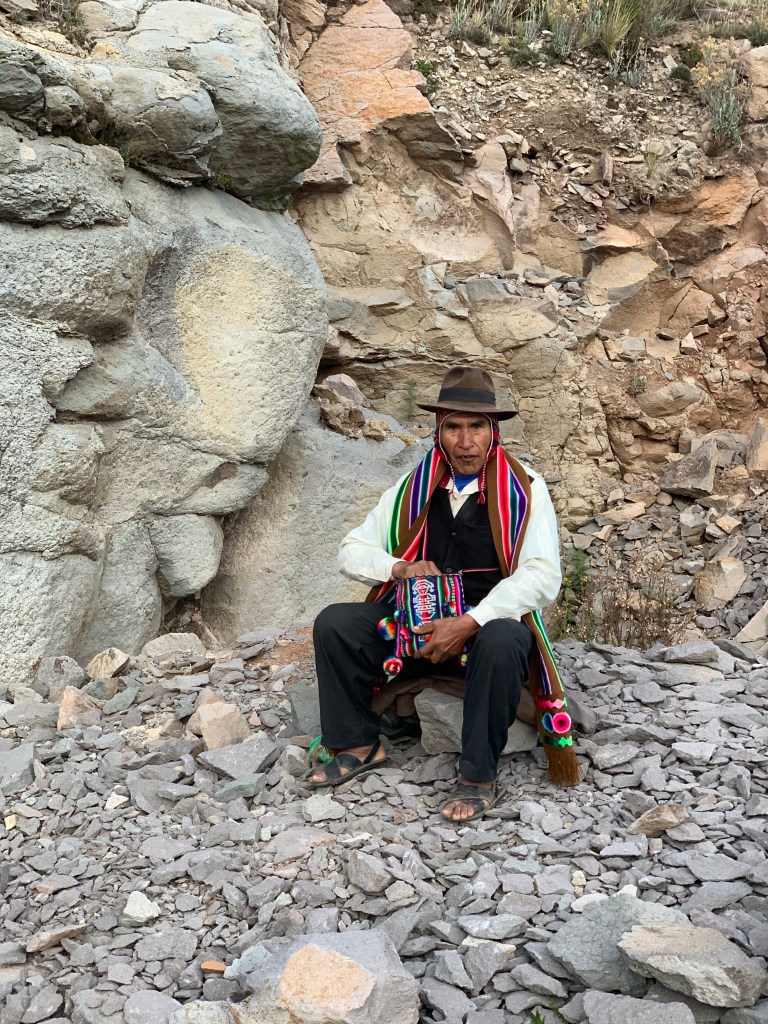
The next morning, we said our goodbyes to Valentina and Hacinto and made way to Taquile Island. While on Taquile Island, a family greeted us on top of the mountain. We were given a presentation on the different types of clothing and the correlation with their relationship status. As the relationship status change from single to courting to married so do the styles of clothing. Two members of the family, cousins actually, were volunteered to be the models. The boy was so embarrassed to be in front of us and share something so private to him, the process of courting a girl, to complete strangers. After the presentation, we were treated to a trout lunch with the most beautiful view overlooking the lake. As we walked back down the mountain to the dock, we saw a very similar situation in multiple different locations. Although it felt as if we had a very authentic experience, it was interesting to see all the other tourist groups doing the same thing along the mountain.
Sustainability: How Sustainable Are These Practices?
I think a lot about how great it is that these communities are able to put their cultures on display to share global knowledge while being able to capitalize economically on their practices. However, the sustainability of these current tourism practices gets brought up regularly. The introduction of tourism to an indigenous group presents opportunities for economic growth, increased education and, arguably, better standards of living. However, it also threatens defining elements of their culture and identity. Following the United Nation’s announcement of the Sustainable Development Goals, the idea of sustainable tourism came to play. Sustainable tourism attempts to preserve the environmental or physical, economic and socio-cultural attributes of the host community. While we were on our two-day excursion, I often thought to myself, “how sustainable is this for the community? If the tourists stop showing interest in this way of life, how will the community move forward?”.
Authenticity: Are We Experiencing What You Consider Authentic?
As you may have noticed, I have said the word “authentic” many times. But what really is authenticity? Authenticity is constantly being reevaluated and reimagined through processes of changing relationships between the actors that participate in the performance of an authentic event. As human beings, we have this fascination with learning the authentic ways that other people live. With tourism, the appearance and persuasiveness of authenticity is paramount to create marketability. The reality is that authenticity sells. Culture has become a way of transactional means and authenticity is what creates the transaction. It has become increasingly difficult to delineate reality from “unreality.” The fascination for the real life of others is an outward sign of an important social redefinition of the categories of truth and reality now taking place.
Let’s Make a Pros & Cons List …
Opportunities of Indigenous Tourism
As stated before, there are many upsides to tourism. The communities who participate in this industry have gained a lot, and are avid supporters of tourism. The first benefit provided by indigenous tourism is economic independence, which is thought to result in a higher degree of self-determination and cultural pride as the stresses imposed by poverty and social welfare are broken. Financial success is believed to facilitate cultural survival. Through the financial success, access to education systems are granted. These education systems provide essential skills and knowledge that can equalize the administrative capacity of indigenous communities with that of the dominant, surrounding culture. Essentially, it gives the community a leg up. Lastly, and most obviously, the tourism industry creates tons of tourist-based jobs. Creating local jobs in restaurants, stores, and entertainment complexes allows for more economic independence and potential for growth. Tourism has the potential to empower a community that has, like many other indigenous communities, been historically disempowered within a narrative of colonial oppression, state-endorsed inequality and lack of access to resources in a market-based economy. On Amantaní and Taquile Islands, tourism that is sustainable is founded upon community-control and facilitates the corresponding ability for self-determination.
Let’s Make a Pros & Cons List…
Threats of Indigenous Tourism
With all good comes some bad. While there are many benefits to tourism in indigenous, there are definitely many negatives with it as well. First of all, there is physical impact; there is the disintegration of physical sites to the erosion and collapse of native cultural traditions. In additional, the influences of increased financial capital and the introduction of mainstream, material-based, culture can have an abundance of physical possessions. It can create an environment in which the indigenous population’s economy is entirely dependent on tourist revenue since there is a lack of industrial diversification. If a community is considered a tourism-based community, that is all that the community will do. Each family or cohort will take turns hosting, and tourism becomes their lives.
Every Action Has a Reaction…
Socio-Cultural Modification
Tourism’s biggest criticism is the socio-cultural modifications that come with it. First of all, there is an unfortunate outcome of the lifestyles of those who benefit from tourism and who do not. This can lead to poverty reinforcement and further socio-economic stratification between the few enterprising elite who reap the immediate benefits from tourism and those who do not.
Have you ever heard of the term “Disney-fication”? Well, think about Disney World/Land. Think about how every single concept is blown up into an amusement park attraction or section. Well, cultures and communities often undergo the process of Disney-fication when their industries convert to tourism. Through this process, indigenous cultural traditions are transformed, and perverted into traditions of tourism and become mimetic representations of their original state. Here, we see indigenous heritage freeze, essentially, and simplified into these amusement park-like attractions where the primary function of the community is to entertain the tourists. When I think of this process, I am reminded of my experience on Taquile Island. The family took something which is such a small part of their culture nowadays, the clothing which describes one’s relationship status, and turned it into a two-hour lively presentation for our group, at the discretion of our tour guide. The boy said he only dresses in the attire a couple times a week, at most, and goes out into the pastures to meet girls. If he had not given that piece of information, we would have thought that the attire shown to us was everyday attire, worn at all times. Such a small aspect of their culture was frozen, blown up, and completely exploited for the benefit of the tourists all over the island. Here, we see the commoditizing nature of indigenous tourism. Through these actions, we are making culture transactional. And at this point, this is where authenticity is lost. However, we must be reminded of a good point my professor made while we were discussing this topic on Amantaní Island: what are we using as the definitions of authentic and sustainable? These two words are created, by us, to easily describe two phenomenon. However, one person’s perspective on what is authentic and sustainable can contains eons of differences compared to someone else’s perspective of authenticity and sustainability.
Closing Remarks
If you have a chance to travel to Peru, and experience the world of indigenous tourism like my group did in the Lake Titicaca area, please consider the following questions:
- Before arriving to Peru, what was your expectation of an “authentic” Peruvian experience. There are often conflict of expectations and notions of what should and should not be considered a core part of culture. Has visiting these islands fulfilled your “authentic” expectations?
- Is it authentic that we can do these types of touristy activities on the islands? Because of modernization and development of the tourist industry, do you feel that we have lost authenticity?
- Think about it ethically… By being consumers of their tourist transactions, are we hurting these communities or are we helping them?
- How does the tourism industry affect the intangible cultural heritage of the communities. Are they able to properly pass down their history and beliefs and attitudes even as their lifestyles are technically changing?
- What happens when tourists lose interest in the community? What is the impact for them since tourism is their economic lifeline?
- What can you do personally, as a tourist, to mitigate some of the risks to the communities? How can we educate other tourists?
These questions were asked to the group as part of a discussion while we were on Amantaní Island. We reflected on the indigenous ways of these groups and imagined what their lives were like before tourism came and became their way of life. We discussed their current situations, and what our impact is on their lives as spectators in their home. Finally, we looked to the future and discussed the economic consequences of the industry and what it is forecasted to be from our perspectives.
If you are lucky enough to visit the people of the Lake Titicaca region, I would wholeheartedly recommend it. Regardless of their industry, the region is full of welcoming families who are willing to put their lives and culture on display for educational (and fun!!) purposes. As I reflect on my time in Peru, I am grateful to those who let us in on their lives and allowed us to be a part of their culture for a short period of time! Cheers to the old ways that are finding their spaces in the modern world.
 Indigenous Ways in Peru: Postcards from Students