Inka use of Ollantaytambo

Over the last two weeks, I had the opportunity to study abroad in Peru. Through the Honor’s college, at the University of Arkansas, created a class about the indigenous ways in Peru. Now what do they mean by indigenous ways? Something I learned from my professors on this trip is you always need to define what you’re talking about, so how should we define indigenous ways. The way I would define it is traditional and original to the area brought together by common culture. I know that is a broad definition, but I want to make sure that it can encompass many different dimensions. Throughout Peru, there are massive amounts of history regarding indigenous people and their culture. From the alluring scenery in Lake Titicaca all the way to Chiciayo and Piura the history within people’s stories and experiences are priceless.

The one place I had the privilege to study and do research on is Ollantaytambo, located in the in province of Urubamba. Before I start I have to tell you how breathtakingly beautiful this site it. Pictures do not do it justice. It is mainly known to be an archeological site, but it’s also a town in southern Peru approximately 45 miles northwest of Cusco. It is located 9,160 feet above sea level. This elevation is actually higher than that of Machu Picchu’s elevation of 8,000 feet.

Currently, it is called the Sacred Valley of the Incas. The valley stretches from Pisac to Ollantayambo and it includes Machu Picchu. It’s one of the major tourist destination in Peru, which brings over 1 million tourists to the area. The town itself is located along to rivers the Patakancha river and Urubamba river. This will be more important later in the post.

Now why is this site important? Well, before we get into that let me give you some history of the site! First let’s break down the word. Ollantay was a famous Inka captain. He’s known for expanding the Inka’s northern and southern boundaries. However, he’s more famously known for his love story in which he falls in love and had an affair with Pachacutci’s daughter, Cusi Coyller. Ollantay asked Pachacuti’s for his daughter’s hand in marriage, but since he came from lower class Pachacutci declined Ollantay request. Because of their love he got thrown in prison and Cusi gave birth to their child. There was another account that I read stated that Ollantay broke out of prison to fight Pachacutci and ran away with Cusi. However, there is no confirmation that this is the truth. The second part of the word comes from tampu which means the “city that offers accommodation, food, and comfort for travelers”. More historical information of this site include that, Ollantaytambo was the royal estate of Emperor Pachacuti.  He was the 9th Inka ruler, and it known for the conquest the Cusco valley and more. Also he’s accredited for founding Machu Picchu, which is a symbol of Peru’s modern day tourism. One of his titles was “earth-shaker”, which people believes that is an appropriate title for him because he led the Incas to be one of the largest empires in the Americas. Clearly, he left such a lasting effect on modern day Peru. Most people know Pachacutci’s legacy because of Machu Picchu. However, one of the most important sites he built was Ollantaytambo, which is impactful back then and in present day. At first, it was his own personal estate from 1438-1471. Pachacuti lived here, worked here, and died here. In Inka culture, the new emperor or ruler would never live in the same buildings of the previous emperor. They either would add on another building or creating a new estate. Furthermore, no other emperor lived in his estate. It was actually turned over it his family and used for administrative spaces. Over the years, Ollantaytambo turned in being a temporary capital for the Manco Inka during the Spanish conquest of Peru.

Now, we fast forward a hundred years to 1536. The Spanish have been in Peru for a few years, and they have been in conflict with the Inka. In 1536 specifically, the Manco Inka defeat the Spanish at Ollantaytambo! From this point onward Ollantaytambo became a symbol of Incan resistance, even though the victory was short lived. After the victory they retreated to Vilcabamba, which is known to be the Lost City of the Incas. Fun fact number two, when Hiram Bingham, the person who discovered Machu Picchu, was rumored to be looking for Vilcabamba when he accidentally discovered Machu Picchu. That’s probably why people believed Machu Picchu held more significance than it actually did. What a fun little connection! Anyways back to the sixteenth century and to the Inka defeating the Spanish. Even with the Spanish having more advanced technology and help from marginalized groups, by the Inka, you would think they would’ve had the upper hand. Nevertheless, the Inka defeated them with slingshots and archers. Which shows their determination and perseverance while defending their land. That’s pretty incredible! They also had other secret weapons that helped them defeat the Spanish, which include their location and geography. The Inka are known to be very meticulous when building their sites. Ollantaytambo is located in the valley perfectly in between Machu Picchu and Cusco. This the only point where you can get to Machu Picchu for travelers. Well there is another “local way”, known as the Inka trail that starts in Ollantaytambo. As I said earlier, it’s located by the Patakancha and Urubamba rivers, which is a great natural defense line. The physical site itself provided a large number of defense properties as well. The terraces are an example of one of them. Think about it, these terraces are huge and trying to climb up and even flight on them would be extremely challenging. Imagine the Spanish coming through the valley on their horses. Then they come across Ollantaytambo and try to attack the fortress. At the same time, there are arrows and rocks flying everywhere scaring the horses and eventually the Inka win the battle. Instead of trying to match the Spanish, the Inka’s used the landscape and geography to their advantage, which lead to a short lived victory. Now you have a small glimpse of why this site is so important to the Inka during the 15th and 16th century.  

The site itself can be broken up into 4 main sectors. The most prominent feature is Temple Hill, otherwise known as the fortress.  However, only a small portion was used for military purposes. The main use was for religious reasons. It is said that is hill looks like a llama. Honestly, I didn’t see it at all.  You will find that most local tour guides will say that mountains, lakes, and buildings resemble pumas or llamas. If you ever go, please let me know if you see the llama. On temple hill, there is the Templo del Sol, which actually means temple to worship the sun. The sun is the second most important god the Inka worshipped, and at most Inka sites there is a templo del Sol. The temple itself is incomplete, and there is evidence that they were building this after Pachacutci died. This appears unusual because normally you wouldn’t add on to these estates after the death of builder. This suggests that Ollantaytambo was more than a royal estate.

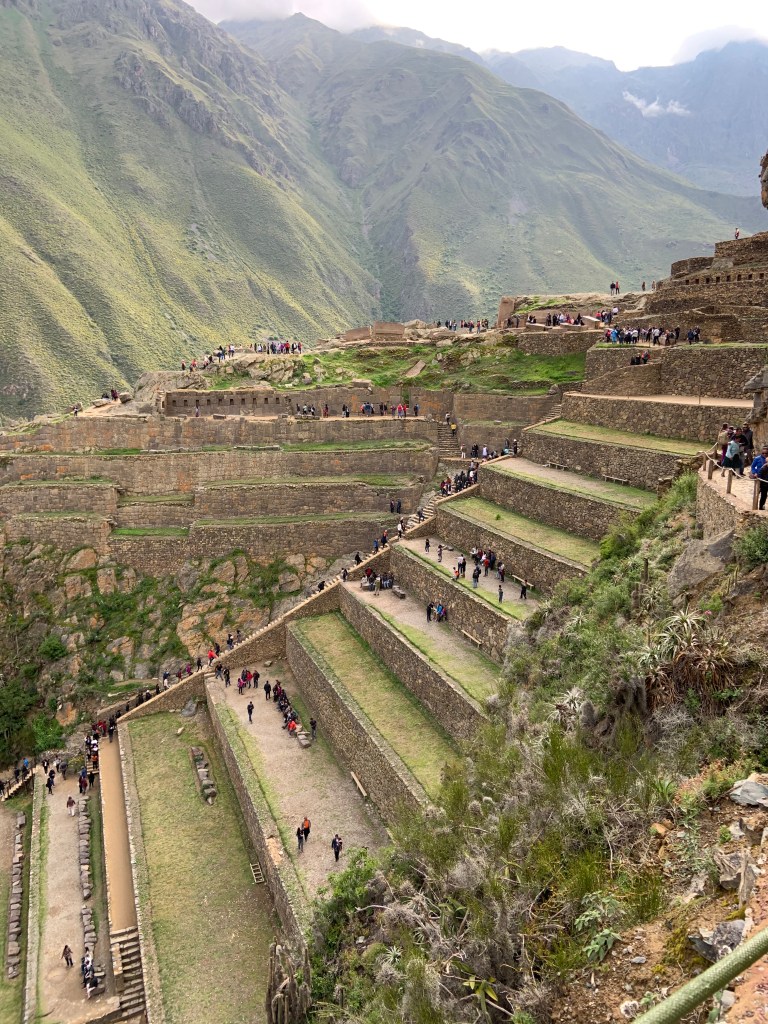
The next sector of this estate are the terraces. Now, as stated earlier the terraces were used as a mode of defense. However, that’s not it’s primary purpose. The main purpose was for agriculture. You are able to grow certain crops in climates were you weren’t able to do so in these climates. These terraces are some of the largest and steepest out of all the Inka sites. By creating these terraces, they would soak up the solar radiation during the day and release the rays at night creating microclimates better suited for growing corn, potatoes and other plants. The Inka people mastered building terraces not only for farming but to prevent their city form sliding way due to the excessive rainfall in the region. They also like the aesthetic of the terraces.

 Another sector would be the quarries, which is known as the Pinkuylluna at Ollantaytambo. These are storehouses located across from Temple Hill. They were built at high altitudes, where more wind and lower temperatures would occur which protected the commodities from perishing. A special feature called qullquas, a ventilation system, was created to supplement this effect. Specifically, the Inka used the original terrain to maximize the effect. They used the upside of the hill to pour grain into the windows and emptied them out of downhill windows. The main purpose for these sites was to store food. It’s important to show that you can provide substance to the people living there because why would you support a leader that can’t provide the basic needs of the people. That’s what Ollantaytambo did, provide food and safety for the people.

The last sector is the town itself.  It was built on an orthogonal layout with a central plaza in the middle. The plaza when built is expected to be as big as four blocks. Apparently, the east side was open, and it was surrounded by other buildings and halls on the remaining three sides.  The blocks on the southern half of town was built to the same design while buildings on the north were more varied.  Ollantaytambo has some of the oldest continuously occupied dwellings in South America. I hope this gives you a better visual of the layout of Ollantaytambo. I remember researching this place and it was hard to put together without physically being at the site.

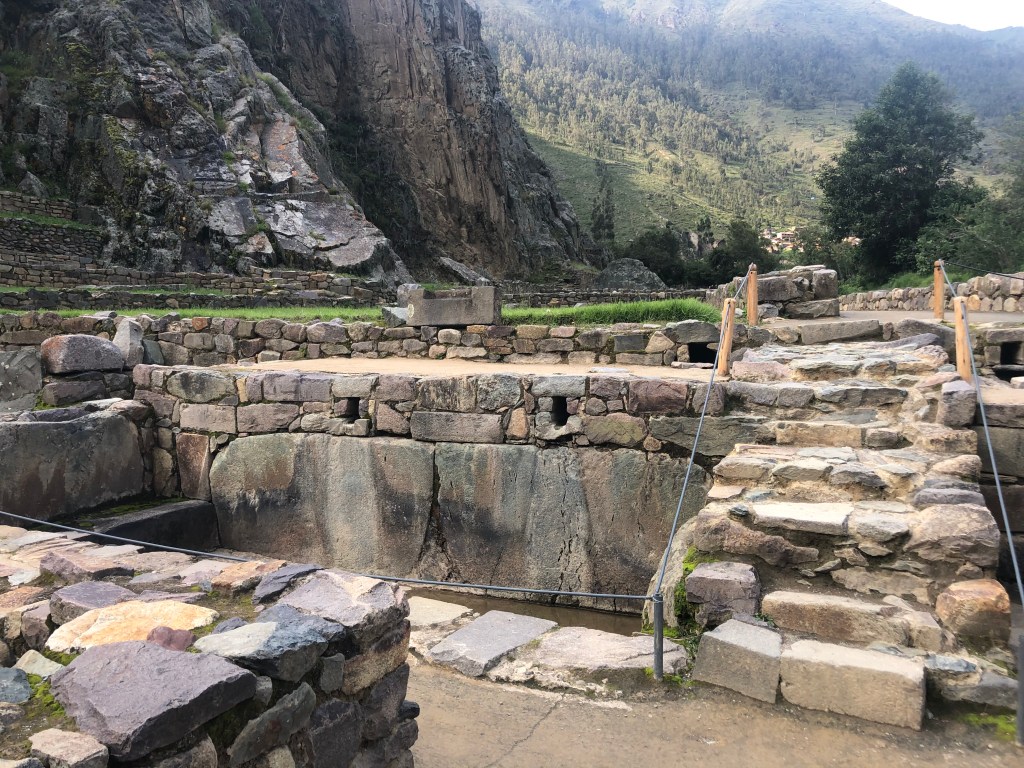
Innovation is defined as a “new method, idea, or product”. Innovation revolutionizes our world, and throughout history major events are marked by significant innovations. The Inka’s are known throughout the world as magnificent engineers. One of the main features of Ollantaytambo is the Incamisana temple. This translates to water temple. Water is a key element for the Inka. Their design of water systems was influenced by their strong beliefs in the power of water. It’s known to be the center of cosmology, religion, and agriculture. The engineering of this place is remarkable. Historians and Anthologist used reverse engineering to analyze the effects of this technology. They concluded that the application of law of physics, engineering principles, and basic knowledge of science were applied in building these systems. The majority of people that built this were natives from the area, especially Cusco. However, there is evidence that there were works all the way from the Lake Titicaca region. It’s important note that is technology wasn’t invented by the Inka. It had been developed by earlier Andean civilizations over many years. All started by the Wari and Tiwanaku people. Traditionally this knowledge was passed down orally, so it’s somewhat of a mystery of how it all got started. Furthermore, they did all of this without a written language. This is extremely different from western culture were we write everything down to have some kind of evidence of who built it. However, the Inka didn’t invent these things like a water system, roads, and terraces. The foundation was laid down by the Wari and Tiwanaku people, but the Inka just capitalized and enhanced those technologies. When the cotton gin was it wasn’t necessarily a new invention but it was an innovation. That technology impacted the world, and that’s why I find innovation extremely powerful for societies.

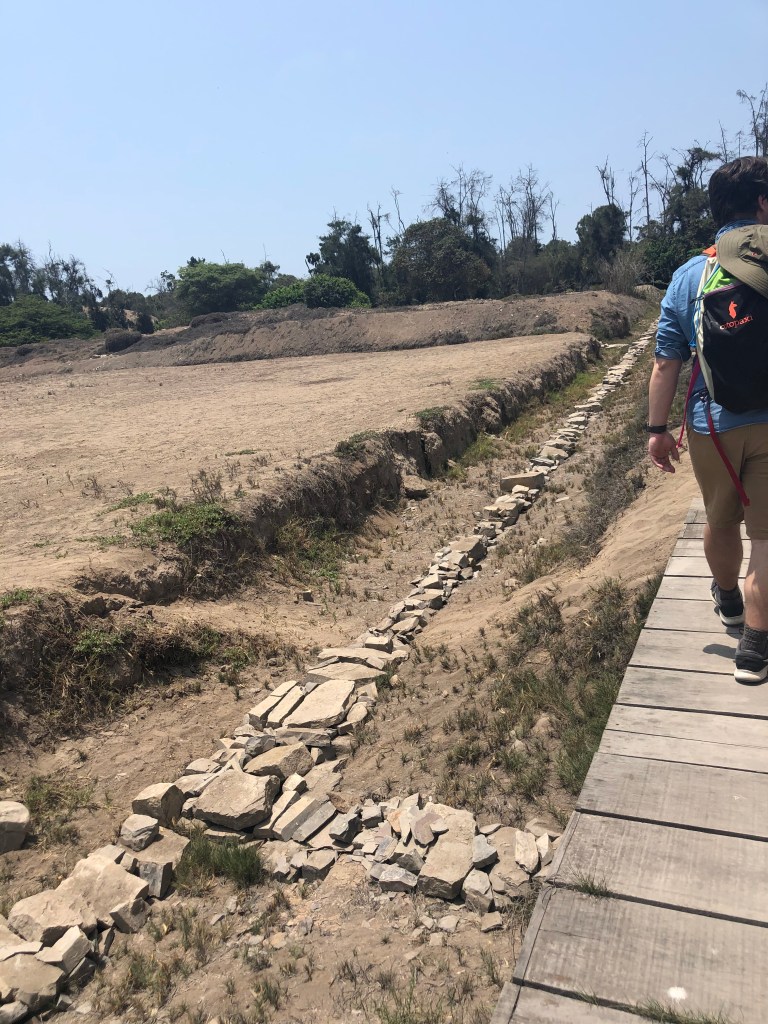
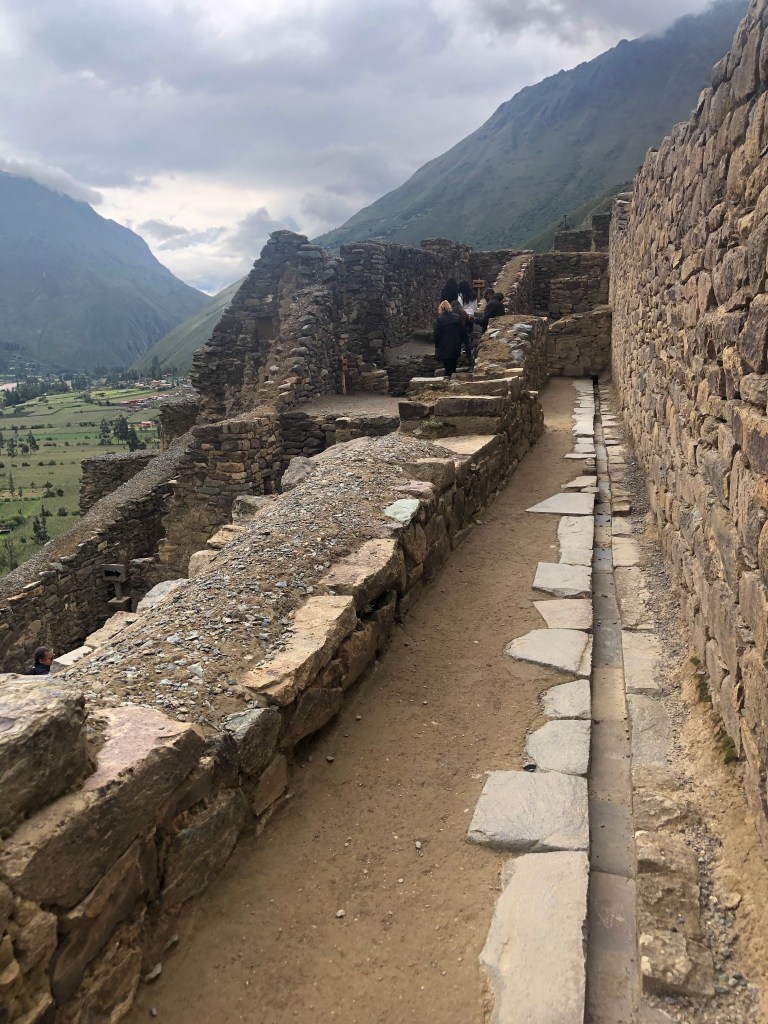
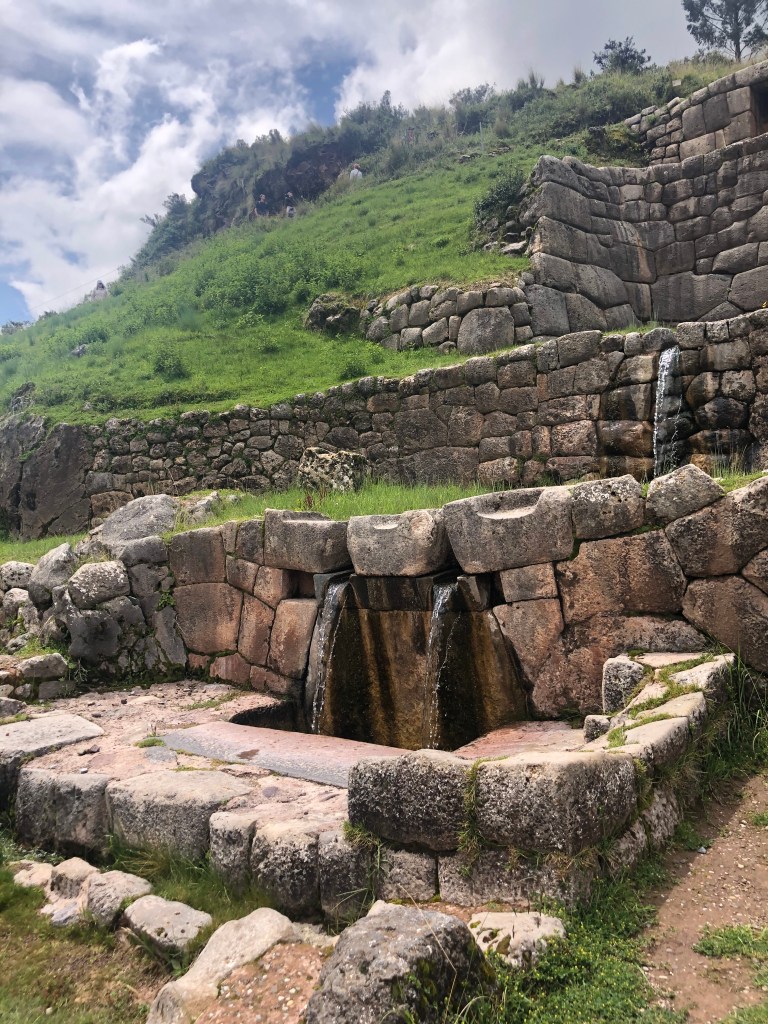
Now, think about physically trying to build this technology. The engineers really had to be created. However, the Inka are excellent at using their environment and that’s what the engineers used to their advantage. They used the mountainside of the valley because it was the perfect place of gravity water supply development, and they used underground water conduits to channel water. Through this mechanics we still have flowing water today. For an example, the Bath of Princess is still running today and its symbol of their knowledge, power, and religious significance. This fountain is to be said to be the most significant ancient fountain in all of Peru. Now where did they supply the water for this temple and fountains. Well there are two sources of water the Inka’s used. The first came from Lake Yanacacha, which brought water to Temple Hill. Then the other source was the Rio Pumaphaqcha, which had pre-existing canal routes that was supposed to reach the eight terraces. However, this canal was never fully completed.

This water source and canal brought a source of life to these temples to give people a place to worship and offering. This is a piece of evidence that demonstrates that the Inka were invested in their religious beliefs, and Ollantaytambo is an example of the ritual control of water. Since it’s located between two rivers it uses its location to show the supernatural and real power of this site. Controlling water was made possible by forcing water in the hydraulic works of the Inka. It demonstrates the absolute power of the Inka and right to rule.

Now let’s take a step back and talk about their religious beliefs. The Viracocha is considered the creator. He made humans on an island in Lake Titicaca, and taught them how to “live and assigned them tribal dress and customs”. According to legion he traveled through the land he created and handed over his creation to “lesser gods” to take care of “human affairs”. Then there is the Inti, which is the second most important behind Viracocha. He is the sun god. The Inka referred to themselves as Intip Churin which translates to children of the sun. They believed that they were on a mission from the sun to “conquest”. That’s was the sun had a temple at most locations the Inka were located. The most important temple for the sun is the Coricancha located in Cusco. The next god is Illapa which is the thunder god that controlled the weather. They would pray for rain to sustain them on agriculture. Then we have Pachamama, she was considered to be the mother earth goddess. She was the god of fertility and the protector. I could go on and on, but there is one more that is important to the site of Ollantaytambo. The god, Mamacocha, is the Lady Sea. The Inka believed that the sea was the source of all water, and the Pacific Ocean is a goddess. Then the streams and springs were daughters of the sea. That’s just an overview of Incan beliefs, which explains why certain elements were influential to them.

            As you can see that Ollantayambo is more than a royal estate. It is considered to be a stronghold of the Inka and one of the most important historical sites for the Inka. We have seen how the Inka defeated the Spanish, brought in elements of the sun and water, they shaped the earth in the way they wanted to. We have seen how it was important in the 15th century to Emperor Pachacuti, and during the 16th when they defeated the Spanish. However, why is it important today? Why does an old Inka site impact people today? Well, it’s a place where we can understand Peru’s history. You can’t understand a place without knowing where it has been. That’s why we need to know about Ollantaytambo. It gives a better insight to the Inka’s. Like I said earlier they don’t have a written account’s, so the next best thing is physical site. Also you can see how all Inka sites interconnect. Ollantaytambo is the starting point for Machu Picchu, every site has a temple del sol, and there are similar architecture styles in all Inka sites. As you can see that even though the purpose has changed but it changes and adapts with the times. Just like people and culture.

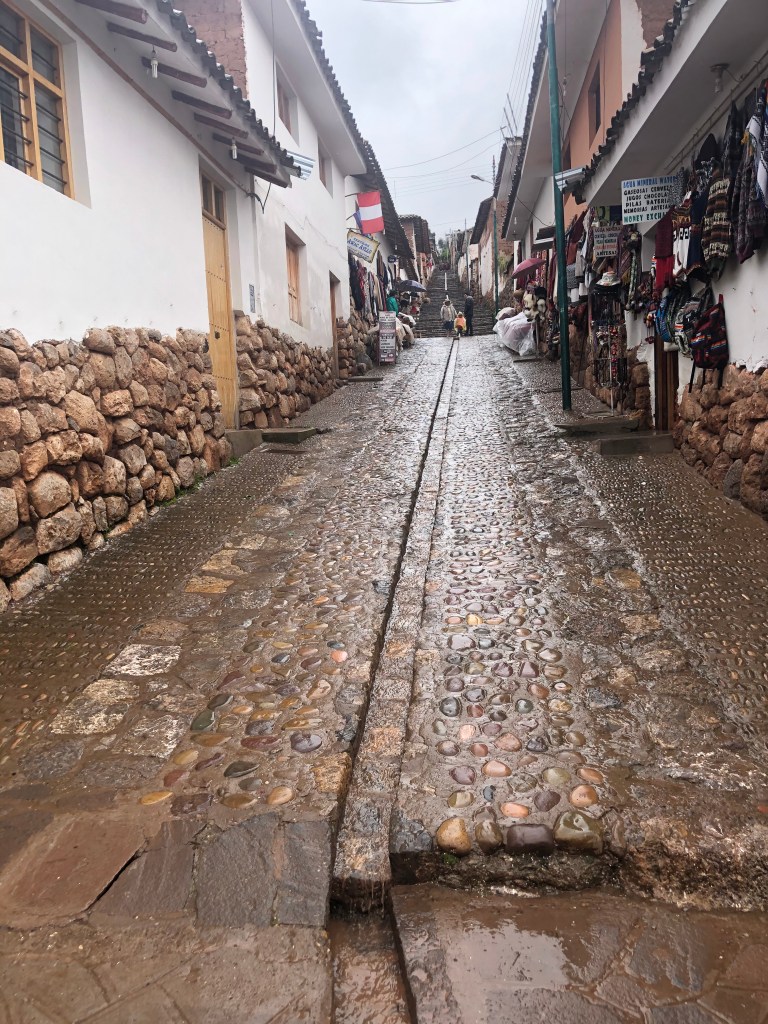
            My personal experience at Ollantaytambo was amazing. It was one of my favorite places we visited while in Peru. I would take into account that my point of view maybe a little skewed. Furthermore, I wasn’t expecting Ollantaytambo to be set up the way it was. It’s hard to imagine what is going to be like through written accounts and pictures. When we were driving up the narrow stone path to get to the town part of Ollantaytambo, I wasn’t expecting it to be on a little plateau. Then throughout the city you can see the old foundation of the water canals, and you have a plaza in the center of town. It quite cute. However, it’s very westernized with tons of restaurants, shops, and hostels. Especially Italian restaurants. Then you walk up to the actually structure, and it’s huge and steep. I seriously wasn’t expecting it to be that steep. It was like a 90-degree angle. Let me tell you climbing up that hill wasn’t easy but since there were so many people at the site it gave me a break while climbing. That’s another thing, Ollantaytambo was extremely busy. Like I haven’t seen any other site in Peru be that crowded. For some reason I wasn’t anticipating it to be that crowded. In my head I believed people only wanted to see Machu Picchu. On the other hand, I didn’t realize this is the stopping point that headed to Machu Picchu, so it makes sense that people would stop by and see this site. Here are my tips if you ever end up going to Ollantaytambo. I would do you research or join a touring group. I know that doesn’t sound appealing, but there aren’t a lot of signs explaining what everything means. Having someone tell you some of the history and layout would be extremely beneficial. I would also bring your tennis shoes and layers of clothing. Your experience won’t be enjoyable if you aren’t dressed properly. Lastly, keep an open mind and question everything. That’s the process of truly learning and having an authentic experience. I hope you enjoyed this post, and next week I will be talking about the effects of tourism!
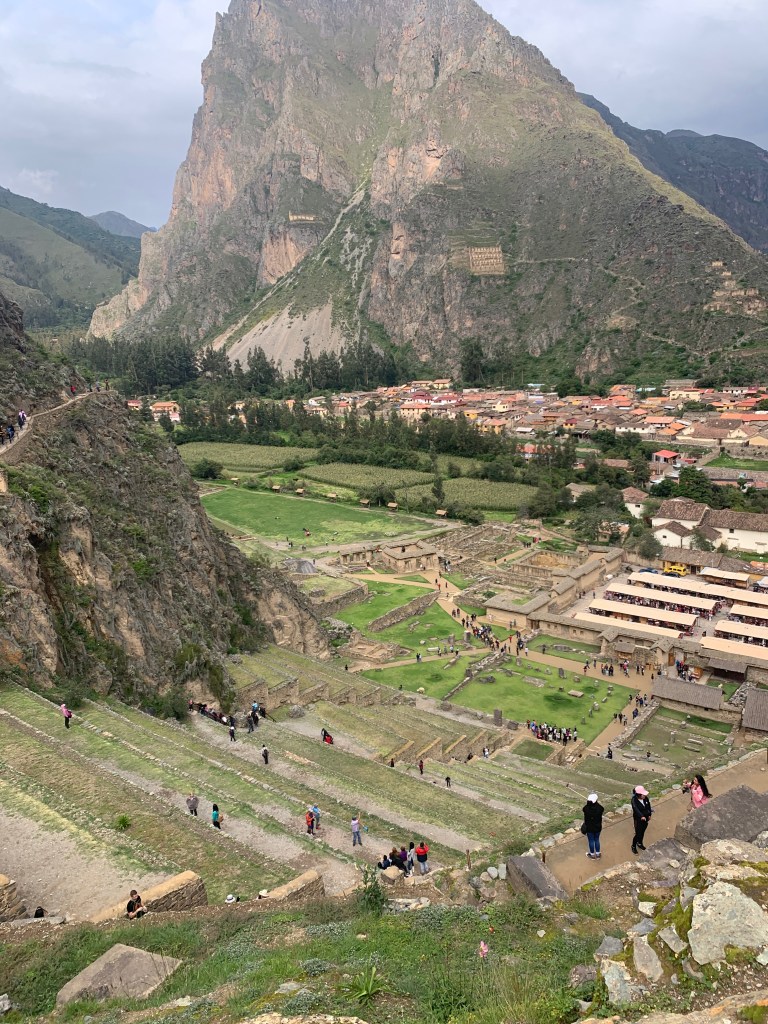
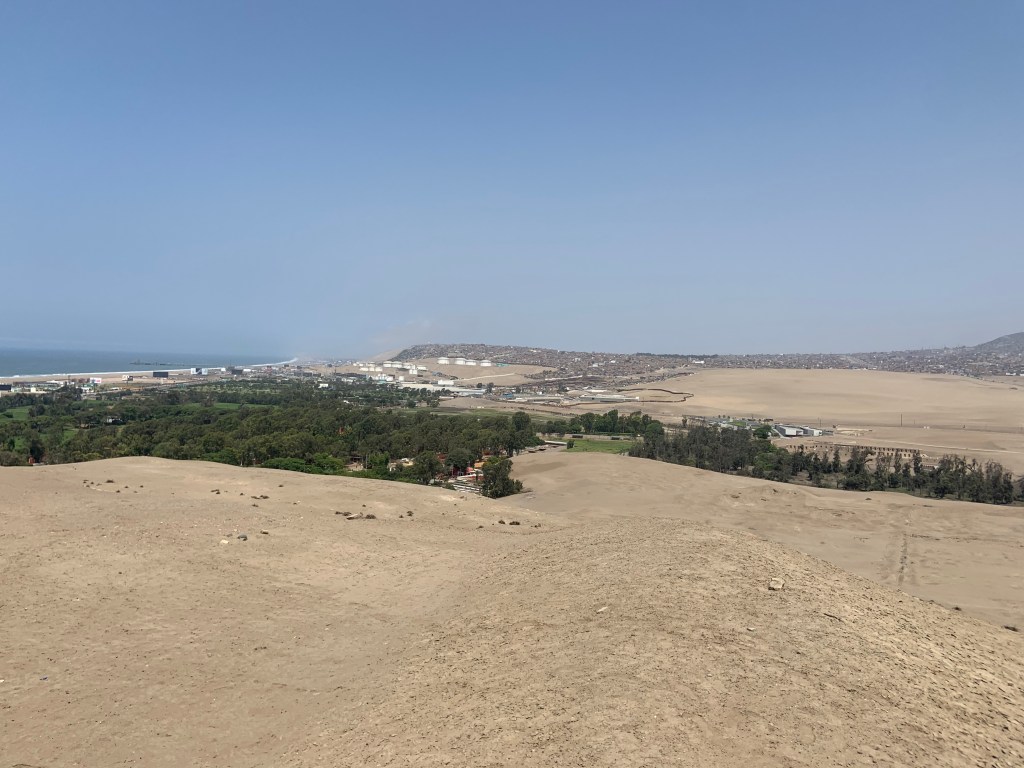
View from Temple Hill

Cranial Deformation and the Evolving Peruvian Identity

by Sadie Beeman

 When people first learned I was studying abroad in Peru, their initial response would be, “Wow! So you’re going to Machu Picchu, right?” My answer would be the expected yes, with their next thought nearly always being, “So what is your class about?” My response to this question nearly always caught them off-guard. “Our course is called Indigenous Ways in Peru. We’re going to look at indigenous culture in Peru in the past and present, but my specific focus is cranial deformation.” Cue the wide eyes and loss for words. I was astounded at how many people felt uncomfortable with the topic and questioned my choice. I set out to discover why in Western culture we are so off put by the practice and find why the practice remains important today. Cranial deformation may appear to be a mere snippet in the long history of Peru and Latin America, but it maintains relevance through its motives and remains a valuable insight into indigenous culture. Cranial deformation and its remnants reflect the methodology of humanity’s desire to cultivate a sense of identity. Travelers tend to focus on the bucket list sites and cities, yet I believe that by taking the time to understand cranial deformation, the history surrounding said sites becomes clear.

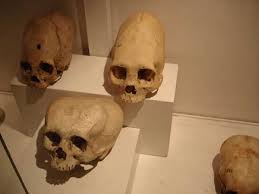
The history of cranial deformation in Peru and other surrounding regions dates back over 10,000 years to around 8000 BC. The resulting head shapes were not uniform which suggests that there were different types of cranial modification. However, each permanent deformation method would typically last until the child reached approximately three years old. It is not concretely known whether each type of cranial modification had a distinct meaning, but researchers have come up with numerous plausible theories. One suggests that the differing techniques were associated with an individual’s ayllu (Hoshower, 161). An ayllu was a kinship unit in Andean society. Therefore, a certain head shape could serve as an obvious symbol of group affiliation. There is little evidence suggesting that gender played a role in the decision; cranial deformation appears to have been a common practice in raising children regardless of their gender (Torres-Rouff, 333). This introduces the idea that parents were responsible for creating a permanent somatic identity for their children. Head shape was an irreversible attribute, and the shape (or lack thereof) that parents chose would follow the children for the entirety of their life. It is similar to the concept of a name; it is intrinsically tied to your identity, yet you have no input in its decision. Another possible motive in cranial deformation could be making a claim to be superior within the population. For example, non-elite parents could give their child a head shape connected to a more amiable societal group, therefore allowing their child to gain significant benefits. In the Tiwanaku population, multiple types of cranial deformation were found which suggests another theory in which head shape was based on class distinction. With the aid of ceramic paintings, it has also been assumed that individuals with no deformation belonged to the priestly class.

Deformed skulls at the Museo Inka.

There are a few populations where researchers have determined the exact type of cranial deformation used. The Colla wound tight fitting wool caps onto infants’ heads to mold them into a distinct circumferentially long shape (Hoshower, 147). Alternatively, the Palta had a long skull that was flat in both the front and back. This shape was achieved by pressing the child’s skull with two boards and tightening them until effect was sufficient (Hoshower, 147). Cranial deformation also tended to vary based on geographic location. Along the coastal region, a truncated pyramid appearance was common, whereas a circumferential deformation was common in the Altiplano (Hoshower, 148).

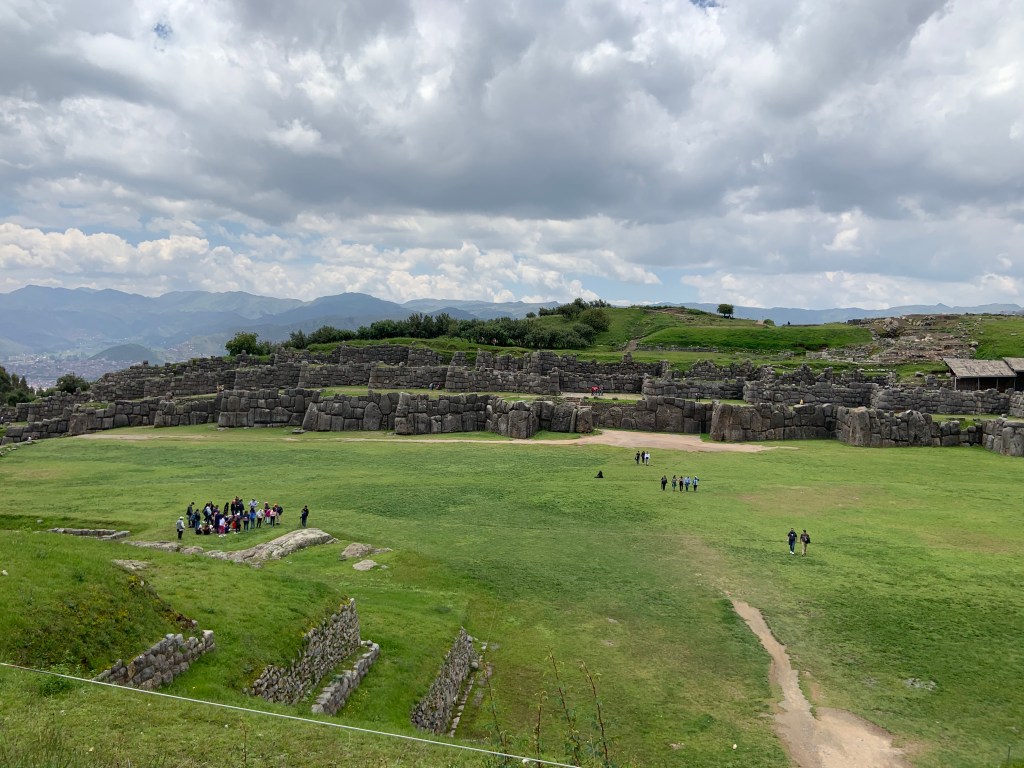
Some discrepancies in head shape among a discovered population could be attributed to migration of groups, creating multi-ethnic regions. In a recently excavated tomb, there were eleven distinct types of deforming apparatuses found and fourteen related types of cranial deformation occurring within the population. These various types of cranial modification imply that significant migration has been a consistent theme throughout the empires of Peru. After visiting sites like Pachacamac and Sacsayhuaman, it is easier to understand why the Inca and other civilizations would make such strenuous pilgrimages. The dominance the sites hold over the surrounding environment is remarkable. In the case of Pachacamac, the Temple of the Sun is housed at the highest point of the site with a breathtaking view of the Pacific in one direction and the rolling sand dunes in the other. In the past, Andean peoples would come for ceremonies and rituals; still today travelers and indigenous groups alike come to pay their respects in their own ways. Sacsayhuaman served a similar purpose as a site for gathering. It’s huge central plaza space was surrounded by massive terrace walls. The site naturally beckons you in and to this day it feeds the imagination as to the ceremonies that occurred there. As we come to understand the appeal these sites had, it becomes clearer why different cranial modifications are found scattered about Peru. Societies were not stagnant or isolated; they were dynamic.

During our time in Peru, there was evidence that migration and pilgrimage still occur today, although under slightly different pretenses. Our flight from Lima to Puno on New Year’s Day was far from full, yet the groups of travelers were diverse. There were elderly couples dressed in traditional clothing, young people in Western clothes, a band, and our group. Although I am only making an assumption, I feel that each of these individuals had a purpose in their journey. Perhaps the old couple had traveled to the city to share traditions of the past with their grandchildren in hopes that they continue on. Maybe the band felt restricted by cultural norms in Puno and wanted to catch their big break in Lima. Regardless of their purpose, their motions mimic those of the indigenous groups that inhabited the land before them. Another instance of pilgrimage I witnessed was when we visited the church at Chinchero in the Sacred Valley. As we stood outside the main entrance, individuals exited the church in procession. The first few individuals to exit were dressed in traditional clothing with the occasional child wearing a t-shirt with a cartoon character on it. When the church had emptied out, the people did not leave the site with their families. Instead, they gathered into large groups which appeared to be based on community. One group included all the people in traditional dress, while another was made up solely of men and women in Western clothing. Seeing these people come to a semi-remote location for Mass provided a tangible example as to what the migrations of the past could have been like.  

Cranial deformation continues to be misunderstood today due to society’s predisposition to view the practice as barbaric. Evidence proves that cranial modifications do not induce pain due to the juvenile skull’s plasticity. In an infant skull, the cranial bones are separated and joined together only by strong elastic tissues called sutures forming fontanelles, more commonly known as “soft spots.” The timing of the closing of these fontanelles coincides with the duration of cranial modification. Even today, babies are subject to cranial modification, yet we view it through a lens of necessity. Many babies are given helmets to wear in order to shape their heads into what we consider a natural shape. They can be born with deformities stemming from genetic abnormalities, or parents and doctors can request the helmet to match the natural aesthetic for a baby born with a misshapen or flat head. The practice of shaping a child’s head with cloth and wood might seem foreign today, but our own practices mirror this tradition. In both cases, the parent is choosing to alter the natural shape of his child’s head in order to increase its future happiness. Another misconception society holds about cranial deformations is that they negatively impacted brain activity. Scientists have gathered that these modifications would have few to no detrimental side effects on the shape of the brain. It is more important that the brain volume remains the same. Some may remain skeptical even still, but our largest proof still remains. Successions of ancient Andean societies practiced cranial deformation and went on to build massive successful civilizations. This alone suffices to display that cranial deformation did not create an incompetency issue.

Even today, similar practices continue. For example, neck elongation occurs within small tribes in both Southeast Asia and Africa. This process occurs through the gradual addition of rings to the necks of women, serving as a symbol of wealth and status. The rings create an illusion of elongation; in reality, the collarbones are being pushed down. This practice parallels cranial deformation in the sense that it is a method for an outward expression of identity. It creates a permanent identification method. Another body modification practice which occurred in China was foot binding. The feet of young girls were bound to create a period of trauma and enforced discipline. This practice was originally assumed to be a marriage rite, but recent studies have attributed the practice to creating a lack of mobility in women therefore relegating them to spinning cotton and weaving (Blake, 699). Unlike cranial deformation and neck elongation, this practice was a punishment which sought to instill fear over enhancing freedoms. This is an important distinction to make in order to better understand the motivations behind cranial deformation.

In Western culture, conspiracy theories thrive in the imaginations of travelers. Television programs like “Ancient Aliens” appear to be laughable, but they plant seeds that cause us to view artifacts with a skewed sense of skepticism.  On numerous occasions, the show has suggested the sites like Machu Picchu and the Nazca lines were only feasible due to extraterrestrial intervention. Even further, these pseudoscientists have used deformed skulls as evidence to their claims. It is important for travelers to educate themselves on the impacts these types of claims have on history and the way it is interpreted. If we allow cranial deformation to be dismissed as an alien, the practice and its history are implied to be inhumane. I even found myself indulging in the “what-ifs” from time to time, like “what if these terraces were a giant staircase?” Whenever we approach indigenous sites and practices in this way, we are desensitizing ourselves. Our reactions of allure and intrigue are degraded.

Terraces at Ollantaytambo which resembled a giant staircase to our imaginations.

The concept of cranial deformation seems to the modern tourist to be something that should be left in the past and is no longer relevant to the current state of Peru. I would beg to differ and would even argue that the motivations that drove the popularity of cranial deformation still exist today. Upon our arrival in Peru, I was nervous that I would not be able to find a trace of cranial deformation apart from the few skulls housed in the Museo Inka. My only chance encounter occurred in Lima at the Catacombs of San Francisco Church. Skulls were arranged neatly in both stacks and circles. Yet one out of the hundreds stuck out like a sore thumb; in one of the deep pits, an elongated skull completed the ring. Because it was the only one I saw, it caused me to wonder if its placement was coincidental or deliberate. I then realized I needed to focus on the abstract ideas that cranial deformation represented.

One pattern I noticed in Peru was the stylistic choices of the people. Younger men and women appeared to typically dress in Western clothing with modern hairstyles. This group made up the majority of Peruvians I encountered. However, there remained a substantial number of men and women who dressed in culturally traditional clothing and hairstyles. In particular, the hats they wore appeared to suggest more than a fashion statement; wearing a hat seemed to serve as a form of self-expression.

Additionally, no two hats stuck out to me as identical. Some were squatty and made of felt while others stood tall with a brim and appeared to be made of straw. The hats drew my eye in a way that is difficult to describe. When I saw individuals in traditional dress, I felt as if I could assume their indigenous heritage, yet their hats added a depth and individuality that was intangible for tourists like myself. I feel the hats allow a unique layer of expression that remains distinctly their own. Along this line of thought, I am reminded of the use of cranial deformation. While I doubt that the hats are a direct replication of this practice, I do believe that they serve a similar purpose. The head was a symbolic representation of power in ancient Andean societies; for example, trophy heads were common (Verano, 59).

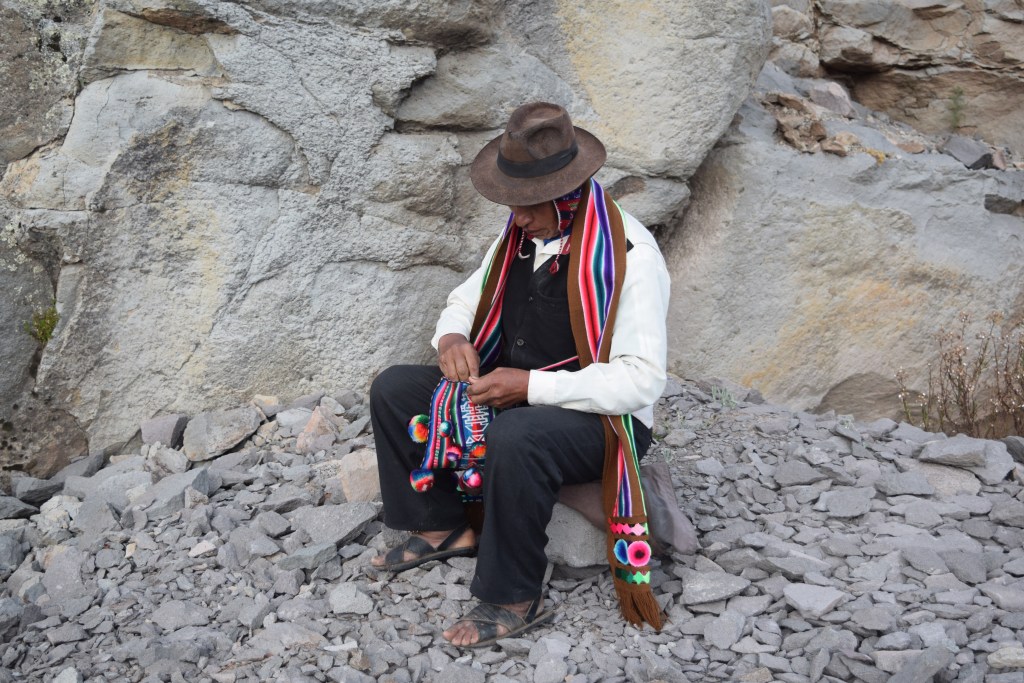
Indigenous man wearing Western style hat over a traditional chullo.

The industry of tourism invites us to dabble into this practice through the hats sold in gift shops and on the streets that mimic traditional chullos. On the island of Taquile, a family presented their courtship rituals to us which included both the practices and the attire. The chullo changed in accordance to the stage of life the individual was in; pom poms were added to indicate relationship status and more. When our group asked if we were able to buy a chullo, our guide Lut spoke with the family who dismissed our inquiry as if the answer were obvious. In the mind of the family, the line between the sacred and the commercial is distinct, but to the consumer minded tourist, the line is blurred. In the Western mind, it would appear that because the family in essence had sold to us an experience with their culture that the selling of chullos would follow.

There appeared to be different spheres that indigenous individuals existed in: the commercial and private. At times, these individuals would market themselves as a commodity, whether it be dressing to imitate an Incan warrior or in traditional dress to pose with a llama. In the same way, many individuals profited off providing an experience. Our first encounter with this was the lunch show at Dpaso. Rather than focusing on providing a culturally educating performance, the dancers create an unforgettable memory. They incorporate the audience; they pull at your emotions.

The commercial and private spheres merged and coexisted during our time spent with our host family on Amantani. As soon as I stepped onto the island, I felt I was being immersed. The family greeted us with immense gratitude and hospitality; they made it feel like we were the ones to be thanked. Our guide Lut referred to them being as close to him as family, therefore they were treating us with that extension. To this family on Amantani, our payment was not meant to be transactional. It was meant to be a reciprocal relationship where our investment was repaid in full through our experience.

 When we first arrived at the family’s home, our lunch was being prepared by the older couple and a young woman named Beatrice. I was intrigued to learn Beatrice’s story. As a young woman, she made the choice to move to Lima, yet the city was not for her. She preferred her previous way of life; although tourists may consider it outdated, it provides the pinnacle in quality of life for Beatrice. I feel that as travelers, we attempt to label these attempts as “escaping tradition,” but this could not be further from the truth. We point out obvious differences between the older and younger generations and attempt to label them as a distinct divide without context. Culture does not live and die in a single generation; identity is fluid and is being molded without deliberate thought.

In Peru and other Western cultures, practices similar to cranial deformation are accepted as the norm. We don’t give a second thought to plastic surgery, piercings, or tattoos, yet they are all permanent body modifications. Each of these practices is a way to express and project a certain self-image. Cranial deformation is so much more than an alteration in skull shape. It is the creation of a permanent somatic identity. The practices of cranial deformation and other artificial body modifications are equivalent to our modern methods of displaying our status by the clothes we wear, the cars we drive, and our material goods. The identity of both individuals and societies in Peru continue to evolve. The integration of traditions and ideals from the past and present continue to shape the future.

Works Cited

Blake, C. Fred. “Foot-Binding in Neo-Confucian China and the Appropriation of Female Labor.” Signs, vol. 19, no. 3, 1994, pp. 676–712. JSTOR, http://www.jstor.org/stable/3174774.

Hoshower, Lisa M., et al. “Artificial Cranial Deformation at the Omo M10 Site: A Tiwanaku Complex from the Moquegua Valley, Peru.” Latin American Antiquity, vol. 6, no. 2, 1995, pp. 145–164. JSTOR, http://www.jstor.org/stable/972149.

Torres-Rouff, Christina. “The Influence of Tiwanaku on Life in the Chilean Atacama: Mortuary and Bodily Perspectives.” American Anthropologist, vol. 110, no. 3, 2008, pp. 325–337. JSTOR, http://www.jstor.org/stable/27564015.

Verano, John W., et al. “Modified Human Skulls from the Urban Sector of the Pyramids of Moche, Northern Peru.” Latin American Antiquity, vol. 10, no. 1, 1999, pp. 59–70. JSTOR, http://www.jstor.org/stable/972211.

The Lasting Cultural Impact of the Sacred Temple: Coricancha

It is a new year; as a matter of fact, it is a new decade. I know, I will give you some time to let that sink in… Each new year comes with new goals. We have all set aside some new goals for the new year and the new decade. For me, personally, I have set some minor goals, such as working to become a better listener; nothing too crazy or spontaneous. However, I am here to convince my readers to have spontaneous goals, impulsive goals even, that push you out of your comfort zone. There is no better way to start on the right foot for the new decade than traveling to a different continent. It is time to pack your bags and fly to South America; we are going to Peru!

“Why Peru?”, you may ask. Even though there are many astonishing countries in South America that are more technologically advanced or have better coastal lines than Peru, the country still shines. Peru is a unique and captivating country that has very close ties with its indigenous culture. Peru is blessed with many great archeological sites built by the Incas. For example, one of the most famous is Machu Picchu. It is one of the Seven Wonders of the World for its mysterious history and breathtaking views located in the Amazon Rainforest. It is home to many natural wonders like Lake Titicaca, the largest lake in South America. Even though it was freezing cold, I had the opportunity to jump into it, so I did! Look at me being spontaneous! One of the must-see cities in Peru is Cusco. Cusco is filled with cathedrals, plazas, and ruins that are mostly all within walking distance from your hotel. Amongst these attractions is a place dear to my heart that I want to focus on, the marvelous temple called Coricancha.

The Coricancha was an elaborate complex built with the most exquisite Inca masonry and metalworks. Coricancha is a Quechua word that translates to Golden Temple; however, the Spaniards referred to it as the Temple of the Sun1. It was the principal shrine of the Inca Empire, which displayed the wealth of Cuzco and was the focal point for religious rites. It was built in Cusco because of the two rivers that surrounded the city, one of which can be viewed at the top of Machu Picchu. The Coricancha was a series of buildings and courtyards surrounded by large, tall walls. Inside these walls were temples that were dedicated to deities that were embedded with gold and silver at every inch of every building2. The source of the gold and silver that was used in the temples came from the spoils of war. That being said, the Inca has impressive military achievements for the amount of gold the Coricancha was dressed in. The rulers of Inca were ambitious men who would conquer vast territory using alliances. They would offer gifts to the leader of the tribe. If the leader accepted the gift, they would work in harmony. If not, then the Inca would overtake them and force them to subdue. The empire would continue to expand until the conquistadors would dismantle the Incas. To this day, the Inca Empire was the largest empire ever seen in the Americas.

One of the many awe features of the Coricancha was its architecture. The Coricancha was physical evidence that shows the conservative features of Cuzco-style masonry, niche designed, and wall style that is indistinguishable from the other building in Cuzco2. It was a model of a building that combined the functions of royalty, religion, and administration in one. At the Coricancha, you can see the picture-perfect masonry style that has given the strength and stability of the wall to withstand all the earthquakes in the past and hopefully in the future. The masonry had sunken joints, and the walls were battered. Its key feature was the beveling of the edges of the stone that used no mortar3. The Inca masonry was so precise that a knife blade cannot be stuck in between the two edges of the stone. Now, the methods of quarrying the stones are still under study. It is believed the stone was cut by boring holes into it. Then, using wood as wedges, they would be dampened with water to separate the stone into pieces slowly. Men transported the stones because the invention of the wheel has not been created, and there was no large animal capable of pulling the weight. Once the stone was roughly in place, they would use smaller files to acquire the perfectly smooth faces. Unfortunately, when the conquistador came to Cusco, they overtook the city and melted all the gold and silver at the Coricancha. Next, they converted the temple into a catholic church called Santo Domingo1. The Coricancha consisted of multiple buildings and courtyards. These courtyards had large open areas that could hold many people for religious or military gatherings. The courtyard had patios accompanied by fountains; some even were made out of gold. Although the Incas displayed an advanced irrigation system, the water source is unclear. One of the most important and most significant temples at the Coricancha housed the huaca called Punchao (the day)3. This temple had a substantial value because it housed a golden statue that was in the shape of a man. The golden statue represented their sun-god, which had a circular plate of gold enclosed in a halo of rays. When the sun rose, it would hit the golden halo and illuminate the entire room marking the beginning of the day. Another temple housed a silver image of a woman that represented their deity to the moon3.

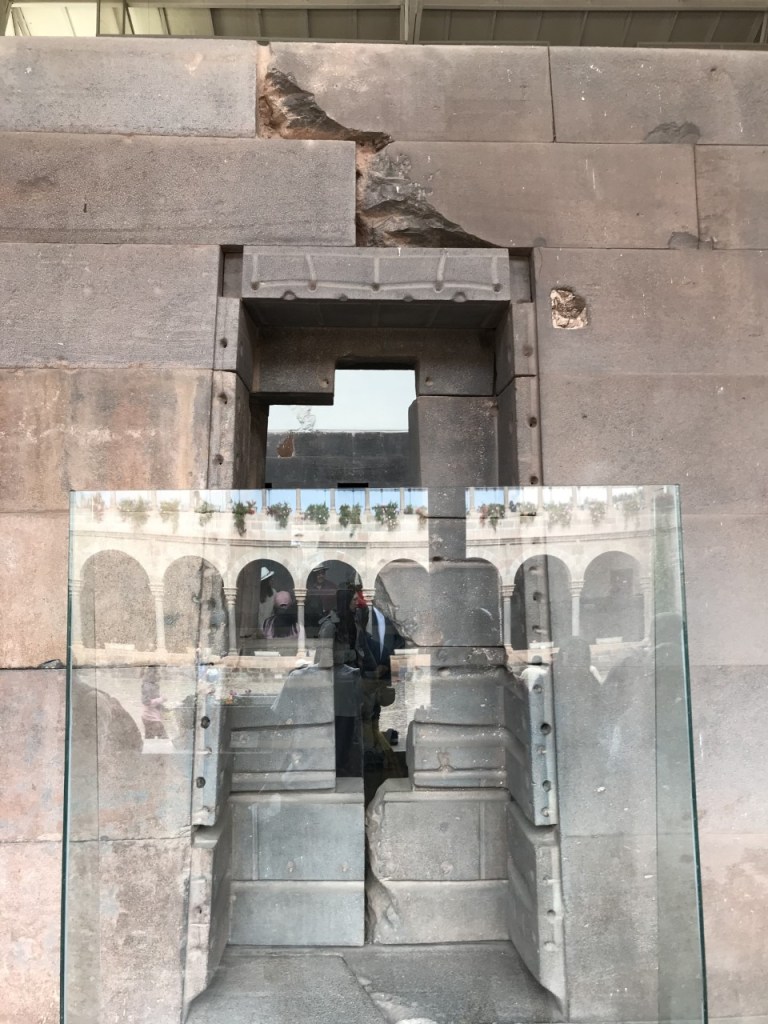
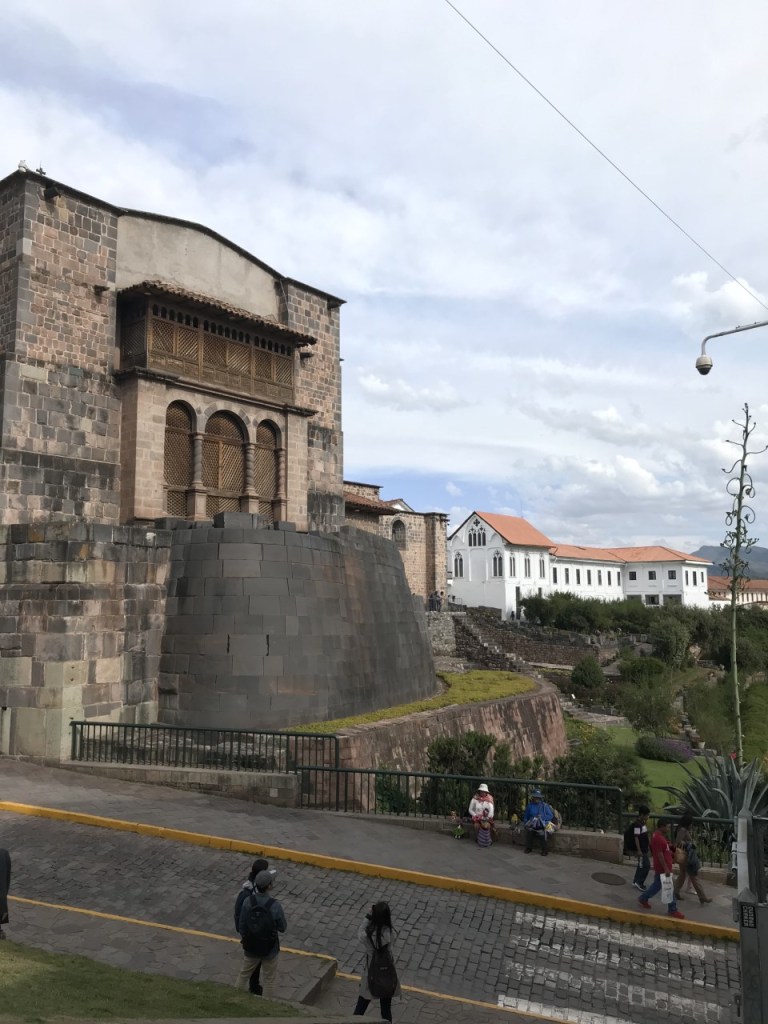
Now, all these details sound remarkable, but seeing in person is a whole new level. As soon as you walk down the street, you are greeted with the famous curved wall of the Coricancha. That wall has stood for 800 years through all of nature’s rain, sun, and earthquakes. The wall is so strong that the conquistadors used it as the foundation to build their church on top of it. Even the Santo Domingo has undergone renovation due to numerous earthquakes. Yes, the Coricancha has multiple personalities, and it can be a confusing building. Currently, the site has three personalities; it is an Inca temple, catholic church, and an art gallery. The stones were all sorts of shape and size; some managed to be as long as three feet or as short as half a foot. In addition to its impressive size, the stones had a large number of angles. Some have up to 27 corners, and if you walk around the city of Cusco, you will come across the famous twelve angle stone. One thing that nearly every stone had in common was its perfect smooth line that made them fit “like a glove” without using any mortar. It is mind puzzling how the Incas were able to pull this off. No wonder the conquistadors believed that they had help from the devil, which is one reason they destroyed the temple. Others think that they were not human but actually Aliens. When you enter the Coricancha, you are greeted by a smaller scale model of the Coricancha in its present-day form as the Church of Santa Domingo. Once you pass that, another jaw-dropping experience begins as you enter into the church plaza. The church plaza is a two-story design with beautiful arches. On the second floor, it has flowers hanging off the patio. Underneath the ceiling of the first floor is where you can find the original ten-foot walls of the Coricancha on the left and right side of the plaza that stretches down the hall. The wall has many windows and doors that one can enter into the rooms that are roughly the size of a nice master bedroom. You will notice that the windows and doors all show the standard Inca trapezoid niche design with symmetrical arrangements. The niches were found with drilled holes that were used to hang gold plated items and gems. If you look carefully on top of the wall, you can see more notches were the Inca would hang gold plated banners. Once you step through the niche doors, inside, one wall has three windows, and the center one is hollow. I went towards the center window and looked up; immediately, I laughed. It was a laugh of disbelief. I could not believe that I was looking through a window that perfectly intersected through two other windows. It did it so well, that when I showed a photo of it to my dad, he thought it was a mirror. He did so because another person was taking a photo from the other direction of the last window, and my dad thought the reflection was me. The symmetrical details at the Coricancha are unbelievable. More importantly, I laughed because this was the east side of the wall. We all know that the sun rises on the east side. Thus, at the right moment of the sunrise, the sun would shine through all of the windows and illuminate the room. Hence the name, Temple of the Sun. I was and still am excited because I was connecting everything I have read on paper into a real-life experience. I wish I were able to be there in the morning to see the sunrise. I highly recommend future travelers to set time aside to experience this phenomenon.

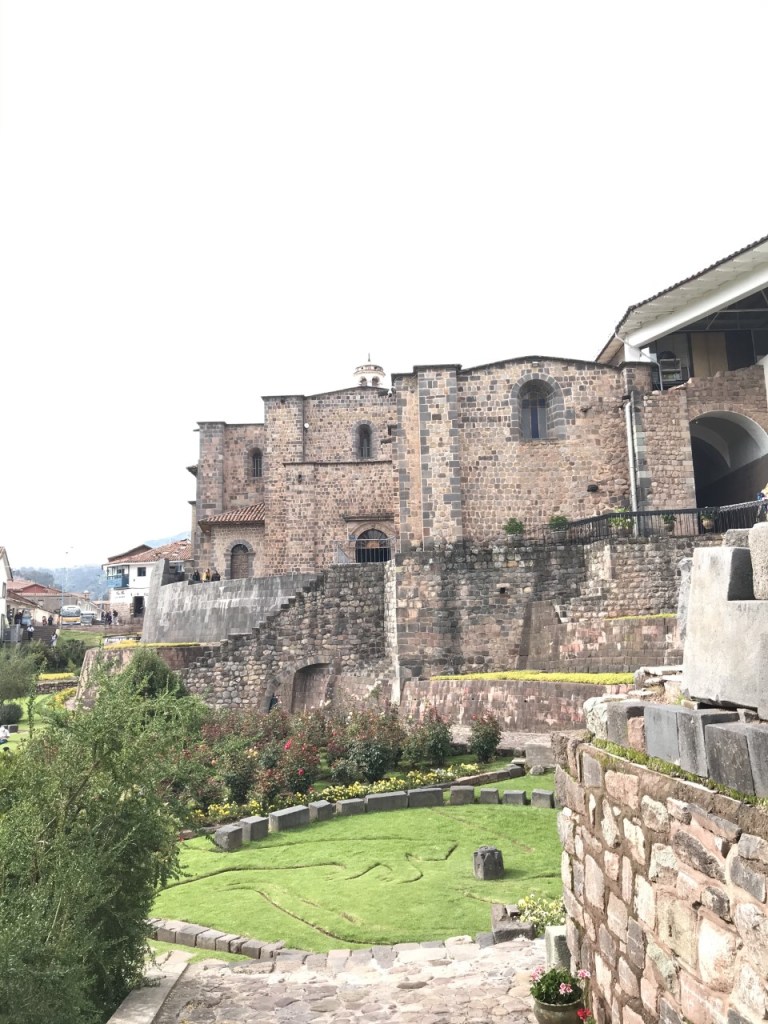
As you continue walking down the same wall, in the last room, you can see a model scale of the thought to be Coricancha in the 1200 AD. It showed the five temples, each with its highly raised thatched roofs that were made out of wood. The temples were dedicated to the main Inca gods. Each temple would have contained large amounts of gold, silver, and gems; some even housed mummified remains. The model also showed a famous garden. It is believed this garden was used more as an offering than the agricultural purpose for that area was found to have gold and silver objects that represented the Inca empire1. For example, gold cornstalks, llamas, birds, and jars. On the right (west) wall, it shows many similarities to the wall on the lift. It has one of the best-preserved niched designed that clearly shows the drilled holes where the gold and gems would be inserted into. When you make your way out to the “backyard,” you come across again the curved wall. From this view, you can see the mixture of the Inca temple with the Spanish church. You can clearly tell the different time periods by looking at the stonework. As stated above, the Inca masonry is one of a kind built mainly out of limestone. In contrast, the Spanish built its church using a cobblestone. The yard had an area that displayed the Inca trilogy, which is the condor, the puma, and the snake4. These three animals represented heaven, earth, and the world of the dead, respectively. As I explore Peru, the Inca trilogy was presented in the crafts and paintings of the Peruvians.

Shifting personalities to the catholic church, there was no Inca wall on the south or north wall. Inside the south wall of the church, there was an art gallery denoting colonial and contemporary artwork from the school of Cusco. There was one artwork that caught my eye. It was this marble statue of Jesus; however, the artist decided to use three pieces of marble. The head, chest, torso, and legs were made from one piece, but the arms were individually carved and attached to his body. I could not figure out why the artist did it. I wonder if it had a meaning to represent the Holy Trinity in Catholicism of the Father, Holy Spirit, and Son or if it was as simple as that the artist did not like his/her work of the arms and restarted them. As I continue exploring the temple/church, there is another room that held liturgical object and clothing of the time. They even display a gigantic mirror if you need to see how you outfit of the day is looking.

Shifting personalities back to the Inca temple, the Coricancha has more to offer than just architecture value. The Coricancha was the focal point for the major religious rites that occurred in the capital city of Cusco. The Inca Empire divided the Cusco Valley into four regions. The Coricancha was at the center of Cusco and the center of the intricate ceque system. The Cusco ceque system is a ritual system composed of several hundred shrines called huacas and ritual lines called ceques5. The indigenous Peruvians define huacas as a sacred object or place for the worship of gods, prayers, and sacrifices. At these huacas, the indigenous Incans would offer coca leaves, guinea pigs, llamas, textiles, and gold items to their gods. In extreme cases, children were sacrificed. Huacas are often located in reserved, unique places such as caves, springs, mountain peaks, and large rocks. There are over 300+ huacas that radiate out from the temple. The ceques were denoted as straight lines that radiated out from the center of the Coricancha. It was seen to be a way of spatial organization that extended back into the pre-Inca times. It formed the four major royal roads. From each of the four main roads, other ceques would branch off arranged in order with the respective huacas and its district as it progressed further out of the city. No ceque contained fewer than three shrines, and some had as many as fifteen. The ceques were more than just a map where huacas could be found. They were also connected to social relationships and divisions of labor5. Furthermore, it seems that the ceques were constructed around cosmology. There are various accounts of huacas on hilltops where monuments were placed where the sun rays would hit it at astronomically significant periods. These monuments were called “sucanca” which are the Inca version of solar pillars. For example, the huaca Chinchincalla was a large hill with two sucanca that when the sun reached them, it meant it was time to plant4. Another example is the two sucanca that were located at the temples of the Coricancha; they would mark the beginning of the December solstice and the June solstice5.

Lastly, there is one other spectacular feature of the Cusco ceque system. By relating the ceque system with cosmology, it created the framework of the Cusco calendar5. Each huaca represents a day, each ceque a week, and a group of three ceques was a month. The huaca counted the days in the clockwise order. The calendar showed the significant periods of the Incaic months, seasons, half-year, and year. The Inca would determine what marked the half-year and year by studying when the June solstice began and finishes after the sunset in April. Thus, the Ceque calendar is a well grounded in archaeological evidence of Inca astronomy and their ritual.

When I made it to the wall that speaks about the Cusco Ceques System, astronomy, and ceque calendar, I couldn’t really make the connection from paper to real life. However, they have many visual aids to help imagine the ceque system at Cusco. I wanted to hop on an airplane and get an aerial view of the city to see if one could still make out the “straight” lines. When it’s not raining or the sun beating on you, I would try to stare up in the sky to see if I could make out the astronomy that the Inca saw. For example, they believed certain stars made an outline of a llama and other essential animals related to the Inca. I, however, was never able to find a llama in the sky, which was upsetting. It is surreal to think about all the technological advancements that the Inca had nearly a thousand years ago. The Incas were indeed an inspiring empire that showed resilience, leadership, and innovation.

I highly recommend everyone to pack their bags and fly to Peru. Peru has a lot to offer, and a visit to the capital city of the Incas is a must. When you are visiting the Coricancha, you are time traveling back in time to one of the most important and sacred temples of the Inca Empire. There is never a dull moment when the building switches its personality; it keeps you excited as a young kid in the candy store. The Coricancha is genuinely a confusing building that embodies so many cultures in one. It is a perfect example of hybridity. One can learn about the Inca time period while also immersing oneself with the colonial time period. The Inca history is endless with the Coricancha, and the stories are also endless. So now, will you accept my challenge for the new year and visit Peru?

1.         Bauer BS. Ancient Cuzco: Heartland of the Inca. University of Texas Press; 2004.

2.         Niles SA. The Shape of Inca History: Narrative and Architecture in an Andean Empire. Iowa, UNITED STATES: University of Iowa Press; 1999. http://ebookcentral.proquest.com/lib/uark-ebooks/detail.action?docID=837095. Accessed January 19, 2020.

3.         Somervill BA. Empire of the Incas. Infobase Publishing; 2009.

4.         Zuidema RT. Brian S. Bauer. The sacred landscape of the Inca: the Cusco ceque system. xiv+249 pages, 128 b&w photographs, 27 maps, 8 figures, 10 tables. 1998. Austin (TX): University of Texas Press; 0292-70865-3; hardback; US$50. Antiquity. 2002;76(292):592-593. doi:10.1017/S0003598X00090840

5.         Ruggles C, Urton G, Urton G. Skywatching in the Ancient World: New Perspectives in Cultural Astronomy. Boulder, UNITED STATES: University Press of Colorado; 2007. http://ebookcentral.proquest.com/lib/uark-ebooks/detail.action?docID=3039877. Accessed January 19, 2020.

The famous niche window
The standing curved wall
The view of the church Santo Domingo built on top of the Coricancha

Tambomachay and the Evolution of Water in Peruvian Culture

By Meagan Olsen

My first glimpse of Peru was of an inky black ocean reflecting small pinpricks of light from ships bobbing in the Lima harbor. There was no division between sky, land, and sea. Bleary eyes blended everything together into one body of water beyond the plane window. As we progressed from the deserts of Lima to the mountains of Cusco, the importance of water in Peru became increasingly obvious. It appeared in the typical places, as rain, rivers, and mud. Its presence also lingered in places now dried up, in pre-Incan irrigation canals and fountains fed from springs that no longer exist. Millennia have passed since the earliest inhabitants of Peru came together and constructed Caral. Throughout all of the changes and evolutions the nation and its indigenous people have undergone, water has played consistent roles as both practical and cultural sources of life. 

Travelers to Peru often spend the majority of their time exploring indigenous or Incan history. Almost every archaeological site exhibits some method of water use or control, ranging from small decorative channels to large reservoirs and lakes. It is therefore important to understand the complex relationship between Incan society and water, as well as how Peruvian relationships with water have developed in recent centuries. 

In its purest sense, water is needed for life. It enables crops to be grown, animals to survive, and humans to exist. Due to its essential role, the Incan empire utilized it as a political tool. Intricate hydraulic systems were obtained from other indigenous groups or built across the empire to both showcase the power of the Inca and encourage conquered groups to comply with Incan rule.1 These systems provided irrigation to extend agricultural growing seasons and helped store water for use during the dry season.2,3 The transportation of water also helped to integrate ecological zones throughout the empire.4 Although water was strongly associated with political and agricultural projects, it played an equally important role in Incan religion and culture. 

Many indigenous groups occupying what is now Peru consider Lake Titicaca to be the source of life. Incan mythology is no exception. Numerous legends cite the lake or nearby caves as the point from which the first Incans emerged. Over 30% of Incan sacred sites, known as huacas, were linked to rivers or springs.4,5 Water was also associated with fertility and blood, forces capable of imparting and sustaining life.4 Water-related ceremonies were woven into local calendars to ensure plentiful rains to bring the harvests.6 The cultural importance of water was such that fountains, baths, and other non-agricultural water features are found throughout the Incan empire, particularly in royal estates and temples. 

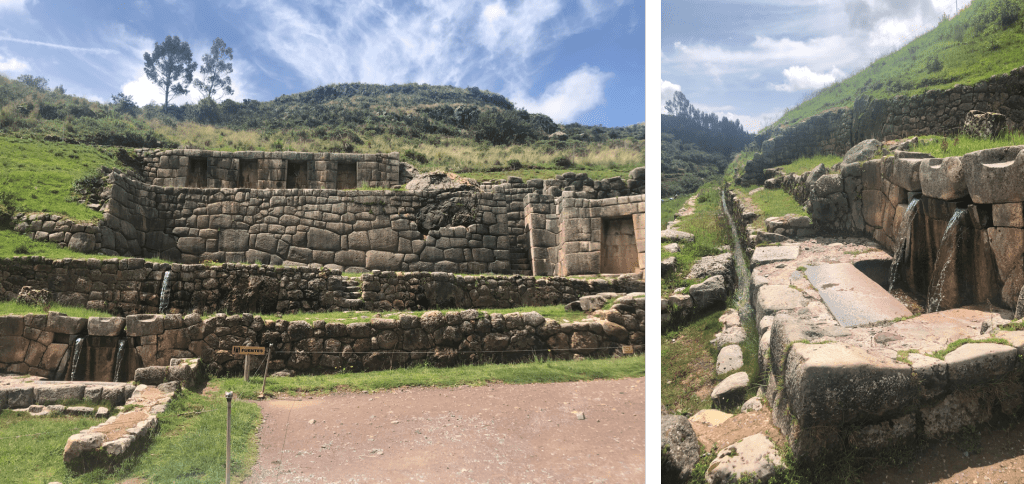
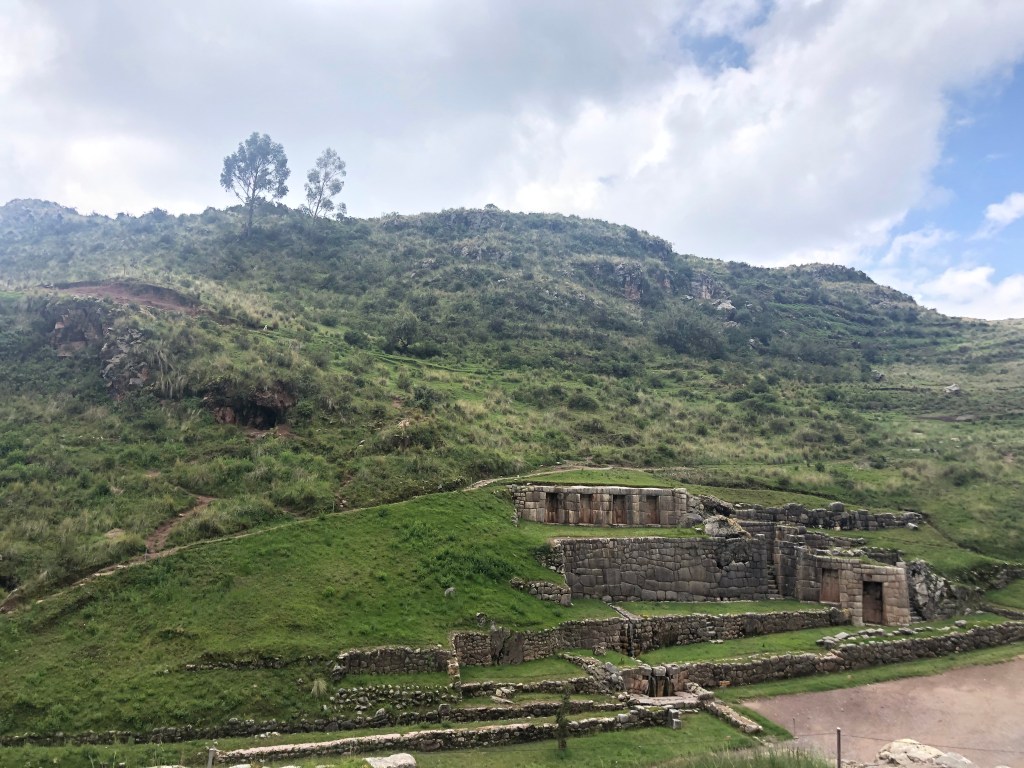
Tambomachay, an Incan site of unknown purpose located just outside of Cusco.

Tambomachay is a key example of an Incan water-related huaca that demonstrates both secular and religious functions. This site was built during the Late Horizon period and consists of channels fed by a year-round spring that lead to a series of fountains and pools before being routed to a canal.2 Although the original purpose of the site is unknown, common theories include royal baths, a resort for the Inca, or a military outpost.7,8 This small architectural site will be used as a framework for the discussion of a variety of elements related to Incan water usage throughout the remainder of this post.

Water-Related Engineering and Agricultural Uses

Daily life depends on water. This fact is as true today as it was during the Incan empire. It is easy to focus on the picturesque terraces, roads, and estates. They are each impressive in their own right. However, without water canals, many of these structures would not have been as successful during their use. Tawantinsuyu undertook massive hydraulic infrastructure projects to provide adequate water supplies to its people. Travelers should therefore be aware of the water transportation systems that acted as a lifeblood for the Incan empire.  

Incan engineering played a key role in the establishment and success of their empire; complex hydraulic systems were only one of their numerous accomplishments. Site construction most likely began with quipus and clay models for the analysis of topography and planning of structure layout.5 Environmental alterations and stonework were accomplished via massive amounts of manual labor. The end result was a hydraulic system capable of transporting water for miles, irrigating terrace farms, and feeding religious fountains and baths. Water purification was even accomplished via intentional earth filtering at sites like Tambomachay and settling tanks at Inca-Caranqui.4

Channels & Canals

Although the Incans are typically praised for their engineering ingenuity, the irrigation techniques they used began with much older groups. The first Peruvian irrigation systems began on the coasts during the Early Horizon period.2 Irrigation was essential for the civilizations that arose in these desert environments. Communities were relatively fragmented, but they often joined together during festivals and celebrations to build large sites like Caral or Chavin de Huantar. This same process would have been used to build the canal systems that brought water from the mountains to multiple communities. Once built, canal maintenance remained largely local.1 Many of these early irrigation canals can still be seen at sites like Pachacamac. 

The hydraulic engineering methods developed by pre-Incan groups were used by the Incans to provide water to terraces, estates, and towns. Although highland agriculture did not depend on irrigation, the control of water still helped to accelerate the agricultural cycle and produce more crops.2 Nearly all water canals and hydraulic systems built by other indigenous groups were maintained and repurposed by the Incans, who in turn built onto these existing systems. These canals varied in construction; final designs featured everything from earth-lined and stone-lined channels to subcritical and supercritical flows.5 The construction of this site-specific hydraulic architecture required large amounts of materials and manpower, but the resulting systems returned much of this energy to the communities over time via increased productivity and easier water access.9 Incan-era canals are present throughout most of their estates and fortresses, such as Ollantaytambo. 

In addition to irrigation canals, water runoff systems were necessary to prevent flooding or destruction of large Incan compounds during the rainy season. These channels used the same general structure as the irrigation systems, with modifications to route water away from key locations. Chinchero still hosts many of these canals and at one point featured a complex drainage system with both open-air and underground channels.4

Water Storage

While the transportation of water was essential within the Incan empire, water storage also played a key role, particularly during the dry season. Man-made lakes and reservoirs were constructed at a variety of Incan sites, including Sacsaywaman and Quispiguanaca.4 These constructions once again demonstrated the power of the Inca and may have also been references to Lake Titicaca or other religious sites. Lakes and reservoirs most likely played religious roles in Incan society as well.

Tambomachay as seen from above, illustrating the site location at the base of a water basin.

Another less common form of water storage involved geologic water storage. Tambomachay is representative of this type of water reserve that involves water being stored in the soil.3 In this case, rain soaks into the ground and is directed by limestone ridges and gravity to the bottom of the basin in which Tambomachay resides. The water in the soil is then contained by four retaining walls.5 This process slows the release of water through an existing natural spring, creating a year-round spring with relatively pure water due to filtration through the soil.3 Modification of mountain springs in this manner enabled the creation of a consistent water source for nearby communities.

Cultural Significance of Water

Incan society and politics were carefully intertwined with spirituality, making it essential to understand their beliefs about the world in order to understand actions and archaeological sites. As mentioned previously, water played a key role in Incan religious and cultural practices. Hundreds of fountains, baths, and streams serving no agricultural purpose were built into palaces and temples. These features largely sit dry now, their existence often overlooked in favor of more impressive structures. However, their presence indicates the crucial nature of water to Incan culture. Tambomachay is a strong example of how water was integrated into cultural and religious concepts. Ignoring these sites and components while travelling throughout Peru will result in the absence of a central tenet of Incan culture.

Camay & Movement of Water

The Incan worldview detailed a cyclic movement of water throughout the earth and other worlds. In general, earthly water was thought to stem from a “heavenly river,” most likely the Milky Way, that emptied its waters into the Pacific Ocean.10 The ocean was believed to be all around and under the earth, with ocean water forming large lakes like Lake Titicaca.11 The lakes then fed the rivers and springs through underground channels.10 Rivers ran downhill, back to the ocean. The ocean was therefore seen as the source and end of all water.11 This constant movement of water in nature resulted in Incan huacas often focusing on the movement of water themselves.

Sites like Tambomachay were potentially used as purifying baths and places to experience the power of water. Running water was considered a life force much like circulating blood.2 This concept is called camay. The running waters imparted sentience on the huaca and were capable of cleansing and rejuvenating the Inca or other figures.10,11 It was also believed that stone could be strengthened by running water.10 Fountains, baths, and other running water features are therefore present in most royal estates and temples, from Machu Picchu to the Incamisana in Ollantaytambo.

Complementarity & Tinku

One of the central tenants in Incan spirituality was the idea of complementarity, or the union of opposites. There is a fundamental combination of human structure imposed on natural features seen in every temple, house, or wall. Sites like Tambomachay add an additional layer to this concept with their use of water. Incan culture identified the earth as feminine and water as masculine. Thus, the water from Tambomachay fertilized the crops and was seen as semen impregnating Mother Earth. There is also a combination of water and stone, both considered vital elements.2 Stone was carved and placed to create retaining walls, channels, and fountains. In doing so, the immobile stone shaped the flow of the fluid water. This interplay results in a terraced structure of stone and water that, along with the Incan interpretation of gender, represents the combination of these key elements for agriculture and life.

An additional aspect of complementarity is demonstrated through fountains. The fountains of Tambomachay involve the splitting of a single pool into two fountainheads that subsequently drain into the same basin. This division and joining are termed p’allqa and tinku respectively.12 The concept of tinku extends to numerous areas and here references the meeting of two sources of water. Incans believed this was the most important way to experience the power of water.11 All sources of water were thought to originate from and return to the ocean. Thus, Tambomachay and other sites separate the water into multiple streams and bring it back together to mimic this. Many fountains across the Incan empire have multiple fountainheads that drain into the same channel. There are also several huacas located at the intersection of two streams or rivers.

Modern Use and Influence of Water

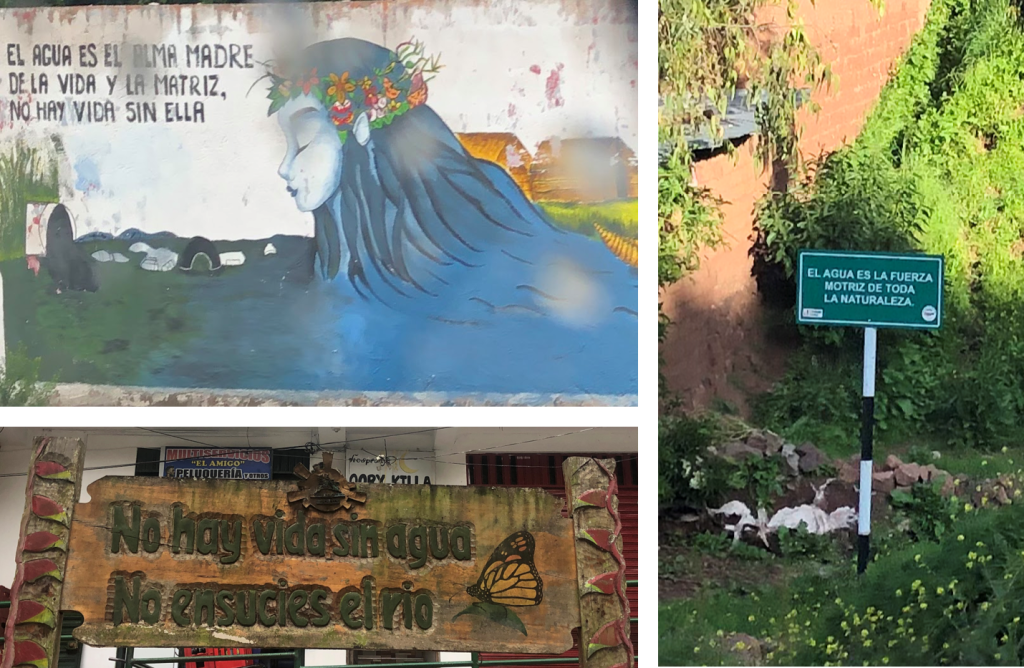
Remnants of Tawantinsuyu and the Incans permeate modern Peru. The contemporary cultural and practical uses of water are not exempt from this lingering influence. Fountains sit in the center of almost every major square and adorn the yards of numerous museums and public buildings. Politicians use water droplets as mascots and the occasional mural celebrating water is painted across walls lining the roads. The modernization of Peru has led to the adoption of numerous Western practices related to water, but the nation has modified these practices to fit within their unique cultural and environmental climates. Modern Peru demonstrates the cultural evolution of indigenous people. Travelers can follow the evolution of hydraulic systems alongside culture to gain a deeper understanding of Peru today.

Top Left: Mural in Puno – “Water is the alma madre of life and the womb; there is no life without her.”
Bottom Left: Sign in Aguas Calientes – “There is no life without water. Don’t pollute the river.”
Right: Sign on the outskirts of Cusco – “Water is the driving force of all nature.”

The Peruvian government and its constituents have an invested interest in water. Approximately 50% of electricity in Peru is generated via hydroelectric power plants.13 This ratio is significantly higher than the 16% of worldwide power generated through the same methods.14 One of the most significant hydroelectric plants in Peru is located in the Sacred Valley near Machu Picchu. This plant, capable of producing 98 MW of electricity, is a source of pride for many people in the region.15 Hydroelectric power is also highly contested by other groups due to its potential harm to the Urubamba River and the microclimates of the Vilcanota river valley.16 This debate is only one of the many ways that Peruvian relationships with water are changing.

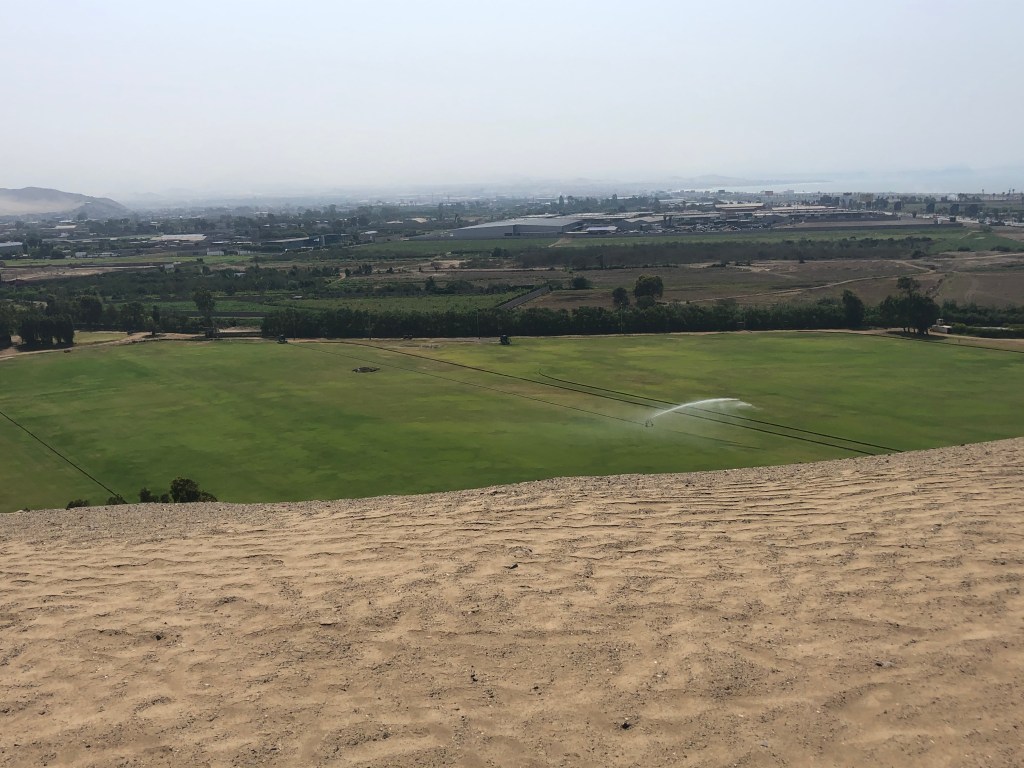
Like most developed countries, Peru continues to use irrigation systems for agricultural and landscaping purposes. Commercial farms have generally transferred to Western forms of irrigation with pumps and hoses. Smaller farms, however, often continue to use older ditch-based methods to provide water to crops. The Lima area in particular directs significant amounts of water from the mountain rivers to enhance the transformation of the environment from desert to lush, green areas. Fog condensation along the coast enables the survival of some flora, but significant irrigation is necessary for the greenery many tourists have come to expect from Peru.

Due to the importance of water in daily life and commercial or tourist endeavors, the Peruvian government puts an emphasis on keeping water resources clean. This is particularly important due to the inability of water treatment plants to handle large, non-biological waste. The common “no littering” signs seen along the roads of most nations are predictably present in Peru. However, the government has also installed signs that discuss the power and importance of water as a resource. Multiple laws enable water source protection have been passed to secure water for Lima and other Peruvian cities as well.17 These measures are intended to ensure water remains accessible to future generations.

Final Thoughts

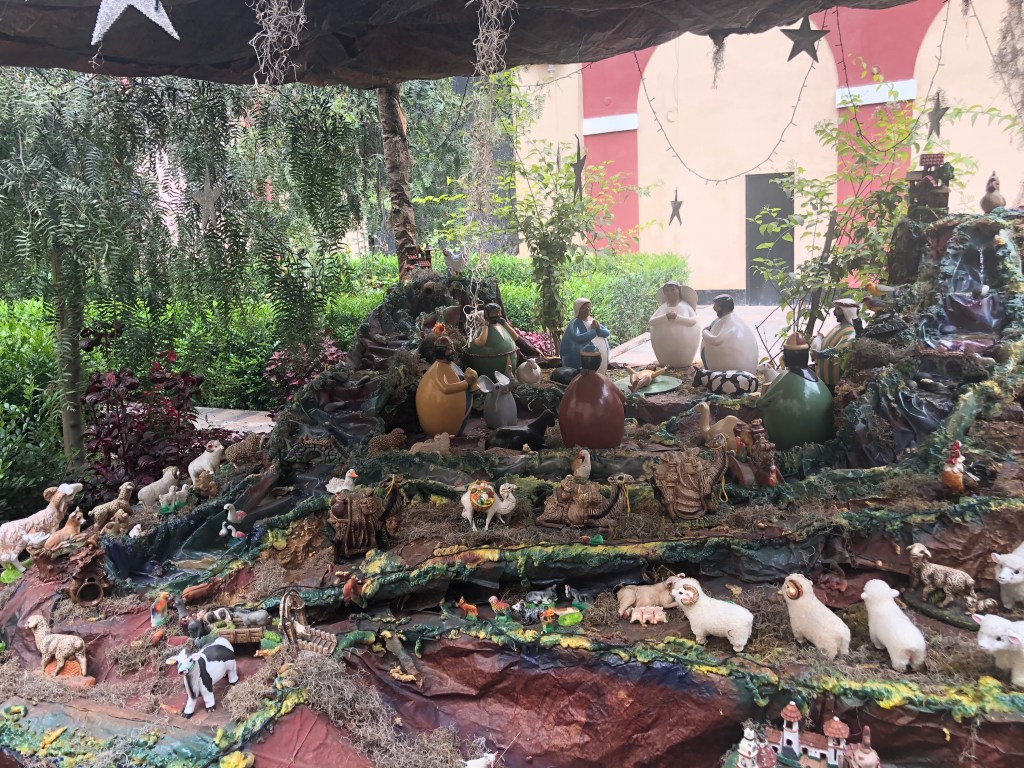
Nativity scene in the San Francisco Convent of Lima.

On my first day in Peru, I came across an intricate nativity scene nestled inside a small courtyard of the San Francisco Convent. A woman working in the church quietly turned on the tiny fountains as our group milled around; the unexpected babbling of tiny streams drew me closer to the display. Water from two separate sources trickled down in terraced rivers around the nativity scene, joining together at the base of the display and encircling the Holy Family. There, the concepts of tinku and camay came to life long before I reached Tambomachay.

This nativity format was mirrored in the churches of Chinchero and Cusco. It proved to me that the Incan concepts of water extend far beyond their original empire. Water is intertwined in the past and present cultures of Peru, fluidly adapting to each new era without truly changing course. To fully understand Peru and its indigenous cultures, travelers must look beyond the monumental terraces and adorable alpacas to their source of life — water.

References

  1. Gose, P. (1993). Segmentary State Formation and the Ritual Control of Water Under the Incas. Comparative Studies in Society and History, 35(3), 480-514. Retrieved from jstor.org/stable/179143
  2. D’Altroy, T. N. (2015). In A. Kolata & D. Snow (Eds.), The Incas (2nd ed.). Retrieved from https://0-ebookcentral-proquest-com.library.uark.edu/lib/uark-ebooks/reader.action?docID=1662757#
  3. Fairley, Jr., J. P. (2003). Geologic Water Storage in Precolumbian Peru. Latin American Antiquity, 14(2), 193-206. Retrieved from jstor.org/stable/3557594
  4. Bray, T. L. (2013). Water, Ritual, and Power in the Inca Empire. Latin American Antiquity, 24(2), 164-190. Retrieved from jstor.org/stable/43746217
  5. Wright, K. R. Tipon: Water Engineering Masterpiece of the Inca Empire. Retrieved from ascelibrary.org
  6. Monteverde Sotil, L. R. (2007). Los Ushnus y el Culto a Dioses con Atributos Sobre el Agua en Beneficio de la Producción Agrícola dentro de la Administración Estatal Inca. Revista de Arqueología Americana, (25), 247-276. Retrieved from https://www.jstor.org/journal/reviarquamer
  7. Mason, J. A. (1952). Peruvian Panorama. Archaeology, 5(4), 220-227. Retrieved from jstor.org/stable/41663087
  8. Cobo, P. B. (1580-1657). Historia del Nuevo Mundo. [University of Wisconsin – Madison Tome IV] Retrieved from babel.hathitrust.org
  9. Price, B. J. (1971). Prehispanic Irrigation Agriculture in Nuclear America. Latin American Research Review, 6(3), 3-60. Retrieved from jstor.org/stable/2502269
  10. Gullbert, S. R., & Malville, J. M. (2017). The Marriage of Astronomy and Culture: Theory and Method in the Study of Cultural Astronomy. Culture and Cosmos, 21(1), Retrieved from http://www.cultureandcosmos.org
  11. Wright, K. R., Gibaja Oviedo, A. M., McEwan, G. F., Miksad, R. W., & Wright, R. M. (2017). Inca Water Worship and Religion. In Incamisana: Engineering an Inca Water Temple. Retrieved from ascelibrary.org
  12. Smith, J. (2013). The Water Temple of Inca-Caranqui. Archaeology, 66(1), 45-49. Retrieved from jstor.org/stable/41804625
  13. Country Profiles: Peru. (2018, June). Retrieved from International Hydropower Association website: https://www.hydropower.org/country-profiles/peru
  14. Nunez, C. (2019, May 14). Hydropower, explained. National Geographic, Retrieved from nationalgeographic.com
  15. Machu Picchu Hydroelectric Power Plant. (n.d.). Retrieved from Granay Montero website: https://www.gym.com.pe/en/our-projects/project/project-central-hidroelectrica-machu-picchu
  16. Morla, R. (2015, May 14). Hydroelectric Mega-Project Threatens Machu Picchu. Panam Post. Retrieved from panampost.com
  17. Lima Water Fund. (n.d.). Retrieved from The Nature Conservancy website: https://www.nature.org/en-us/about-us/where-we-work/latin-america/peru/aquafondo-the-water-fund-for-lima/

The Importance of Museo de Arte Religioso and the Corpus Christi Series

By Blakely Moore

Cusco, Peru is known as the former capital of the Inca Empire. Due to this label, there are seemingly infinite historical sites to visit and pieces to see that the Inca originally created. Many of these have been modified or partially broken down and used as a foundation by the Spaniards since the Spanish conquest in the 16th century. Now when visiting Cusco, both the Inca and Spanish styles can be seen throughout from the mixing of the cultures after the conquest. This is especially seen in artworks that were produced at the Cusco School of Painting. This school is known to be the most prominent school of painting in Spain’s American colonies. Shortly after the conquest, European artists began to flow into Cusco and started introducing their art styles to the indigenous people that were already there. The artists of the works created here were both Indian and Mestizo. The art that came from this blending of the two artistic cultures was prominent throughout the following centuries, and today much of it is displayed at the Archbishop’s Palace that also doubles as a Religious Art Museum. 

The Archbishop’s Palace foundation was originally the palace for Inca Roca and then became a family farmhouse after the conquest. Prior to becoming the farmhouse, the Inca edifice was partly taken apart so that the Spaniards could build on top of it. A signature architectural feature of the structure is the 12 angled stone found on one of the exterior walls. This is from the initial foundation and is so important that it is considered a national heritage object. Currently, the building houses many pieces of religious art from the colonial era and is open as a museum right in the center of Cusco near the Plaza de Armas. The paintings are known for being colorful, having a flattened space, and being exceptionally decorative. The paintings of the subjects are mostly from bible story narratives, the Virgin, and the saints. Several of the pieces also had imaginary landscapes. While these are the most common identifying features, there are definitely exceptions. The museum is a popular tourist attraction due to both the beauty found in the art and the historical significance of the site itself. 

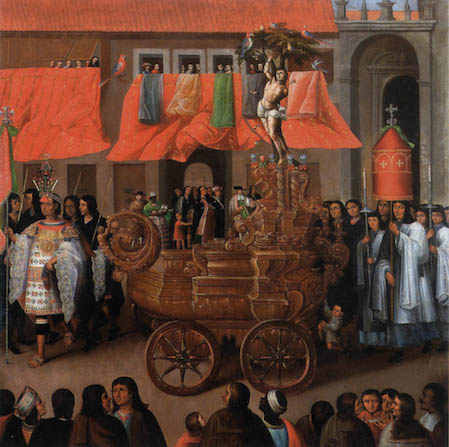
One of the most famous works that came from the Cuzco School of Painting is actually a series of a number of paintings. The series is showing the procession of the Corpus Christi festival. This is a religious festival that happened in Cusco, Peru to celebrate the doctrine of transubstantiation of the Catholics. Transubstantiation is the transformation of wine and bread from the Eucharist to Christ’s actual blood and body when taking mass. Corpus Christi literally translates to “body of Christ” in Latin. In addition to celebrating transubstantiation, this festival is also used as a way to commemorate the Spaniards triumph over the Inca and the success of Christianity over the pagan religions.

At the time of these paintings in the 16th century, Cusco was a part of the viceroyalty of Spain. This means that it was being ruled by a monarch that was a representative of Spain due to it being a colony so far away from the mainland. The Corpus Christi festival is celebrated 60 days after Easter, the day celebrating Jesus rolling away the stone and coming out of the tomb after He resurrected from the dead. This also happened to be at the same time as the Inca solstice celebration. The solstice celebration is in honor of Inti, their god of the sun. Inti was one of the greatest respected deities of the Inca religion and they named this event Inti Raymi, and raymi means festival. Since this was for a god of the Incas, and not associated with Catholicism from the Spanish, there were obvious differences in the types of people in the downtown area of Cusco at the time. One group of people were praising the one and only Jesus Christ for him dying on the cross to save everyone from their sins, while the other group was worshiping one of their several gods because he was the most venerated by them. Due to the overlapping of a Christian religious event with an Inca religious event, there was actually an increase in Christianity. The Spanish who were participating in the Corpus Christi festival were able to minister to the Inca who were participating in Inti Raymi. This influence by the Christians on the nonchristians converted many of them to Christianity. At the time of the original celebrations, the Spanish basically overruled the Inca’s celebration, so Corpus Christi was much more popular.

The original purpose of the Corpus Christi series paintings was to further the project initially started by the Spanish Bishop Manuel de Mollinedo y Angulo. His goal was to make the festival more valued and he thought that having paintings made would do the job. However, the paintings actually ended up doing more than the success/failure of the bishop. This series really incorporates the different social groups that are present in Cusco at this time. They show that there are more than just the two groups that were based on where the people originated from: the Hispanic colonizers and the Andean colonized. Other than these two classifications, there are also social distinctions amongst the indigenous people. The indigenous people (i.e., the Andean colonized) poured their own values into the festival to ensure that there was a noticeable difference between the social classes. This can be seen throughout the paintings based on the attire of the people and their placements in the artwork. 

Although the finished Corpus Christi series was comprised of 18 paintings, only 16 are still around today and only 12 of these are permanently housed at the Archbishop’s Palace. They can be leased out at times to go to other museums, but their home is in Cusco. Each of the pieces is of a different part of the procession of the festival. It is similar to how a homecoming parade works with the various floats moving down Main Street of the town, but with a much different purpose. The paintings were actually supposed to depict the procession in chronological order, but that ended up not being the case. Eight of the paintings are of the procession of saints with their devotees. Throughout these eight, there are five of the Indian parishes represented with their standard bearers in the costumes of their royal Inca ancestors. By including these parishes, areas correlated with the Inca districts, the social distinctions within the indigenous groups can be better seen. The remaining four paintings at the Archbishop’s Palace are related to these religious orders of the Catholic church: Franciscans, Dominicans, Augustinians, and Mercedarians. Other inclusions in the paintings are the secular clergy, as well as the political and Ecclesiastic leaders of Cusco. Since these paintings encompass both the Incas and Spanish, they are showing the intermingling that is occurring in Cusco, and throughout Peru, at this time. 

Another name for the Corpus Christi series is the Santa Ana series because they were supposedly made for the Cusqueno parish church. It is unknown who designed and produced these, but there are said to be at least two artists that worked on them. Also, it is believed that these artists were likely of indigenous origin since the majority of painters in this area at the time of the paintings were indigenous. These pieces ranged in size from 6 feet tall by 6 feet wide to 7 feet tall and 12 feet wide, which is 36 square feet to 84 square feet. This is a massive size, as it is as tall and wide as the height of an average man. Within these colossal paintings, there is a range of 30 to over 150 total people. The placement of these people had a significant meaning. It was a sign of status depending on where you were placed. The Cusqueno elites, along with their families, were placed in the backgrounds of many, while the foreground consisted of members of the middle and lower economic classes. Think of it as the important people at the top of the paintings and the lower ranking people at the middle and bottom. In addition to the placement of the people signifying status in society, the commissioner of the painting also indicated this. All of the paintings had a sponsor or group of sponsors that commissioned/paid for it. Normally the painting was sponsored by the people that were incorporated in it; however, there were 3 exceptions to this. This is an example of artwork that is not strictly about the Bible and its characters. Although the festival itself is religion based and many of the subjects are related to the Catholic church, there is a heavy inclusion of local people. The paintings with the exceptions are the ones that include the bishop and the Corregidor who was an appointed government official by the King of Spain. Since during this time it was admirably to spend lavishly on yourself, it is surprising that the bishop and the Corregidor did not do so. They held such high ranks in society, yet they did not spend the extra money to boost their status to an even greater level. It would seem as if having someone else pay for your position in an artwork that it would increase your importance, but actually the status of these two was downsized when they commissioned the paintings they were in. If the people who commissioned a piece were not in it, but it was of a structure like a church, then that would be highly looked upon. Commissioning a painting of objects in the community, rather than people, especially churches and other religious buildings, was a way to exhibit religious devotion and was respected. By visiting this painting series, one can see a visual representation of how the hierarchy of society in 16th century Peru was organized. 

Each of the paintings are named by the main subject of that piece, which made for easy identification. Whether it be a parish, a religious order, or a depiction of a biblical narrative, it was named after the focal point of the painting. A prime example of this is the painting named Parish of San Sebastian. Based on the previous information, I am sure you could guess that the main focus of this specific work is San Sebastian. Saint Sebastian was a soldier in the Roman army and also a martyr. At first, his Christian beliefs were kept secret, so he was able to fight in the army. Once his true identity was revealed, he was sentenced to be executed. Shockingly, Sebastian was able to be nursed back to life by Saint Irene who was the widow of Saint Castulus. Sebastian lived for a little while longer before he decided to condemn the Emperor for the brutality he brought upon Christians. As one would expect, this act led to him being beaten to death. Saint Sebastian was a martyr of the faith, so of course the Spanish Catholics wanted to honor him at the Corpus Christi festival. The center point of the painting is a statue of Saint Sebastian mounted high on a carriage. This carriage was not actually what was used during the festival, but the artists used this as a way to enhance the quality of the paintings. The artists, and the ones who commissioned these works, wanted the paintings to seem as luxurious as possible so they added extravagant items, like the carriage, that were found in Spain to accomplish this. In Spain, they were used in religious processions like this one in Cusco. When looking closely at the painting, it is noticeable that the people and carriage are stagnant to allude to the fact that this was not the method of travel used. In the festival, the floats were carried by many people who held them on their shoulders. Since Saint Sebastian was such a prestigious martyr, he received this important honor of having a spot in the procession and then that was followed with him having a painting specifically dedicated to him.

There are several other aspects of Parish of San Sebastian that are arguably as significant as the statue of Saint Sebastian himself. His statue is representing his martyrdom by being tied to a tree and pierced with arrows. As previously mentioned, the purpose of the Corpus Christi festival was to memorialize the changing of the Eucharist into Christ’s actual blood and body. This piece is the one that depicts the Eucharistic host as it was in the parade. It is the piece that is demonstrating what the entire occasion was dedicated to. Proceeding the carriage holding the statue of Saint Sebastian is the Eucharist host being held by the Bishop in a monstrance. The monstrance is the object that holds the Eucharist when it is being presented in a manner such as this. This painting is showing the sacramental bread on its way to the Church, and there is another piece later in the series that shows its arrival at the Church.

Preceding the carriage is a man of indigenous origin. This is able to be identified due to his attire: a typical Inca tunic and a mascapaycha. These specific items denote that he is not just a member of an indigenous group, but that he is the leader of his group. These leaders are termed caciques, and, in this picture,  he is acting as the standard bearer by being the representative for his group. The sun face on the front of the tunic he is wearing is a symbol of Andean nobility. Although he is a leader of the Inca, the Spanish still let people continue in this position if they agreed to execute Spanish laws over their indigenous people. By following the Spaniards laws and participating in this religious festival, the caciques, a position that was only maintained by a select amount after the conquest, were allowed to wear their indigenous garments and still be included in Spanish social order. Along with their laws and daily lives being a mix between indigenous and Spanish, the caciques tunic actually had a mix of both cultures, too. The pattern of the tunic, which encompasses the majority of it, was in relation to the Inca culture, but elements like the lace sleeves are from the Spanish. Just from this one clothing item of this one man, you can get a glimpse of ways that the two cultures blended. In addition to the tunic, the crown that the cacique is wearing is a sign of status. It is called a mascapaycha due to the red fringe hanging below it to establish that he is Inca royalty. The crown has intricate features that are used to exhibit he is a pre-Hispanic noble. Some of these characteristics are the silver globe and banners that sit on top of a rainbow and the two curiquingue birds. These birds were considered sacred to the Inca. As mentioned, the mascapaycha was a sign of nobility and this was due to the caciques using them to show who they were descendants of. In turn, this solidified their significance in society. This crown is significant because it is showing both Inca heritage and loyalty to the Spanish state simultaneously. These paintings in the Corpus Christi series, specifically Parish of San Sebastian, are a great depiction of how the Spanish did not completely wipeout the Inca, but instead formed a new culture from the blending of these two civilizations. 

The last aspect of this painting of Saint Sebastian that needs to be pointed out is the placement of the people. This is a prime example of the importance of the positions of each type of person in society in the artworks. The class most populated in the community was typically the middle and lower classes, so there are many more of them to disperse throughout the pieces. In Parish of San Sebastian, the ones involved in the procession are the people who belong to the middle class of society. In the actual Corpus Christi festival, they would be the ones carrying the floats down the processional path. Since there are fewer elite members in society than any other class, there are also the least amount of them painted into this scene. Of course, they would not be doing any laborious work for this festival, so they are the ones sitting on the balconies and watching from windows at the top of the painting. The heads at the very bottom of the painting are the people who have the lowest status in society. They are just observers of the procession and do not have a significant status at all. By seeing this one painting, you can see the detail about social hierarchy that was put into both the artworks and into society itself, which is not nearly as defined in our world today. 

It is important to go visit the Archbishop’s Palace for not only the importance it has in the Catholic religion, but also for the religious art museum that it is home to. There are countless pieces held there that show the immaculate work produced at the Cusco School of Art in the 16th century that cannot be seen elsewhere. The art that came from here is top notch due to the influences of both indigenous and Spanish culture on it. Also, the building itself is historically significant due to it originally being an Inca palace. Just by walking around the exterior walls, you can see the famous 12 angled stone that the Inca created. Since the Spanish did not completely destroy this structure, there are many Inca elements still present. To continue on the art route, this place contains most of the paintings from one of the most well-known series of this time: The Corpus Christi series. Getting to observe these massive paintings in person would be quite the show. The details of each figure would be so complex and easily identifiable. Most importantly, each of the 12 paintings that are kept here depict such a critical part of the Corpus Christi festival, which is still heavily celebrated in Peru today. These give insight into how important this procession was to the Spanish because they actually commissioned paintings of this stature to commemorate it. 

Image result for parish of san sebastian
Parish of San Sebastian from the Corpus Christi Series
Design a site like this with WordPress.com
Get started